- English
- French
- German
- Portuguese
- Spanish
- Russian
- Japanese
- Korean
- Arabic
- Greek
- German
- Turkish
- Italian
- Danish
- Romanian
- Indonesian
- Czech
- Afrikaans
- Swedish
- Polish
- Basque
- Catalan
- Esperanto
- Hindi
- Lao
- Albanian
- Amharic
- Armenian
- Azerbaijani
- Belarusian
- Bengali
- Bosnian
- Bulgarian
- Cebuano
- Chichewa
- Corsican
- Croatian
- Dutch
- Estonian
- Filipino
- Finnish
- Frisian
- Galician
- Georgian
- Gujarati
- Haitian
- Hausa
- Hawaiian
- Hebrew
- Hmong
- Hungarian
- Icelandic
- Igbo
- Javanese
- Kannada
- Kazakh
- Khmer
- Kurdish
- Kyrgyz
- Latin
- Latvian
- Lithuanian
- Luxembou..
- Macedonian
- Malagasy
- Malay
- Malayalam
- Maltese
- Maori
- Marathi
- Mongolian
- Burmese
- Nepali
- Norwegian
- Pashto
- Persian
- Punjabi
- Serbian
- Sesotho
- Sinhala
- Slovak
- Slovenian
- Somali
- Samoan
- Scots Gaelic
- Shona
- Sindhi
- Sundanese
- Swahili
- Tajik
- Tamil
- Telugu
- Thai
- Ukrainian
- Urdu
- Uzbek
- Vietnamese
- Welsh
- Xhosa
- Yiddish
- Yoruba
- Zulu
Steel Formwork Construction vs Timber: Which Is Best for Projects?
When comparing steel formwork construction to timber formwork, steel is the stronger long-term choice for most mid-to-large infrastructure and commercial building projects. Steel panels deliver superior load-bearing capacity, tighter joint tolerances, and a reuse cycle exceeding 50 times, which drives down per-pour cost considerably. Timber formwork may suit small residential jobs where initial budget is tight, but it degrades faster, absorbs moisture, and demands frequent replacement. For EPC contractors managing multi-phase projects across the Middle East, Southeast Asia, or Africa, steel formwork systems offer the consistency and compliance documentation that project schedules demand.
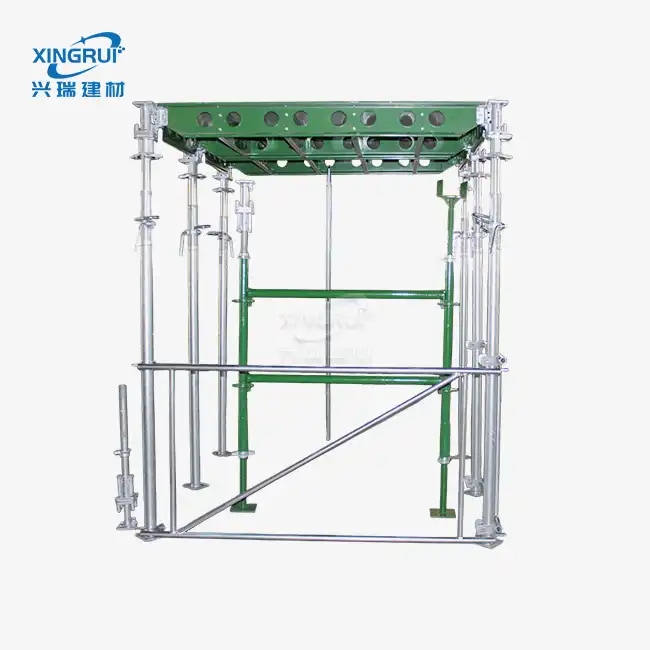
Understanding Steel Formwork and Timber Formwork
Before making a procurement decision, it helps to understand what each system actually is and where each one performs best.
What Is Steel Formwork?
Formwork made of high-strength steel panels is called steel formwork construction. It is a temporary mold system used to shape new concrete until it becomes strong enough. Panels are usually made from Q235 or Q345 carbon steel, which is stamped and welded into separate pieces. These methods are used for cast-in-place walls, columns, slabs, bridges, tunnels, and other concrete buildings that need to have exact shapes.
What Is Timber Formwork?
To make concrete forms, timber formwork uses solid wood or engineered plywood pieces. For decades, this has been the standard way to build things. It can be made into any shape because the carpenters cut and put it together on-site. Wood, on the other hand, soaks up water, bends under pressure, and usually only lasts 5 to 10 uses before it needs to be replaced.
Where Each System Excels
For repeated pours in large pieces of infrastructure like bridge piers, high-rise core walls, and underground culverts, steel formwork construction is the best choice. Timber formwork is still useful for one-of-a-kind architectural elements or low-budget home projects where speed of production is more important than long-term value.
Comparative Analysis: Steel Formwork vs Timber Formwork
Procurement managers can make a data-driven choice when they look at both systems side by side and compare them in four key areas.
Durability and Maintenance
Steel panels can't be damaged by water, chemicals, or changing shape. With the right covering to keep it from rusting, like electrostatic powder blasting, a steel panel set can last for more than 50 pour cycles. Every time you use wood, it soaks up water and swells and weakens. Field data from big companies regularly shows that 20–30% of the wood in a job is replaced, which adds cost that wasn't planned for.
Installation and Handling
Steel modular panels are connected by standard pins or bolt holes. This makes construction more reliable and less reliant on skilled labor. The same installation process can be done on dozens of floors by the same trained crew. Putting together wood needs woodworking skills and unique cutting for each pour, which slows down the cycle time. But each panel of wood is lighter, which can make it easier to move by hand on sites without cranes.
Lifecycle Cost Analysis
Steel formwork construction costs more per square meter up front than wood formwork, often by three to five times as much. Steel, on the other hand, costs much less per use than wood when used more than 50 times. Steel will save a project that uses 5,000 square meters of formwork over 20 floor cycles money on both the cost of the steel itself and the labor needed to fix and replace it.
Environmental and Safety Considerations
Steel can be recycled in its entirety when it's no longer useful. Timber formwork creates construction waste that is often dumped in landfills, especially in places where there isn't a good system for sorting trash. In terms of safety, steel panels keep their structural integrity over the course of their useful life. Wood that has been damaged by water can fail quietly, putting active pour sites at risk of unpredictably high load risks.
Performance and Efficiency in Modern Construction Projects
As projects get more complicated, the engineering needs for formwork have grown. This is what each method does.
Load-Bearing Capacity for Heavy Infrastructure
Steel forms can handle the hydrostatic pressure that is created when a lot of concrete is poured at once. When systems are made from Q235 carbon steel and panels are between 2.3 mm and 3.0 mm thick, the surface stays flat within a ≤2 mm range even when they are loaded. This is important when building bridge columns and basement walls because the accuracy of the geometry directly affects how well the structure works. In the same conditions, wood bends, which means that more supports are needed, which adds weight and takes longer to put together.
Modular Design and Adaptability
Modern steel formwork construction systems are made with standard panel sizes, like 1500x300 mm and 1200x200 mm, that can be put together in a number of different ways. Engineering teams can use computers to model pour processes and make sure that panel arrangements are correct before the panels are made. Wood can be shaped in many ways, but it doesn't have the consistent sizes needed for modular planning. This makes it harder to plan when projects will be finished.
Project Suitability by Scale
For projects with less than five floors or very uneven architectural surfaces, wood can work well and cost less at the start. For bigger projects, like multi-story business buildings, government infrastructure, or repeating residential towers, steel formwork construction panels save money on each pour and pay for themselves in the first few stages of the project.
Procurement and Supplier Insights for Steel Formwork
Sourcing the right steel formwork construction supplier requires attention to several factors beyond unit price.
Quality Assurance and Certification Requirements
When looking for a steel formwork construction supplier, it's important to think about more than just the unit price. For example, EPC procurement managers should ask for ISO 9001 certification for quality management, ISO 14001 certification for environmental compliance, and ISO 45001 certification for health and safety at work. CE certification is an extra layer of security for projects that are bound by European standards contracts. Before the first shipment, it makes sense to ask for a third-party inspection by SGS or Bureau Veritas.
Shandong Xingrui Building Materials Co., Ltd. is certified by ISO 9001, ISO 14001, and ISO 45001, and all of their panels are made with a full-process quality control system in mind. The business is based in Rizhao, Shandong Province, in a 79,800-square-meter building that has 4 cold roll making lines and 12 welding robots. You can get sample panels and technical information before you buy a lot of them.
Customization and Drawing-Based Orders
Government rules often mean that projects in the Middle East and Africa need panels with specific sizes or connections that aren't standard. A good steel formwork construction provider should take customer plans and make sure they are accurate before starting production. Shandong Xingrui can make things to order based on drawings provided by the customer, and they can handle both standard and project-specific designs.
Delivery, Lead Times, and Logistics
When EPC workers are working on a project plan, on-time delivery is just as important as good product quality. Ask suppliers about their production capacity, the backlog of orders, and the FOB terms. Rizhao's specialized seaport, airport, and high-speed train connections give Shandong Xingrui an edge when it comes to shipping containers quickly to places around the world.
Best Practices and Maintenance for Steel Formwork
Proper Cleaning After Each Pour
Leaving leftover concrete on the sides of panels speeds up the surface's wear and tear and changes how tight the joints are for the next pour. Crews should use a scraper and brush to clean the panels after pulling them, and then they should use a new release agent before putting them away or putting them back up. This easy step keeps the flat panel face safe, which is what lets you make tight joining joints.
Corrosion Prevention in Field Conditions
When panels are stored outside in humid or coastal areas, they need to be stacked with air gaps and waterproof covers. If the factory-applied electrostatic covering gets scratched, a zinc-rich primer that is suitable should be used to fix it. Checking the weld quality around the corners of the frame on a regular basis will find early signs of wear before they become a structural problem.
Compliance with Structural Safety Standards
When installing steel formwork construction, it must meet the load standards that apply, which are EN 12812 for European projects or national rules that are the same. The procurement engineers should make sure that the load ratings on the panels match the hydrostatic pressure that was calculated for the planned pour rates. On government infrastructure projects, it is normal for a trained engineer to check the work before it is poured.
Conclusion
When it comes to durability, accuracy, lifecycle cost, and compliance documentation, steel formwork construction is better than wood. These are the things that EPC contractors that manage large infrastructure portfolios care about the most. Timber still has some uses in small or very irregular situations. If procurement managers need a reliable steel formwork construction provider that can make custom panels, have approved quality systems, and deliver large orders on time, Shandong Xingrui Building Materials Co., Ltd. is a company that should be looked at.
FAQ
How many times can steel formwork panels be reused?
With regular upkeep, steel formwork construction pieces made from Q235 carbon steel can be used more than 50 times. When cleaning and coating protocols are followed consistently, some heavy-duty systems that are always being used on big infrastructure projects report even higher numbers.
Can steel formwork be customized for non-standard dimensions?
Yes. Manufacturers like Shandong Xingrui will use plans given by the customer to make panels that fit the exact size of the project. This is especially important for government contracts for infrastructure where normal market sizes don't fit the needs of the building.
What certifications should I request from a steel formwork manufacturer?
Ask for ISO 9001 for managing quality, ISO 14001 for managing the environment, ISO 45001 for managing health and safety at work, and CE approval if the project meets European contract standards. Inspection records from a third party, like SGS or Bureau Veritas, add another layer of security before a shipment.
Is steel formwork worth the higher upfront cost compared to timber?
Yes, for any job that involves pouring the same thing over and over on different floors or buildings. When you split the price of the steel over more than 50 uses, the cost per pour is much lower than the cost per pour of replacing wood panels every 5 to 10 rounds.
How do I verify a Chinese steel formwork supplier before placing a bulk order?
Ask for samples of the products, records of the factory audit, and inspection reports from a third party. A lot of suppliers also offer video tours of their factories. Standard due diligence steps include looking at certifications and asking for examples of past work done in the area you want to target.
Get a Custom Quote from GREEN FORMWORK — A Trusted Steel Formwork Manufacturer
Shandong Xingrui Building Materials Co., Ltd. makes GREEN FORMWORK, which are Q235 steel formwork construction panels that are flat to within 2 mm, can be used more than 50 times, and come with quality documentation that meets CE standards. Our team gives you examples and technical help before you commit to buying a lot, whether you need standard sizes or custom panels based on your drawings. To get a price for your job, email us at sdxingruiqp@126.com right now.
References
1. Concrete Society. Formwork: A Guide to Good Practice. 3rd ed. The Concrete Society, 2012.
2. European Committee for Standardization. EN 12812: Falsework — Performance Requirements and General Design. CEN, 2008.
3. Hurd, M.K. Formwork for Concrete. 7th ed. American Concrete Institute, 2005.
4. International Organization for Standardization. ISO 9001: Quality Management Systems — Requirements. ISO, 2015.
5. Peurifoy, R.L., and Oberlender, G.D. Formwork for Concrete Structures. 4th ed. McGraw-Hill, 2011.
6. World Highways. "Steel vs Timber Formwork: Lifecycle Cost Considerations for Global Infrastructure Projects." World Highways, 2021.
Learn about our latest products and discounts through SMS or email