- English
- French
- German
- Portuguese
- Spanish
- Russian
- Japanese
- Korean
- Arabic
- Greek
- German
- Turkish
- Italian
- Danish
- Romanian
- Indonesian
- Czech
- Afrikaans
- Swedish
- Polish
- Basque
- Catalan
- Esperanto
- Hindi
- Lao
- Albanian
- Amharic
- Armenian
- Azerbaijani
- Belarusian
- Bengali
- Bosnian
- Bulgarian
- Cebuano
- Chichewa
- Corsican
- Croatian
- Dutch
- Estonian
- Filipino
- Finnish
- Frisian
- Galician
- Georgian
- Gujarati
- Haitian
- Hausa
- Hawaiian
- Hebrew
- Hmong
- Hungarian
- Icelandic
- Igbo
- Javanese
- Kannada
- Kazakh
- Khmer
- Kurdish
- Kyrgyz
- Latin
- Latvian
- Lithuanian
- Luxembou..
- Macedonian
- Malagasy
- Malay
- Malayalam
- Maltese
- Maori
- Marathi
- Mongolian
- Burmese
- Nepali
- Norwegian
- Pashto
- Persian
- Punjabi
- Serbian
- Sesotho
- Sinhala
- Slovak
- Slovenian
- Somali
- Samoan
- Scots Gaelic
- Shona
- Sindhi
- Sundanese
- Swahili
- Tajik
- Tamil
- Telugu
- Thai
- Ukrainian
- Urdu
- Uzbek
- Vietnamese
- Welsh
- Xhosa
- Yiddish
- Yoruba
- Zulu
Top Modular Aluminum Formwork Features for Reusable Concrete Work
When contractors and rental operators ask what makes a concrete forming system worth investing in long-term, the answer almost always points to one thing: reusability backed by structural consistency. Modular aluminum formwork delivers exactly that. Built from high-strength 6061-T6 aluminum alloy, this system combines standardized panels, non-standard panels, and precision accessories into a single configurable assembly that handles walls, beams, columns, floor slabs, bay windows, and more—all while achieving 300+ reuse cycles with proper maintenance.
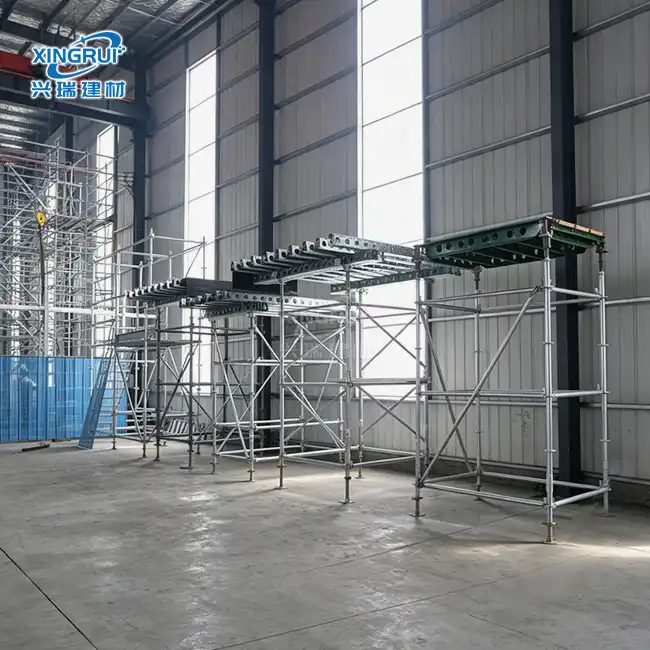
Understanding Modular Aluminum Formwork: Key Features and Benefits
What Sets It Apart From Traditional Systems?
Most plywood formwork can handle 5 to 8 pours before the surface starts to break down, which lowers the quality of the finish. Steel-based options last longer, but they are much heavier—often more than 50 kg/m². Formwork panels made of aluminum alloy are only 20–25 kg/m², which means they can be moved by hand without losing their ability to hold up to 60 KN/m² of weight.
Core Structural Advantages
The tensile strength of ≥250 MPa and yield strength of ≥210 MPa of the system are similar to those of 6061-T6 aluminum, which is one of the most common types of structural aluminum used in building around the world. Dimensional accuracy of within ±1mm makes sure that panels fit the same way on all project sites, which is very important for rental companies that manage asset pools across many buildings.
Sustainability and Green Construction Alignment
At the end of its useful life, 95% of modular aluminum formwork can be recycled. This means that your object will still be worth something after it's been used. Instead of using single-use wood shuttering, these aluminum forming panels can save several cubic meters of wood trash each project cycle, which directly supports the standards for green building certification.
How Modular Aluminum Formwork Works: Design Principles and Operation
Standardized Split Design Logic
The system has a split design that is used for all of its parts, like walls, floor slabs, beams, and columns. Precision-engineered pins and wedges connect each panel to the others. With this connection method, crews don't have to worry about matching complicated accessories on-site, which is something that usually slows them down during traditional shuttering setups.
Monolithic Pouring Capability
Being able to cast walls, blocks, columns, and beams all at the same time in a single pour is one of the most useful features. With this one-piece method, you don't have to patch after stripping, and the concrete will be smooth right off the form. With an early stripping time of less than 48 hours, building teams can actually get a 4–5 day floor cycle on plans that are used over and over again in homes.
Flexible Bay Adjustment for Varied Floor Plans
The modular aluminum formwork parts can be put together in different ways so that the bays can be set up in different ways without having to make whole new sets of panels. This is useful for projects that include both normal living flats and business buildings with odd shapes. The standard component library and non-standard panels can be used together to cover bay windows, core walls, and other irregular structural areas. This cuts down on the need for custom one-off fabrication.
Comparing Modular Aluminum Formwork Systems: Choosing the Best for Your Projects
Aluminum vs. Plywood vs. Steel: A Direct Comparison
Here's how the three main types of concrete forming materials stack up on the criteria that matter most to B2B procurement teams:
- Plywood formwork costs less upfront but averages 5–10 reuse cycles. Surface quality degrades quickly, increasing finishing labor costs. It carries no meaningful residual value after use.
- Steel formwork offers high durability and good pressure resistance, but its weight (typically 40–60 kg/m²) demands crane-assisted handling on most floors, raising equipment costs and slowing cycle times.
- Aluminum alloy forming panels balance all three variables. At 20–25 kg/m², they remain manually portable. With 300+ reuse cycles, the per-pour amortized cost drops well below plywood after approximately the 30th to 50th use, according to standard ROI modeling used across the rental industry.
The people who run rented properties and build long-term asset pools care about these differences the most. When you pick the wrong forming material, you end up with "asset islands," which are panels that can't be used on other projects because their shape doesn't work with the others or their surface quality has been damaged.
Certifications That Confirm Product Quality
The aluminum making panels that Shandong Xingrui Building Materials Co., Ltd. makes meet the requirements of ISO 9001 quality management and ASTM-B209 aluminum sheet specs. Also, all of the goods have CE Certification. When procurement experts compare the trustworthiness of different suppliers, these certificates show that the dimensions, alloy makeup, and welding integrity have been checked by a third party, not just said to be true.
What BIM Integration Adds to Complex Projects
For business projects with curved beams, unique columns, or cantilevered slabs, GREEN FORMWORK supports BIM-integrated design to make panels that are precisely shaped to fit the building's geometry. The ability to do this means that buying teams don't have to find a second seller for zones with complicated architecture.
4. Cost and Procurement Insights for Modular Aluminum Formwork
Understanding Cost Drivers
Unit prices are based on four main factors: the type of material, the size of the panel, the type of surface treatment, and the number of units ordered. The 6061-T6 alloy specification directly links the price of a panel to the price of an aluminum ingot on the market, which changes over time. Long-term per-cycle deferred cost, not just spot price, should be taken into account by rental companies that are building asset groups. A panel that costs 30% more but lasts 300 cycles instead of 150 gives about twice as much return on investment.
Bulk Procurement and Supplement Orders
GREEN FORMWORK takes both big original orders and small supplement orders. Rental companies that deal with ongoing panel losses during active project rotations can get replacement pieces from the same manufacturer without having to meet unreasonable minimum order quantities. This directly cuts down on the time that assets are not being used between deployments.
Lead Times, Samples, and Technical Support
The 79,800 m² modular aluminum formwork factory in Rizhao has 4 sets of cold roll forming equipment and 12 welding robots, which means it can handle large orders from around the world. Samples are available with full technical paperwork, so procurement engineers can make sure that they will work with current panel stocks before making large purchases.
Ensuring Long-Term Value: Maintenance, Lifespan, and Environmental Considerations
Key Factors That Affect Panel Longevity
The two things that directly affect how many times a panel can be refurbished are the quality of the surface treatment and the thickness of the profile wall. Panels with thick enough walls and the right anodized or coated surface treatment don't let concrete stick to them, which is what breaks down surfaces between pours. The two most cost-effective maintenance habits that rental teams can make standard are cleaning after each strip and making sure that nothing gets damaged during transport.
Environmental Performance Over the Asset Lifecycle
Because 95% of aluminum can be recycled, old panels have value again instead of ending up in a landfill. The carbon cost per pour is much lower than alternatives made of disposable wood over a 300-cycle asset life. This lifecycle calculation can help construction companies that are trying to get LEED or a similar green certification show proof of their materials credit.
BIM and Digital Tools as Future-Ready Features
When BIM is used in the design phase of a project, panel layout data can be directly transferred into assembly processes. This cuts down on the time needed for pre-pour planning on-site. As IoT-enabled site management spreads across high-rise residential and commercial developments, forming systems based on standard modular geometry will work better with the needs of digital workflow.
Conclusion
The technology for reusing concrete forms has come a long way, and now modular aluminum formwork systems are the best option for rental companies, contractors, and buying teams that want to know the total cost of ownership, not just the starting cost. This system is worth looking into for any asset-expansion plan because it can be reused more than 300 times, pours in one piece, has a ±1mm tolerance on dimensions, and works with all BIM programs. GREEN FORMWORK is a good long-term partner because it can make things, has quality standards that are recognized, and is ready to provide both large orders and small pieces to fill in gaps.
FAQ
How many reuse cycles can these panels realistically achieve?
With standard cleaning and proper storage between projects, aluminum forming panels manufactured to 6061-T6 specification achieve 300+ cycles. At end-of-life, the aluminum carries a 95% recyclability rate, which preserves residual asset value.
Can the system handle irregular structures like bay windows or curved beams?
Yes. Non-standard panels combine with the standard component library to cover bay windows, core walls, curved beams, and other irregular zones. For complex commercial geometries, BIM-integrated design allows custom panel fabrication.
What happens when panels are damaged during active rental rotations?
GREEN FORMWORK accepts small-quantity supplement orders, which means rental operators can replenish individual damaged panels without purchasing full replacement sets or meeting large minimum order thresholds.
Does the system require specialized labor?
Assembly uses pins and wedges rather than complex accessory matching. A structured 3–5 day training period covers pinning and wedging sequences, after which crews can work efficiently without traditional carpentry skill sets.
What certifications does this product carry?
Panels are manufactured to ISO 9001, ASTM-B209, and CE Certification standards, with dimensional accuracy verified within ±1mm tolerance through quality inspection at the Rizhao production facility.
Partner With GREEN FORMWORK for Your Next Aluminum Formwork Supplier Requirement
GREEN FORMWORK, which is backed by Shandong Xingrui Building Materials Co., Ltd., makes modular metal formwork that can be used over 300 times, has a ±1mm tolerance for size, and can handle full addition orders. It was designed to help rental companies grow their standard asset pools. You can get samples and technical information if you ask for them. You can email us at sdxingruiqp@126.com to talk about the details of your project.
References
1. American Concrete Institute. ACI 347R-14: Guide to Formwork for Concrete. ACI, 2014.
2. Construction Industry Research and Information Association. Formwork: A Guide to Good Practice. CIRIA, 2012.
3. Hurd, M.K. Formwork for Concrete, 8th ed. ACI Special Publication SP-4, 2005.
4. ASTM International. ASTM B209: Standard Specification for Aluminum and Aluminum-Alloy Sheet and Plate. ASTM, 2021.
5. International Organization for Standardization. ISO 9001:2015 Quality Management Systems — Requirements. ISO, 2015.
6. Peurifoy, R.L., and Oberlender, G.D. Formwork for Concrete Structures, 4th ed. McGraw-Hill, 2011.
Learn about our latest products and discounts through SMS or email