- English
- French
- German
- Portuguese
- Spanish
- Russian
- Japanese
- Korean
- Arabic
- Greek
- German
- Turkish
- Italian
- Danish
- Romanian
- Indonesian
- Czech
- Afrikaans
- Swedish
- Polish
- Basque
- Catalan
- Esperanto
- Hindi
- Lao
- Albanian
- Amharic
- Armenian
- Azerbaijani
- Belarusian
- Bengali
- Bosnian
- Bulgarian
- Cebuano
- Chichewa
- Corsican
- Croatian
- Dutch
- Estonian
- Filipino
- Finnish
- Frisian
- Galician
- Georgian
- Gujarati
- Haitian
- Hausa
- Hawaiian
- Hebrew
- Hmong
- Hungarian
- Icelandic
- Igbo
- Javanese
- Kannada
- Kazakh
- Khmer
- Kurdish
- Kyrgyz
- Latin
- Latvian
- Lithuanian
- Luxembou..
- Macedonian
- Malagasy
- Malay
- Malayalam
- Maltese
- Maori
- Marathi
- Mongolian
- Burmese
- Nepali
- Norwegian
- Pashto
- Persian
- Punjabi
- Serbian
- Sesotho
- Sinhala
- Slovak
- Slovenian
- Somali
- Samoan
- Scots Gaelic
- Shona
- Sindhi
- Sundanese
- Swahili
- Tajik
- Tamil
- Telugu
- Thai
- Ukrainian
- Urdu
- Uzbek
- Vietnamese
- Welsh
- Xhosa
- Yiddish
- Yoruba
- Zulu
What Accessories Are Needed for a Modular Aluminum Formwork System?
A complete aluminum formwork system is only as effective as the accessories holding it together. For a modular aluminum formwork system to perform at full capacity, it requires a coordinated set of components beyond the core panels—including pins, wedges, tie rods, support braces, clamps, and safety guardrails. These accessories govern structural stability, dimensional accuracy, and assembly speed on every floor. Sourcing the right mix of standard accessories determines how well your asset pool transfers across different projects and how quickly your crews can turn over each floor cycle.
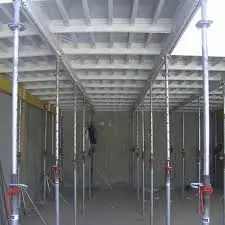
Understanding Modular Aluminum Formwork Accessories
Before judging individual parts, it's helpful to know how the tools fit into the system as a whole.
What Accessories Actually Do on Site?
Accessories join, line up, and support the metal pieces so they work together as a single mold for pouring concrete. Even the best 6061-T6 panels will move when fresh concrete is poured, and the hydrostatic pressure can reach 60 KN/m² in deep pours. This can happen if the connecting hardware isn't chosen correctly.
The Three Functional Categories
There are three main types of accessories: connection hardware (such as pins, wedges, and clamps); structural support components (such as tie rods, kicker braces, and prop heads); and safety and access equipment (such as guardrails, toe boards, and access ladders). There are three groups, and each one talks about a different part of the pour cycle.
Why Accessory Standardization Matters for Rental Operators?
Compatible accessories are a direct way for rental fleet operators to get a good return on their investment when they are managing assets at multiple job sites. Accessories that aren't standard separate assets into separate pools that can't be put back together. This wastes money and makes replacement costs go up. That risk is greatly reduced by a modular aluminum formwork system with standard accessories.
Core Accessories and Their Functions in Modular Aluminum Formwork Systems
Knowing which accessory does what helps procurement engineers write accurate BOMs and avoid over-ordering or substituting incompatible parts mid-project.
Panel Connectors, Pins, and Wedges
Pins and wedges are the primary locking mechanism for aluminum formwork panels. A precision-machined pin passes through aligned panel holes; a wedge is then driven through a slot to lock the connection under load. Dimensional accuracy within ±1mm is necessary here—loose tolerances allow concrete bleed and panel displacement during pours.
Tie Rods and Wall Spacers
Tie rods run horizontally through opposing wall panels, counteracting the outward pressure of fresh concrete. Paired with PVC or steel spacer tubes, they hold walls at the correct pour width. High-cycle rental environments favor hot-dip galvanized tie rods, which resist corrosion and maintain performance across 200+ reuse cycles without significant degradation.
Support Braces, Prop Heads, and Early-Stripping Shores
Inclined support braces hold wall panels plumb before and during pouring. Adjustable shoring props with prop heads carry slab loads after early panel stripping—a practice permitted within 48 hours under proper concrete strength conditions. Early stripping recovers panels quickly, which directly supports 4–5 day floor cycles on high-rise residential projects.
Safety Accessories and Access Hardware
Guardrail posts, toe boards, and platform brackets are mandatory for elevated slab pours. Access ladders integrated into the formwork structure reduce dependence on separate scaffolding. These items must meet the construction safety standards of the target market—CE certification is required for European and many Southeast Asian projects.
Quick-Release Fittings and Rubber Gaskets
Modular aluminum formwork quick-release fittings allow faster panel extraction after stripping. Rubber gaskets seal panel joints against grout leakage, protecting the fair-faced concrete finish that eliminates downstream plastering costs. On projects with tight floor schedules, these small accessories have measurable impact on labor hours per cycle.
Comparing Aluminum Formwork Accessories vs. Traditional Formwork Hardware
Formwork tools made of aluminum are different from those made of wood or steel in more ways than just weight.
Weight and Handling Efficiency
Hardware made of steel is much heavier than hardware made of aluminum. Panel-mounted metal clamps and prop heads make work easier for crews and cut down on tiredness. This is especially helpful on sites where there isn't access for a crane between floors. Traditional steel form ties and wooden blocks add weight to the assembly, which slows it down.
Reuse Life and Replacement Cost
Formwork accessories made of wood usually last between 5 and 10 cycles before breaking down. Steel gear works better, but it needs to be treated regularly to keep it from rusting. When kept in good shape, aluminum alloy accessories can be used over 300 times, just like the panels themselves. This means that the total cost of replacing the accessories over the asset's working life will be less.
Cost-Benefit Position for B2B Buyers
For example, metal items cost more up front per unit. But for a rental fleet that goes through more than 50 projects, the lower number of replacements and lack of painting needs create a real cost advantage. The China Academy of Building Research published independent data on the construction industry that shows that aluminum formwork systems cut total formwork labor costs by 30–40% compared to timber alternatives on repeating residential floor plans.
Selecting the Right Accessories Based on Project Needs
To choose the right accessories, you need to make sure that the product specs fit the needs of each type of job and purchase model.
Matching Accessories to Structure Type
Modular aluminum formwork for wall panels in shear core building needs heavy-duty tie rod systems that can handle higher lateral forces. Early-stripping prop arrangements must be reliable for slab systems. Bay window brackets and non-standard corner joints can fix odd shapes without making custom panels, which is a good mix for rental companies that need assets that can be switched out.
Supplier Evaluation for Long-Term Procurement
A trustworthy company that sells aluminum formwork should keep extra parts in stock with low minimum order quantities, provide dimensional drawings for checking the layout of panels before they are put together, and provide technical support for BIM-integrated panel layouts. Shandong Xingrui Building Materials Co., Ltd. keeps more than 1,000 different kinds of accessories for its products and ships them directly from its 79,800-square-meter Rizhao plant. This is helpful for operators who need to keep track of their ongoing restocking needs.
Bulk Purchasing and Logistics Planning
Negotiated price tiers and consolidated shipping are good for large sales. Rizhao has its own airport, seaport, and high-speed rail hub, which makes shipping goods from Xingrui's facility to major ports in Southeast Asia and around the world easy and quick. When planning to add more assets, procurement teams should include wait times and MOQ needs right from the start.
Installation and Maintenance Tips for Aluminum Formwork Accessories
All of your fleet's accessories will last longer if they are handled properly during setup and checked after every run.
Assembly Sequence and Common Errors
Install the wall panels and tie rods before putting down the slab panels. This keeps the panels from moving because of lateral loads that aren't being supported. Under-tightening wedges is the most common mistake made on the job site. This lets the concrete move slightly under the pressure of the pour and leaves visible flaws on the face of the concrete. These accidents happen much less often when crews are trained on pin and wedge routines for three to five days.
Routine Inspection Protocol
Check the tie rod threads for deformation, the pin holes for extension beyond tolerance, and the wedge faces for breaking after each strip cycle. Replace any part that is clearly worn out. By keeping a condition log for each batch of accessories, rental companies can compare the number of times the items have been used to their rated life, which helps them accurately value the assets that are still usable.
Recycling and End-of-Life Value
Aluminum items can be recycled 95% of the time when they reach the end of their useful life. This leftover value helps to cover some of the cost of repair and makes sure that buying choices are in line with what companies need to say about the environment. This is becoming an increasingly important factor for builders working with green building certification programs like LEED or BREEAM.
Conclusion
Choosing the right tools for a modular aluminum formwork system has a direct impact on how well the structure works, how efficiently workers do their jobs, and the total return on an asset over the life of a rental fleet. Every part in the pour cycle has a clear job to do, from safety guardrails and early-stripping props to precision pins and tie rods. Prioritizing standard, high-cycle accessories from a factory that can directly restock lowers the risk of compatibility and lowers the cost of procurement over time. When managers build or add to their pool of metal formwork assets, they should pay just as much attention to the specifications of the accessories as they do to the panels themselves.
FAQ
Are aluminum formwork accessories compatible across different brands?
Not always. Pin hole diameters, wedge slot dimensions, and tie rod thread standards vary between manufacturers. Before mixing accessories from different suppliers, request dimensional drawings and conduct a physical pre-assembly trial. Sourcing accessories from the same manufacturer as the panels eliminates compatibility risk entirely.
What safety certifications should accessories meet?
For international projects, look for CE certification (EU and Southeast Asia markets) and compliance with relevant load-bearing standards such as GB 50204 or equivalent. Shandong Xingrui's accessories meet ISO 9001 and CE certification requirements.
What is the typical lead time for bulk accessory orders?
Standard bulk orders from Xingrui's Rizhao factory typically ship within 20–35 business days depending on order volume. The company's direct port access in Rizhao supports efficient global dispatch. Small replenishment orders are accepted to support ongoing rental operations.
How often should tie rods be replaced in active rental fleets?
Under normal operating conditions with proper cleaning after each cycle, galvanized tie rods typically last 150–200 cycles. Inspect threads after every 50 cycles and replace units showing visible thread wear or corrosion beyond surface level.
Partner with GREEN FORMWORK for Your Aluminum Formwork Supply
With help from Shandong Xingrui Building Materials Co., Ltd., GREEN FORMWORK sells a full range of modular aluminum formwork panels and tools straight from the plant. We support rental fleet operators and B2B procurement teams with flexible order sizes, technical drawings, and a steady supply of over 1,000 accessory types. Our products have been reused more than 300 times and have a ±1mm tolerance on dimensions. You can get a quote from a reliable modular aluminum formwork manufacturer by emailing our team at sdxingruiqp@126.com.
References
1. China Academy of Building Research. Technical Specification for Concrete Structure Formwork Engineering (JGJ 162). 2008.
2. American Concrete Institute. ACI 347R-14: Guide to Formwork for Concrete. 2014.
3. ASTM International. ASTM B209: Standard Specification for Aluminum and Aluminum-Alloy Sheet and Plate. 2021.
4. International Organization for Standardization. ISO 9001: Quality Management Systems — Requirements. 2015.
5. Construction Industry Institute. Formwork Systems Benchmarking Report: Aluminum vs. Timber and Steel. 2019.
6. European Committee for Standardization. EN 13374: Temporary Edge Protection Systems — Product Specification and Test Methods. 2013.
Learn about our latest products and discounts through SMS or email