- English
- French
- German
- Portuguese
- Spanish
- Russian
- Japanese
- Korean
- Arabic
- Greek
- German
- Turkish
- Italian
- Danish
- Romanian
- Indonesian
- Czech
- Afrikaans
- Swedish
- Polish
- Basque
- Catalan
- Esperanto
- Hindi
- Lao
- Albanian
- Amharic
- Armenian
- Azerbaijani
- Belarusian
- Bengali
- Bosnian
- Bulgarian
- Cebuano
- Chichewa
- Corsican
- Croatian
- Dutch
- Estonian
- Filipino
- Finnish
- Frisian
- Galician
- Georgian
- Gujarati
- Haitian
- Hausa
- Hawaiian
- Hebrew
- Hmong
- Hungarian
- Icelandic
- Igbo
- Javanese
- Kannada
- Kazakh
- Khmer
- Kurdish
- Kyrgyz
- Latin
- Latvian
- Lithuanian
- Luxembou..
- Macedonian
- Malagasy
- Malay
- Malayalam
- Maltese
- Maori
- Marathi
- Mongolian
- Burmese
- Nepali
- Norwegian
- Pashto
- Persian
- Punjabi
- Serbian
- Sesotho
- Sinhala
- Slovak
- Slovenian
- Somali
- Samoan
- Scots Gaelic
- Shona
- Sindhi
- Sundanese
- Swahili
- Tajik
- Tamil
- Telugu
- Thai
- Ukrainian
- Urdu
- Uzbek
- Vietnamese
- Welsh
- Xhosa
- Yiddish
- Yoruba
- Zulu
What Are the Benefits of Using a British Standard Frame System Today?
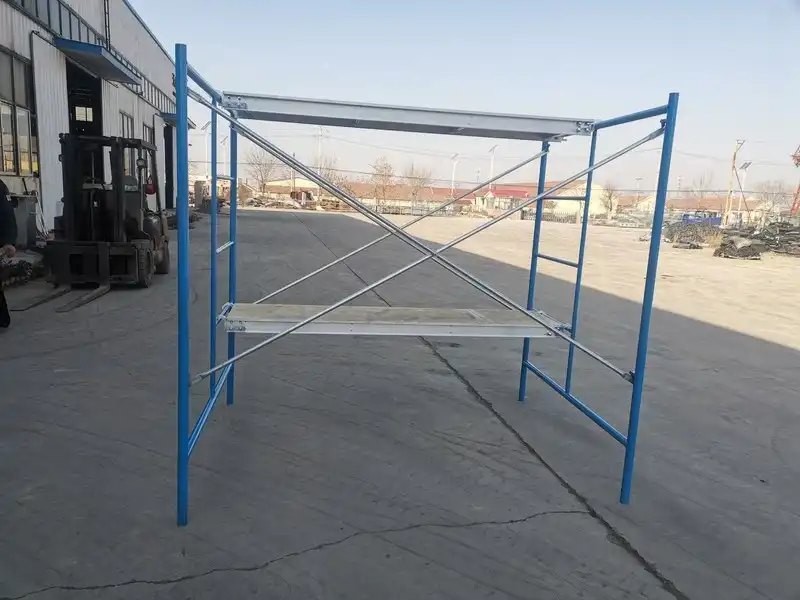
A British Standard Frame scaffolding system gives construction teams a door-type access scaffold that meets BS 1139 and EN 12811 load and dimensional requirements. Built from Q235 premium steel in a standardized 1930×914mm configuration, these frames deliver consistent node geometry and reliable load-bearing capacity across European, Middle Eastern, and Southeast Asian project sites. For procurement managers sourcing scaffold systems for municipal or EPC contracts, the compliance credentials, cross-manufacturer compatibility, and reusability of a quality BS-spec frame translate directly into lower lifecycle costs and fewer on-site delays.
Understanding British Standard Frame System and Its Specifications
After World War II, there was a push in the UK to make building more regular. This led to the creation of the BS scaffold frame system. Today, BS 1139 and the unified European standard EN 12811 control it. These standards say what the tubes should look like, how they should be joined, and what kinds of loads can be put on them. A lot of people in the Gulf, Southeast Asia, and Sub-Saharan Africa like the system because all Commonwealth countries agreed on the same rules.
Core Dimensional Parameters
The usual size is 914 mm wide and 1930 mm tall. Frame pipes are made of high-quality Q235 steel, which has a peak strength of 235 MPa or more, and their walls are 2 mm thick. An acidic site can damage the surface, but hot-dip galvanization (G30 to G90) protects it. Cold-bending and automatic welding lines that are run by computers keep the size range to within ±0.5mm.
Thread and Connection Details
. BS-spec scaffold frames use standard BS 1139 Part 1 spigot pins and sleeve couplers. The outside diameter and thread pitch of these are not the same as those on metric DIN connections. This means that field teams don't need conversion gear to connect BS diagonal braces or cross braces that came from different allowed sources.
How to Verify Compliance Before Purchase?
Procurement engineers should ask for a Declaration of Performance (DoP), batch quality inspection certificates, and an EN 12811 structural math report before they sign a buy order. It's fastest to check if a frame meets the requirements without going to the site. Just look at the dimensional plans, the weld bead consistency, and the supplier's factory inspection records.
Benefits of Using a British Standard Frame System
A british standard frame BS door-frame system can help with a number of problems that come up when stuff is bought for big building projects. When you need to order replacement parts in the middle of a project, standardized geometry makes it easy. The grade of steel and finish on the surface make it possible to use it more than once. This means that the initial cost of the unit is repaid in two to three rental rounds.
Let's make a list of the best things about this system:
- Full compliance acceptance rate. Because the 1930×914mm frame conforms directly to EN 12811 load class requirements, project engineers in European and Gulf markets accept the system without requesting additional structural calculations. This cuts pre-construction approval time by several weeks on typical municipal contracts.
- High reusability and long service life. Q235 steel combined with G30–G90 galvanization extends the practical service life beyond 25 years under standard site exposure. Rental fleet operators report significantly lower repair and replacement rates compared to lighter-gauge alternatives, which directly improves asset turnover ratios.
- Cross-manufacturer part availability. Standardized mounting centers mean that BS cross braces, base plates, and connecting rods from any compliant supplier integrate without modification. This prevents costly project delays when a specific accessory is back-ordered.
Parts from different manufacturers can be used together: Since mounting centers are standard, BS cross braces, base plates, and joining rods from any source that meets the needs can be used without any changes. This keeps the project from being held up for long periods of time when an important part is not available.
British Standard Frame System Compared to Other Standards
What does the BS frame have to do with other scaffolding standards? This helps buying teams explain to clients and suppliers why they need the specification.
BS vs. Metric (DIN/EN) Frames
ASTM E39 says that metric scaffold systems must use tubes with an outside diameter of 48.3 mm. This is the same size that most European suppliers have in stock. It doesn't matter what BS frame you look at; the outside diameter (OD) is always the same. What does change. In mixed-standard projects, this means that BS and metric parts shouldn't be switched around until they've been tested to make sure they work together.
BS vs. American (OSHA/ANSI) Frames
You can see that American scaffold frames have a bay width of 1219mm × 914mm, which is less than the BS height of 1930mm. For the most part, this means that the two ways can't be switched. Contractors who work in both the North American market and the Gulf/Commonwealth market should keep their stock separate. It is harder to learn how to work with both systems at the same time.
Choosing the Right Standard for Your Market
If you do most of your work in the UK, the Gulf Cooperation Council states, Southeast Asia, or Commonwealth Africa with a british standard frame, make sure the frame meets BS standards. This will help you get local authority approval and make it easier to clear the goods when they come. When EPC companies use only BS accessories, they keep their scaffold system in the same regulatory family and are less likely to fail to meet requirements.
Procurement Insights: How to Source British Standard Frames Efficiently?
To get good BS scaffold frames from a company in another country, you need to make sure of four things: full approval, production capacity, the ability to make changes, and the company's transport skills.
Evaluating Supplier Certifications
A reliable BS frame maker has ISO 9001 for quality management, ISO 14001 for environmental management, and ISO 45001 for health and safety at work. An EU project must have both CE approval and a signed DoP in order to be accepted. Shandong Xingrui Building Materials Co., Ltd. has all three ISO certifications and CE. The company has sent goods to more than 100 different countries and has a good track record when project owners ask for third-party plant checks.
Customization and Sample Lead Times
Being able to make something to order is useful when a project needs a frame height that isn't standard or a link feature that isn't found anywhere else. In the 79,800-square-meter Xingrui plant, there are 12 robots that weld and 6 robotic welding lines. In 7–14 days, it can make samples from ideas that have been accepted. This is how long it usually takes for an EPC project in the Gulf or Southeast Asia to go from RFQ to detailed agreement.
Logistics and Order Structure
Being able to change the terms of an order, like FOB Rizhao or CIF destination port, makes it easier to organize freight. Direct shipping routes from Rizhao port to Dubai, Singapore, and Mombasa cut down on the time it takes to get goods from manufacturers in mainland China to these places. For first-time trial orders, small shipments with 30% to 50% TT down payment are common. This lets the buying team see how good it is before committing to the whole project.
Future Trends and Industry Outlook for British Standard Frame Systems
The global scaffolding market will reach USD 11.5 billion by 2030, according to Global Market Insights (2023). Modular systems will gain ground over old tube-and-coupler methods. A british standard frame is a good choice for this change because its standard shape works well with the methods that are popular on Gulf mega-projects right now that make prefabrication easy.
Material and Coating Advances
Galvanization with G90 is becoming more common among manufacturers and is no longer seen as an update. If you live near the coast or somewhere with a lot of humidity, this will keep your metal longer. Some suppliers are also testing powder coatings that set quickly and meet the exposure levels for BS EN ISO 12944 Class C4. Structures that hold up water and at sea can use these coverings.
Harmonization with EN Standards
The language used in BS 1139 and EN 12811 is becoming more identical, which makes it easy to follow the rules in different countries. If the purchasing manager asks for EN 12811 load class W06 or W09, they will find that a well-documented BS-frame product meets both needs right away. This makes it easier to get the building authorities to agree.
Demand Drivers in Target Markets
The MEED Projects Database says that the GCC will spend about USD 180 billion on building things in 2023. Southeast Asia's housing projects and transit projects are both being bought at the same time. More and more, both areas need scaffolding systems that have been approved by the CE. This means that sellers who have put money into facilities for certification are more likely to get those contracts than those who just say they are certified.
Conclusion
When contracts call for EN 12811 and BS 1139 paperwork, a well-specified british standard frame system lowers the chance of not following the rules, lowers the total cost per release cycle, and keeps projects on schedule. The item is strong as it is made of Q235 steel, has a ±0.5mm mistake in its dimensions, and is multi-ISO approved. People in charge of buying things for projects in the Gulf or Southeast Asia should work with a manufacturer that has the right licenses and can send models quickly. This will make buying safer from the very first sale on.
FAQ
Q1: Are BS scaffold frames compatible with metric accessories from European suppliers?
A: BS and metric scaffold frames share the same 48.3mm tube outer diameter per EN 39. However, spigot and coupler geometry can differ. Always verify dimensional drawings from both suppliers before mixing components on a live site.
Q2: What certifications should I request from a BS frame manufacturer?
A: Ask for ISO 9001, ISO 14001, ISO 45001, CE certification, a signed Declaration of Performance, and batch inspection reports. For Gulf projects, an EN 12811 structural calculation report is often required by the project engineer.
Q3: What is the typical lead time from order to delivery?
A: From first inquiry to large-volume shipment, the standard cycle runs 60–120 days, including 7–14 days for sample production, 1–2 weeks for sample confirmation, and 15–30 days for main production. OEM or custom-marking projects may add 30–45 days.
Q4: Can I order a small trial batch before committing to full project volume?
A: Yes. Trial orders with small batch quantities are accepted. This gives your site team time to verify dimensional fit and weld quality before placing the full project order.
Q5: Does Q235 steel meet EN 12811 structural requirements?
A: Q235 steel has a minimum yield strength of 235 MPa, which satisfies the material grade requirements referenced in EN 12811 and BS 1139 for standard scaffold frame applications.
Request Your BS Frame Quote from GREEN FORMWORK
For Green Formwork, the business Shandong Xingrui Building Materials Co., Ltd. is in charge. Many project teams in the Gulf, Southeast Asia, and Commonwealth Africa buy approved BS-compliant door-type scaffold frames from them. These frames come with full ISO and CE paperwork. We make things just for you, give you samples, and are here to help you from the time you ask for a quote until you get your order. Send an email to sdxingruiqp@126.com to get a price for your project right away.
References
1. British Standards Institution. BS 1139: Metal Scaffolding — Specification. BSI, 2009.
2. European Committee for Standardization. EN 12811-1: Temporary Works Equipment — Scaffolds: Performance Requirements and General Design. CEN, 2003.
3. Global Market Insights. Scaffolding Market Size & Forecast Report. GMI, 2023.
4. MEED Projects. GCC Construction Projects Database: Infrastructure Spending Overview. MEED, 2023.
5. International Organization for Standardization. ISO 9001:2015 Quality Management Systems — Requirements. ISO, 2015.
6. European Committee for Standardization. EN ISO 2808: Paints and Varnishes — Determination of Film Thickness. CEN, 2019.
Learn about our latest products and discounts through SMS or email