- English
- French
- German
- Portuguese
- Spanish
- Russian
- Japanese
- Korean
- Arabic
- Greek
- German
- Turkish
- Italian
- Danish
- Romanian
- Indonesian
- Czech
- Afrikaans
- Swedish
- Polish
- Basque
- Catalan
- Esperanto
- Hindi
- Lao
- Albanian
- Amharic
- Armenian
- Azerbaijani
- Belarusian
- Bengali
- Bosnian
- Bulgarian
- Cebuano
- Chichewa
- Corsican
- Croatian
- Dutch
- Estonian
- Filipino
- Finnish
- Frisian
- Galician
- Georgian
- Gujarati
- Haitian
- Hausa
- Hawaiian
- Hebrew
- Hmong
- Hungarian
- Icelandic
- Igbo
- Javanese
- Kannada
- Kazakh
- Khmer
- Kurdish
- Kyrgyz
- Latin
- Latvian
- Lithuanian
- Luxembou..
- Macedonian
- Malagasy
- Malay
- Malayalam
- Maltese
- Maori
- Marathi
- Mongolian
- Burmese
- Nepali
- Norwegian
- Pashto
- Persian
- Punjabi
- Serbian
- Sesotho
- Sinhala
- Slovak
- Slovenian
- Somali
- Samoan
- Scots Gaelic
- Shona
- Sindhi
- Sundanese
- Swahili
- Tajik
- Tamil
- Telugu
- Thai
- Ukrainian
- Urdu
- Uzbek
- Vietnamese
- Welsh
- Xhosa
- Yiddish
- Yoruba
- Zulu
What Is a 60 Series Heavy-Duty Ringlock Support? A Buyer’s Guide
It is a modular steel shoring system made on 60 mm vertical standards. It is called a 60 series heavy-duty ringlock support. It moves thick floor slabs, heavy concrete loads, and tunnel work. Each standard has rosette disks welded to it that can hold diagonal braces and horizontal ledgers. This lets crews use wedge pins to build stable towers. A 48 mm ringlock system can't hold as much axially as the bigger tube can. We at GREEN FORMWORK make ours out of Q235 steel and welded pipes that are 60.3 mm x 3.2 mm. This guide lists the parts, the maximum load, the steps for making a choice, and the paperwork that people in the US should ask for before placing an order.
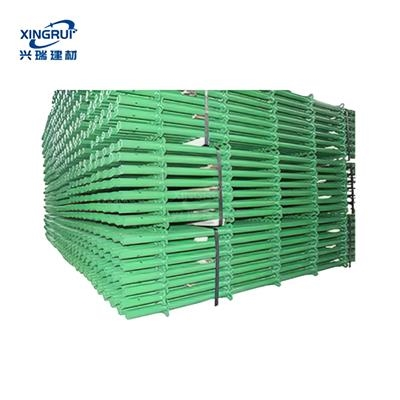
What Is a 60 Series Heavy-Duty Ringlock Support?
A Modular Shoring System for High Loads
Ringlock is made up of separate parts. Along each standard, ledgers and diagonal braces lock into rosette disks, and vertical standards hold the weight. A wedge pin is dropped into the disk, and it is seated with a light hammer strike. Our 60 series design has an eight-hole disk that locks itself in place by gravity, so one node can handle multiple connections at the same time. Base jacks are put at the bottom and U-head jacks are put at the top. The standards are then stacked and ledgers and braces are added. What the tower does is move weight from beams and formwork to the ground or a structure that supports it. That means it can be used for heavy temporary support, bridge falsework, and concrete forms.
What "60 Series" Means
Labels from different suppliers may look different. In this case, it means a standard with an outside diameter of 60.3 mm and a wall thickness of 3.2 mm. For people in the United States, 60.3 mm is equal to 2.375 inches, which is the same size as a 2-inch nominal pipe. Something else might use "60 series" to refer to a different disk or tube size. It is always best to get written confirmation of the outside diameter, wall thickness, disk details, steel grade, and jack specifications. A name does not always mean good work. Dimensions and engineering data that have been checked do. This habit also keeps you from mixing up parts that look the same but don't fit together right.
60 Series vs. 48 Series
A 48 mm tube is often used in standard ringlock systems. Because it has a bigger moment of inertia, the 60 mm tube can hold about 50–70% more vertical load than a 48 mm system, according to our product data for 60 series heavy-duty ringlock support. In tall, thin towers, a bigger tube is less likely to buckle. In practice, this could mean using fewer uprights to hold the same amount of weight, which could save time and effort when putting together a big pour. In load-bearing positions, you shouldn't mix the two sizes because the rosette and wedge sizes are the same for each tube diameter. The 60 series should be treated as its own system, with ledgers, braces, and other parts that match.
Components and Core Specifications
Main Components
There is a clear job for each part. The load is put on the standards. At set times, ledgers and diagonal braces are joined together with rosettes. Base jacks level the tower and spread the weight across the sole plates. U-head jacks hold the beams, bearers, and formwork in place at the very top. Some of the things that can be added are collars, couplers, platforms, guardrails, and toe boards. As important as the size of the tube is the quality of the weld at the rosette and the condition of the threads on each screw jack. A bad weld or a thread that is bent can make the whole tower less effective. I make sure that every part of a quote comes from the same system when I look it over.
Core Specifications of Our System
From our product data, these are the main features of our 60 series heavy-duty ringlock support:.
| Parameter | Specification |
|---|---|
| Upright | 60.3 mm × 3.2 mm welded pipe |
| Steel grade | Q235 |
| Disc | Eight-hole rosette |
| Single upright capacity | 120 kN (about 27,000 lbf) |
| Maximum step distance | 1.5 m |
| Surface treatment | Hot-dip galvanized, 65–80 microns zinc |
| Welding | Full-penetration automatic welding |
These numbers give your engineer a place to start. Final design values still depend on how the whole tower is laid out, which is what I'll talk about next.
Steel Grade and Surface Treatment
Q235 is a type of carbon structural steel from China. It has a minimum yield strength of 235 MPa at normal tube thicknesses, which is about 34 ksi. It is not enough for US engineers to just know the grade names; they should also look at the mill certificate and the stated yield strength. With 65 to 80 microns of zinc, the galvanizing is done in a hot dip. Zinc keeps the steel surface from getting wet, which is important for fleets that will be used again and again and are stored outside. The standard in the US for zinc coatings on iron and steel is ASTM A123. When you ask a supplier how they measure thickness and how many times they do it per batch, you can be sure you are getting accurate information.
Load Capacity, Installation, and Inspection
Why One Load Number Is Not Enough?
At a maximum step distance of 1.5 m, our single upright for 60 series heavy-duty ringlock support can hold 120 kN, which is about 27,000 lbf. The score is helpful, but it's not a tower rating. The real capacity changes depending on the effective buckling length, the jack extension, the ledger and brace spacing, the eccentric loading, the quality of the foundation, the wind, and the condition of the connection. It is possible for a tall tower with long jack extensions to carry less weight per leg than the same standard in a short, well-braced bay. That's why I use each headline number as a starting point. Before anything goes up on site, I ask for a design that is made just for my project.
Safety Factors and US Rules
Ultimate load is where something breaks. It is well below the design load and the safe working load. The space between them is the safety factor. 29 CFR 1926.451, OSHA's scaffold rule, says that supported scaffolds must be able to hold at least four times their maximum intended load and their own weight. 29 CFR 1926.703 says that for cast-in-place concrete, the formwork and shoring must be able to support all expected vertical and lateral loads without failing. Drawings of these parts must be available on the job site. ACI 347R-14 tells you how to design formwork. Check with your engineer of record to make sure you know which rule applies based on whether the structure is scaffolding or falsework.
Installation and Inspection Basics
Pick up where the drawings left off. Make sure the ground is firm, then set the base jacks and sole plates. Finally, stand the uprights up. The last step is to add U-head jacks and bearers and finish with collars, ledgers, and diagonal braces. At each step, check the level, span, wedge engagement, jack extension, and plumb. Missing braces, uneven foundations, overloading, and mixing parts from different systems are all mistakes that happen a lot. As per OSHA 1926.451(f)(3), a qualified person must check the scaffolding before every work shift and after any event that might affect its stability. I also think you should get a new inspection after storms, impacts, moving, or making changes.
Applications and How to Select the Right System
Bridges and Box Girder Support
Heavy box girder formwork puts a lot of weight on the shoring in the form of wet concrete. In our product data, one of the main uses listed is building large-span bridges, which include spans longer than 30 meters. Bridge sites have rough ground, wind, vibrations, and limited access. The 60 mm standard makes tall towers stiffer, and adjustable base jacks can handle different types of ground. People who own rental fleets and work on bridges also care about reuse, since the amount of falsework changes from job to job. Hot-dip galvanizing makes the steel last longer between jobs. Ledger lengths should match the layout of the bays shown on the drawings. This is where custom sizing comes in handy. Still, each bridge needs a different shoring plan from a qualified engineer.
Heavy Floor Slabs, Tunnels, and Industrial Structures
It's important to level thick transfer slabs and long-span floors correctly and make sure that the load is spread evenly across beams and formwork. Steel is at risk when working in tunnels and subways because of the humidity, so the quality of the coating is important. For power plants and hangars, heavy roofs need high-clearance support. Our data shows that vertical heights above 30 meters are a good use with the right design. On any of these jobs, keep access scaffolding and load-bearing shoring separate. This is because each job has different needs for loading and checking. Before you finish the layout, make sure it works with steel bearers, U-head jacks, and wood beams.
Selecting Against Project Conditions
First, think about the load type, support height, bay layout, ground conditions, and how often the material will be used again. Then look at the verified working load, stability, adjustment range, assembly speed, protection against corrosion, spare parts, and paperwork. For smaller jobs, a 48 series or cuplock system may work better, and dedicated shoring towers are best for certain layouts. For loads and heights that are too high, the 60 series is the right choice. If your fleet already has ringlock inventory, make sure it works with what you already have. We offer custom sizing, which means that we can match the lengths and shapes to your drawings. The system can also be used on different projects.
Quality Verification and Procurement Checklist
Materials, Welding, and Traceability
When you buy heavy-duty parts for 60 series heavy-duty ringlock support, thin-wall tube is a known risk. If you use calipers or an ultrasonic gage to measure the wall thickness of sample pieces, then compare the number to the 3.2 mm specification. If you want to make sure that the chemistry and strength match the paperwork, ask any supplier for mill certificates with heat numbers. At GREEN FORMWORK, we keep track of the raw materials and finished goods that come in at every stage of the production process. We use 12 welding robots and 6 automatic welding lines for our welding. Rosette joints are always the same from piece to piece when automated welding is used. Check the appearance of the weld, the condition of the threads, and the tolerances on each sample before you place a large order.
Certifications and Supplier Documents
GREEN FORMWORK is made by Shandong Xingrui Building Materials Co., Ltd., which is certified by ISO 9001, ISO 14001, and ISO 45001 management systems. These include management of quality, the environment, and health and safety at work. They are not the same as testing the product, so make sure you give your inspector the drawings, material certificates, test reports, load tables, welding records, and galvanizing details they need. We've been in business since 2007 in Rizhao, Shandong, and now have more than 40,000 square meters of standard workshops that employ 920 people, including 180 technicians. If you prepare your document file ahead of time, there won't be any delays at the receiving yard.
Preparing a Clear Request for Quotation
With a full RFQ, all suppliers can quote on the same scope, which keeps comparisons fair. Include the location, use, support height, bay size, number of items, design load, tube size, steel grade, surface treatment, jack range, packaging, and delivery date. Add to the unit cost freight, duties, inspection, spare parts, and the number of times the item is expected to be used before comparing prices. Check batch consistency, partial shipments, and container loading plans for large orders. Customization changes testing and lead time, so let them know right away. We can make things to order based on samples and drawings sent by customers, and we ship to more than 100 countries and regions.
Conclusion
It is a modular shoring system made on a 60 mm tube for high-load concrete work. The 60 series heavy-duty ringlock support is part of this system. Different suppliers use different series names, so it's important to get written confirmation of the disc's size, wall thickness, steel grade, and other details. When making the GREEN FORMWORK version, they use 60.3×3.2 mm Q235 pipe with an eight-hole rosette and a 120 kN single upright capacity. However, the tower capacity is not defined by a single number. The result can be different depending on the length of the buckle, the extension of the jack, the bracing, the ground, and the wind. US law requires engineered designs, drawings, and regular inspections. For bridges, heavy slabs, and tunnel support, the bigger tube works best. Verified products are set apart from claims that aren't true by mill certificates, galvanizing records, and test reports.
FAQ
Does "60 series" mean the same thing at every supplier?
No, different suppliers use the label in different ways, so get written confirmation of the disc's outside diameter, wall thickness, and other details.
Can I use 48 series ledgers with 60 series standards?
Most of the time, no for positions that carry weight. The rosette and wedge sizes are the same for all tube sizes.
What load can one upright carry?
At a maximum step distance of 1.5 m, our single upright can hold 120 kN. Tower capacity needs to be designed for each project.
Which documents should I request?
Ask for test reports, load tables, welding records, drawings, and information on galvanizing.
Request a 60 Series Heavy-Duty Ringlock Support Quotation
Are you planning to build a bridge, support a heavy slab, or dig a tunnel? Send GREEN FORMWORK your application, layout, support height, estimated load, quantities, and where the goods need to be delivered. As a manufacturer of 60 series heavy-duty ringlock supports, we can make custom sizes, send samples, and give technical advice. We can also make a list of matching parts and send you a quote. To start your question, email sdxingruiqp@126.com.
References
1. Occupational Safety and Health Administration, 29 CFR 1926 Subpart L: Scaffolds, 1996
2. ACI Committee 347, Guide to Formwork for Concrete (ACI 347R-14), 2014
3. ASTM International, ASTM A123/A123M: Standard Specification for Zinc (Hot-Dip Galvanized) Coatings on Iron and Steel Products, 2017
4. American Society of Safety Professionals, ANSI/ASSP A10.8: Scaffolding Safety Requirements, 2019
5. International Organization for Standardization, ISO 9001: Quality Management Systems — Requirements, 2015
6. International Organization for Standardization, ISO 45001: Occupational Health and Safety Management Systems — Requirements, 2018
Learn about our latest products and discounts through SMS or email