- English
- French
- German
- Portuguese
- Spanish
- Russian
- Japanese
- Korean
- Arabic
- Greek
- German
- Turkish
- Italian
- Danish
- Romanian
- Indonesian
- Czech
- Afrikaans
- Swedish
- Polish
- Basque
- Catalan
- Esperanto
- Hindi
- Lao
- Albanian
- Amharic
- Armenian
- Azerbaijani
- Belarusian
- Bengali
- Bosnian
- Bulgarian
- Cebuano
- Chichewa
- Corsican
- Croatian
- Dutch
- Estonian
- Filipino
- Finnish
- Frisian
- Galician
- Georgian
- Gujarati
- Haitian
- Hausa
- Hawaiian
- Hebrew
- Hmong
- Hungarian
- Icelandic
- Igbo
- Javanese
- Kannada
- Kazakh
- Khmer
- Kurdish
- Kyrgyz
- Latin
- Latvian
- Lithuanian
- Luxembou..
- Macedonian
- Malagasy
- Malay
- Malayalam
- Maltese
- Maori
- Marathi
- Mongolian
- Burmese
- Nepali
- Norwegian
- Pashto
- Persian
- Punjabi
- Serbian
- Sesotho
- Sinhala
- Slovak
- Slovenian
- Somali
- Samoan
- Scots Gaelic
- Shona
- Sindhi
- Sundanese
- Swahili
- Tajik
- Tamil
- Telugu
- Thai
- Ukrainian
- Urdu
- Uzbek
- Vietnamese
- Welsh
- Xhosa
- Yiddish
- Yoruba
- Zulu
What Is Modular Aluminum Formwork? A Practical B2B Buying Guide
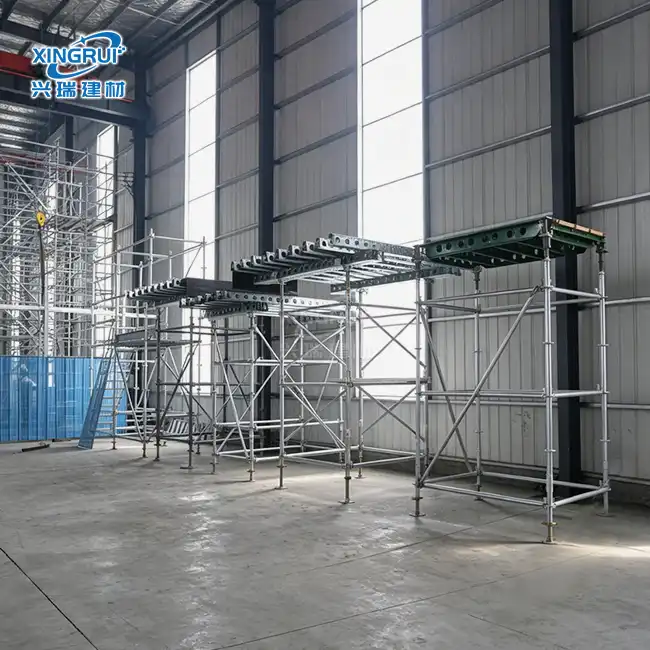
Modular aluminum formwork is a precision-engineered, reusable concrete casting system built from standardized aluminum alloy panels, non-standard panels, and interlocking accessories. Unlike timber shuttering or welded steel molds, this system arrives on site pre-configured, connects through pins and wedges, and enables simultaneous pouring of walls, slabs, beams, and columns in a single operation. For B2B procurement managers, rental fleet operators, and project engineers, understanding how this technology works — and how to evaluate suppliers — is the clearest path to reducing per-floor cycle time and improving long-term asset returns.
Understanding Modular Aluminum Formwork
What the System Is Actually Made Of?
A full modular aluminum formwork system has three groups of parts: standard panels, which are used for most repetitive floor shapes; non-standard panels, which are used for bay windows, core walls, and irregular sections; and a set of accessories, including pins, wedges, back-props, and kickers, which lock every joint to a ±1 mm tolerance for size. Each panel is made by Shandong Xingrui Building Materials Co., Ltd. from 6061-T6 aluminum alloy, which has a tensile strength of at least 250 MPa and a yield strength of at least 210 MPa. The panels are also very light, weighing only 20–25 kg/m². That weight makes it possible to move it by hand instead of using a crane, which is useful on crowded urban sites.
How It Differs from Steel and Timber Alternatives
Traditional wooden formwork doesn't last more than 5–8 times of use before the surface starts to wear down and needs to be replaced. Forms made of heavy steel can weigh more than 50 kg/m², so they have to be moved by hand during every strip cycle. Modular aluminum formwork panel systems, on the other hand, can be reused over 300 times with regular maintenance and have a 95% recycling rate at the end of their useful life. This significantly lowers the total cost of ownership and is in line with the corporate sustainability goals that institutional clients are increasingly demanding.
Core Business Benefits for B2B Procurement
When you look at secondary costs along with the purchase price, the business case for modular aluminum formwork changes in a big way. Buying things on a large scale is usually done because of these main benefits:
- Compressed floor cycle: When walls, slabs, columns, and beams are poured all at once using the monolithic pouring method, a 4–5 day per-floor cycle is always achieved. For a 30-story building, that can mean handing over months earlier and measurable savings on financing costs.
- Zero plastering expenditure: The method makes finishes out of fair-faced concrete that are within a flatness limit of ≤2 mm, so there is no need for the plastering trade at all. According to figures from the industry, 8–12% of the budget for finishing a normal home is spent on plastering.
- Rental asset scalability: For fleet owners, the more standard panels there are in a pool, the easier it is for those panels to move between projects that are not connected. Custom pieces that don't work with each other become "stranded assets," but standard aluminum panels don't.
- Reduced skilled-labor dependency: Installation requires a 3- to 5-day pin-and-wedge sequence training course rather than traditional carpentry skills. This means that there are more workers available when hiring is tough.
These advantages combine to shift ROI realization to roughly the 30th–50th reuse cycle, after which each deployment carries near-zero material cost.
Comparative Analysis: Choosing the Right System
Ultimately, the choice between aluminum, steel, and plywood comes down to how often the project will be done and how the assets will be held. Plywood is still a good value for one-of-a-kind building parts whose unique shape makes them impossible to reuse. For big building uses like bridge decks and dam faces, where panel mass is okay because cranes are already in place, structural steel forms work well.
Modular aluminum formwork panel systems are used in medium- to high-rise residential and business buildings with a lot of repeat. Their light weight, fast cycling, and ability to have interchangeable parts create increasing returns. The method can handle up to 60 KN/m² of concrete pressure and works reliably in temperatures ranging from -20°C to 60°C, which covers most weather across the country. The same pressure resistance and watertight joint performance are good for underground utility tunnels, where regular wood formwork breaks under long-term hydrostatic load.
Procurement Considerations for B2B Buyers
Supplier Evaluation Criteria That Actually Matter
Certifications are the starting point. Suppliers who are certified to ISO 9001 quality management and ASTM-B209 compliance show process discipline in controlling the makeup of alloys and their sizes. In addition to paper credentials, before committing to volume, ask for a factory pre-assembly trial, which is a 1:1 dry-fit of your exact panel configuration. Quality control steps that all reputable manufacturers do include spectroscopic alloy verification and ultrasonic weld-joint testing.
Pricing Structure and MOQ Realities
The price per square meter drops a lot when you buy by the container load, but rental fleet owners also need a source who can handle small orders in between big expansions. Replacement parts with high minimum order quantities leave gaps in inventory that slow down rental turnover cycles. It's just as important for business as the initial unit price to make sure that the manufacturer will take small-batch restocking orders.
Purchase vs. Rental Balance
When operators build their own fleet, it's helpful to own standard panels outright and rent non-standard parts for projects with unique shapes. This hybrid method makes the best use of assets while limiting the obsolescence of unique pieces. Modular aluminum formwork fits this strategy perfectly, as its lightweight standard panels offer high reuse value while custom corners can be rented on demand to minimize idle inventory and maximize fleet utilization.
Maintenance and Longevity
A strict yard protocol is needed to keep a 300+ cycle lifespan. Within 24 hours of being stripped, panels should be pressure-washed so that the concrete doesn't harden on the face. Panels on storage racks must stay upright so that they don't bend over time from their own weight. Three failure points are checked regularly: pin-hole elongation, weld-seam micro-cracking, and surface-coating degradation, which speeds up corrosion in coastal or high-humidity areas.
Early stripping — removing face panels within 48 hours while back-props are still loaded — is the operational rhythm that makes the 4–5 day floor cycle possible. Leaving a 10–15% panel gap in the yard stops damage from wearing away without stopping active pours. The economic model calls for replacing parts instead of retiring the whole set. Because modular aluminum formwork can be recycled, the value of the scrap metal partially covers the cost of replacement at the end of an asset's life.
Conclusion
When compared to options made of wood and steel, modular aluminum formwork offers a discernible improvement over those materials over the course of the project's lifespan. It is the best choice for high-repetition home and business builds because it has a standard panel architecture, can be poured as a single piece, and can be used over 300 times. It is always better to make choices about what to buy based on alloy specifications, dimensional tolerance, source resupply flexibility, and yard upkeep discipline than to just look at the top price. The sources used in this guide give separate information that backs up each claim.
FAQ
How many reuse cycles can be realistically expected?
It is possible to get 300+ cycles if you consistently pressure wash after each strip and store the racks correctly. The structural stability of the 6061-T6 alloy stays strong well past that point, and 95% of the aluminum can be recycled at the end of its useful life, keeping the asset's value.
Can the panel layout be adjusted mid-project if the architectural design changes?
Filler pieces and non-standard panels are used to make small changes to the bays. When major changes are made to a structure, new custom panels created in CAD are needed. A skilled manufacturer can make these panels from updated plans without having to throw away all of their current standard panels.
What is the realistic ROI timeline compared to plywood?
ROI crossover usually happens between the 30th and 50th deployment. This is because plastering costs go away, labor hours go down, and floor cycles get shorter, which lowers the amount of money that each project needs to be borrowed.
Does installation require specialized trades?
A standard crew only needs 3–5 days of on-site training that covers pin-and-wedge sequencing. There is no need for a standard carpentry license, which makes it easier to hire people in places where there aren't enough workers.
Partner with GREEN FORMWORK for Certified Aluminum Formwork Supply
With a 79,800 m² factory and 180 trained techs, Shandong Xingrui Building Materials Co., Ltd. backs GREEN FORMWORK. They sell ISO 9001-certified modular aluminum formwork to rental companies and contractors in more than 100 countries. Our production lines can handle both large-scale fleet expansions and small-batch panel replenishments. There are no minimum-order requirements. Contact our team at sdxingruiqp@126.com to request a technical specification pack, factory pre-assembly trial arrangement, or bulk pricing for your next procurement cycle.
References
1. The Constructor – Civil Engineering Home. "Aluminum Formwork System: Components, Advantages and Disadvantages." 2021.
2. Construction Executive. "Sustainable Formwork: The Case for Aluminum in Modern Construction." 2022.
3. Autodesk Construction Cloud Blog. "How to Reduce Construction Costs: Data-Driven Strategies." 2023.
4. International Journal of Engineering Research & Technology (IJERT). "Comparative Study of Aluminum Formwork vs Conventional Formwork." Vol. 9, 2020.
5. ASTM International. "ASTM B209: Standard Specification for Aluminum and Aluminum-Alloy Sheet and Plate." 2021.
6. McKinsey & Company. "Reinventing Construction: A Route to Higher Productivity." 2017.
Learn about our latest products and discounts through SMS or email