- English
- French
- German
- Portuguese
- Spanish
- Russian
- Japanese
- Korean
- Arabic
- Greek
- German
- Turkish
- Italian
- Danish
- Romanian
- Indonesian
- Czech
- Afrikaans
- Swedish
- Polish
- Basque
- Catalan
- Esperanto
- Hindi
- Lao
- Albanian
- Amharic
- Armenian
- Azerbaijani
- Belarusian
- Bengali
- Bosnian
- Bulgarian
- Cebuano
- Chichewa
- Corsican
- Croatian
- Dutch
- Estonian
- Filipino
- Finnish
- Frisian
- Galician
- Georgian
- Gujarati
- Haitian
- Hausa
- Hawaiian
- Hebrew
- Hmong
- Hungarian
- Icelandic
- Igbo
- Javanese
- Kannada
- Kazakh
- Khmer
- Kurdish
- Kyrgyz
- Latin
- Latvian
- Lithuanian
- Luxembou..
- Macedonian
- Malagasy
- Malay
- Malayalam
- Maltese
- Maori
- Marathi
- Mongolian
- Burmese
- Nepali
- Norwegian
- Pashto
- Persian
- Punjabi
- Serbian
- Sesotho
- Sinhala
- Slovak
- Slovenian
- Somali
- Samoan
- Scots Gaelic
- Shona
- Sindhi
- Sundanese
- Swahili
- Tajik
- Tamil
- Telugu
- Thai
- Ukrainian
- Urdu
- Uzbek
- Vietnamese
- Welsh
- Xhosa
- Yiddish
- Yoruba
- Zulu
What Is Multi-Layer Multi-Directional Crab Scaffolding Used For?
Around big, tall, or oddly shaped structures, multi-layer multi-directional crab scaffolding offers secure working platforms and temporary support at different heights. Builders use it for big business complexes, very tall factories, industrial plants, bridge or dome projects, and other places where rigid frames can't bend to fit the shape of the building. Its rosette nodes can hold ledgers and braces at a variety of angles, so workers can change how each layer fits the structure. People in the United States who work as contractors, rent equipment, or buy things should read this guide. It talks about what the system is, where it works, how it moves things, and how to buy it safely.
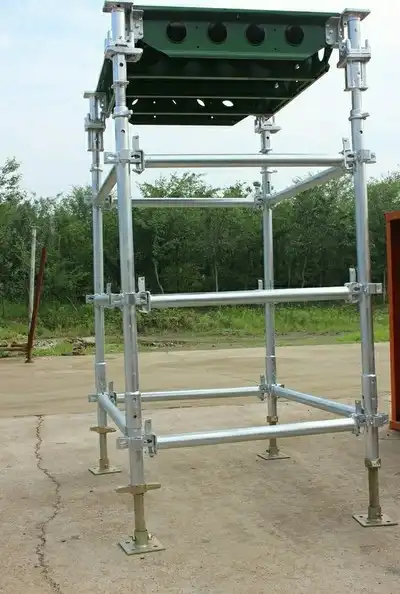
What Is Multi-Layer Multi-Directional Crab Scaffolding?
Core Components and Node Design
Vertical standards, horizontal ledgers, diagonal braces, platforms, adjustable bases, and connection fittings are the parts that make up a multi-directional system. A "multi-layer" frame has more than one working level stacked on top of each other. The disc-shaped rosette node is what gives it its "multi-directional" name. It can accept ledgers and braces at 45-degree intervals across a full 360-degree range. Each joint is held together by our self-locking wedge system instead of bolts, so nothing comes loose while it's being used. It takes a lot of skill and time to put together traditional tube-and-clamp scaffolding. This design cuts down on the steps needed to put it together and makes sure that the layout stays the same from layer to layer.
Material and Technical Specifications
A better crab-style frame is made by Shandong Xingrui out of Q235 premium steel. Here is a list of the main parameters we publish in Table 1.
| Parameter | Specification |
|---|---|
| Material | Q235 premium steel |
| Vertical standard | 48.3 mm tube, 3.25 mm wall |
| Node spacing | 500 mm, ±1 mm accuracy |
| Maximum vertical height | 24 m, multi-layer continuous |
| Horizontal layout | Multi-span continuous arrangement |
| Reinforcement | Vertical diagonal and horizontal bars |
| Surface treatment | Hot-dip galvanization, 60–80 μm |
| Certifications | ISO 9001, ISO 14001, CE |
In tall assemblies, accurate node spacing is important because small mistakes add up over many layers. The steel is protected by the galvanized coating, and under normal conditions, we expect it to last longer than 15 years. A general claim about heavy loads is not the same as a project calculation, so make sure you get the load table that fits your bay's exact size and height.
Why the Term "Crab" Needs Clarification
For buyers, "crab scaffolding" can mean different things in different places, including multi-layer multi-directional crab scaffolding. The name can refer to a node or locking arrangement that is unique to a certain manufacturer; it is not a standard. Parts from different manufacturers rarely work together safely because they have different sizes, shapes, and load ratings. The wedge's thickness and the rosette's diameter must be exactly the same. We suggest getting all of the parts from the same company and writing down the terms before you place your order. With approved drawings and a bill of materials, you don't have to guess, and your certified load ratings are safe.
Main Applications of Multi-Layer Multi-Directional Crab Scaffolding
Large Commercial Complexes
Tall atriums, podiums and curved or walked facades are often seen in retail malls, hotels and mixed-use skyscrapers. By adopting a multi-layer, multi-directional crab scaffolding arrangement, crews may erect platforms at different elevations around those shapes without having to press the structure to the frame. The multi span horizontal layout spans huge floor plates and the enhanced crab type frame makes efficient use of space allowing plenty of area for sells to move about. Loaded platforms are stable as the stress is uniformly distributed among the nodes. For project managers, a regular assembly is a pattern that may be repeated again and over. That helps speed up inspections and training new crews.”
Ultra-High-Rise Factories and Industrial Plants
On heavy industry projects, straight scaffold lines are impeded by massive steel towers, pipe runs and other equipment. When joined together in an ongoing process multi-layer form our system is 24 m long. Lateral stresses are resisted by diagonal and horizontal bars. Ledgers and braces may be joined at various angles to work around pipelines and machinery in oil refineries, power plants and large enterprises. The steel is hot-dip galvanized to protect it from corrosion in the severe industrial air. Wind, height, and tie patterns all affect the load on the scaffold and any odd or tall arrangements must be examined by a skilled engineer.
Bridges, Domes, and Irregular Structures
People may meet at strange angles in bridges and stadium tops and domes, which is frequently what infrastructure teams are interested in. There are Rosette nodes at 45-degree intervals and crews may add bracing on curved piers or sloping surfaces. The system can also manage temporary access and various form-related activities. But it doesn't always replace heavy-duty shoring. Pouring concrete and creating curving decks put a lot of pressure on a scaffold thus I believe we should share blueprints with our professionals immediately soon. Before production they check the node topology and loads and we design the system to your specifications.
How the System Works and Stays Safe
How Loads Travel to the Ground
The weight of the workers, tools, and materials goes into the platforms and up through the transoms and ledgers to the vertical standards. The load is sent from the standards to fixed base jacks and sole boards, which spread it out on the ground. When you put together diagonal bars going up and down and bars going horizontally, you get triangles that resist side forces. The crab-style frame also spreads stress evenly across the nodes. Wind exposure, base reactions, and tie demands all go up as height and working level go up. You can use adjustable bases on uneven ground, but they don't take the place of a foundation check. Check the soil's ability to hold weight before putting it up.
Safety Controls Under OSHA Rules
The standard to feed U.S. projects is OSHA’s scaffold regulation 29 CFR 1926.451. Each piece of scaffolding is tested to bear at least forty times its own weight. If a platform is above 10 feet above a lower level it requires fall protection (i.e. guardrails and safe access). A supported structure with a height to base width ratio larger than 4:1 must be guyed, tied or braced to prevent overturning. And even with diagonal support and wedge locked joints in our multi-layer multi-directional crab scaffolding system, the person in control is still the one who is competent to make judgments concerning ties, platforms and access. Request load tables & drawings tailored to your site layout & setup.
Inspection and Maintenance
Before each shift , and if anything happens that might compromise the structure , the scaffold has to be examined by someone who understands what they are doing . I believe you should mark each area, erect load restrictions and maintain a record in writing. Look for twisted members, broken platforms, corrosion, missing wedges, unauthorized alterations. Recheck after severe wind, heavy rain or collision. The galvanized coating prevents the metal via rusting and because it can be employed again and over you can only replace damaged bits instead of the full set. Once the parts are disassembled they should be cleaned and sorted by kind so that the following project may start with parts previously examined.
Crab Scaffolding Compared With Other Systems
Compared With Ringlock and Cuplock
Since both Ringlock and Cuplock are well-known modular systems, the comparison should be based on how well they work technically, not on their names. The differences in real life are shown in Table 2.
| System | Connection | Best fit |
|---|---|---|
| Crab-style (rosette) | Rosette nodes at 45° steps, wedge lock | Tall, irregular, or industrial structures |
| Ringlock | Rosette with wedge pin | Modular multi-directional work |
| Cuplock | Cup node, ledgers at 90° | Repetitive, regular layouts |
| Frame | Prefabricated frames | Simple, straight facades |
Rosette-style connections are a lot like ringlock, so people who know how to use ringlock will understand how they work. Rosettes give you more freedom when working at an angle, while cuplock works well for layouts that are repeated. Do not mix parts from different brands unless the wedge and rosette sizes are the same and the load rating is confirmed by the supplier.
Compared With Frame Scaffolding
Straight walls cost less and are easier to build up using frame scaffolding. Frames' predetermined sizes make projections, curved profiles, and equipment difficult to work around. One set of multidirectional scaffolding may be utilized for numerous tasks since you can adjust the bay length and angle. You need blueprints, a material list, and skilled personnel, so prepare beforehand. For repeated facades, frame scaffolding is optimal, while for geometry, height, or industrial impediments, multi-directional is best. We manufacture frame scaffolding, so any option is excellent.
Reusability and Total Cost of Ownership
Tonnage pricing doesn't reveal the complete picture. The true cost includes labor, shipment, storage, repairs, and replacements. Because we make reusable parts of multi-layer multi-directional crab scaffolding to order, node distances are consistent across projects. The 60-80 μm galvanized coating ensures steel safety even after repeated usage. Our data shows that the hammer-locked wedge method sets up 40–60% faster than traditional scaffolding. It requires less hours of effort. Contractors and rental firms profit from speedier teams and interchangeable components. Get a pricing comparison that includes your labor rates before deciding.
How to Select and Buy for Your Project
Define Your Project Requirements
Start by writing down the numbers: the working height, the number of layers, the bay size, the platform width, the expected loads, the ground conditions, and the exposure to weather. Then choose what you need: a full system, spare parts, rental stock, or an OEM supply. If you give them a clear brief, they can come up with a layout that works instead of giving you a generic quote. You should send drawings or samples if you already have them. Shandong Xingrui can do custom work based on customer samples and drawings, so the production can be guided by the details of your node.
Request the Right Documents and Samples
Ask each supplier for certificates, load tables, assembly instructions, technical drawings, and a list of all the materials and coatings that will be used. Our factory is certified by ISO 9001 and ISO 14001, and our products are certified by CE. We keep track of finished goods and raw materials at every stage of production, which helps with traceability. We also give you samples with technical support so that your engineer can check the finish, node fit, and wedge action before you place an order for the whole thing. Before you sign, make sure you understand any extra instructions your client gives you, like a local engineering review.
Plan Delivery and Site Setup
Shandong Xingrui lies in Rizhao, which has an airport, seaport, and high-speed rail hub for export logistics. We ship to over 100 countries. Before ordering, request written confirmation of packaging, container loading, pre-shipment inspection, and delivery dates. Be careful to survey the ground, develop a method statement, and instruct the personnel on the structure's assembly sequence. Our 12 welding robots, 6 automated welding lines, and 4 cold roll forming sets handle large orders. Please inquire about our capabilities during your peak season.
Conclusion
Multi-layer multi-directional directional crab scaffolding enables workers to access different levels of works and temporarily promote tall, wide or awkwardly shaped structures. The effects of wedge locks, curved and horizontal horizontal bracing, 45 degrees rosette nodes and Q235 steel thermal dipping galvanization process were shown in the article. It works for big business, for towering industries, for infrastructure.
Safety is a function of the installation: Foundations, connections, guardrails, inspections, OSHA guidelines. Multi-layer multi-directional crab scaffolding is more suited to complex shapes than to ringlock, cuplock and frame scaffolding. But for simple façade frame methods may be used. Buyers need to define project data, and study drawings, load tables, certificates and samples, and assess service life cost.
FAQ
What is multi-layer multi-directional crab scaffolding used for?
It gives people access at different levels and temporary support around big business complexes, ultra-high-rise factories, industrial plants, and strange structures. A project-specific design makes sure that it works.
How tall can the system go?
Our system can handle continuous multi-layer assembly up to 24 m tall and multiple spans laid out horizontally. Engineers need to look over layouts that are taller or heavier.
Can I mix it with other brands?
We tell you not to do it. Different manufacturers use different wedge thicknesses and rosette diameters, so parts made by a single manufacturer keep their certified load ratings.
Do you provide samples?
Yes. Our samples come with technical support, so your engineer can make sure they fit before you place an order for the whole thing.
Request a Multi-Layer Multi-Directional Crab Scaffolding Quote
Looking for a multi-layer multi-directional crab scaffolding manufacturer who can work from your drawings? Thanks to Shandong Xingrui, GREEN FORMWORK can offer Q235 steel systems, ISO 9001 certification, and samples with technical support. Send us your height, loads, quantity, and destination at sdxingruiqp@126.com, and our team will make a quote that fits your needs. For more information about the product, go to sdxingrui.com.
References
1. Occupational Safety and Health Administration, Scaffold Use in the Construction Industry (OSHA 3150), 2002
2. Occupational Safety and Health Administration, Safety and Health Regulations for Construction, Subpart L – Scaffolds (29 CFR 1926.451), 1996
3. American Society of Safety Professionals, ANSI/ASSP A10.8 Scaffolding Safety Requirements, 2019
4. European Committee for Standardization, EN 12811-1 Temporary Works Equipment – Scaffolds, 2003
5. European Committee for Standardization, EN 12810-1 Façade Scaffolds Made of Prefabricated Components, 2003
6. International Organization for Standardization, ISO 9001 Quality Management Systems – Requirements, 2015
Learn about our latest products and discounts through SMS or email