- English
- French
- German
- Portuguese
- Spanish
- Russian
- Japanese
- Korean
- Arabic
- Greek
- German
- Turkish
- Italian
- Danish
- Romanian
- Indonesian
- Czech
- Afrikaans
- Swedish
- Polish
- Basque
- Catalan
- Esperanto
- Hindi
- Lao
- Albanian
- Amharic
- Armenian
- Azerbaijani
- Belarusian
- Bengali
- Bosnian
- Bulgarian
- Cebuano
- Chichewa
- Corsican
- Croatian
- Dutch
- Estonian
- Filipino
- Finnish
- Frisian
- Galician
- Georgian
- Gujarati
- Haitian
- Hausa
- Hawaiian
- Hebrew
- Hmong
- Hungarian
- Icelandic
- Igbo
- Javanese
- Kannada
- Kazakh
- Khmer
- Kurdish
- Kyrgyz
- Latin
- Latvian
- Lithuanian
- Luxembou..
- Macedonian
- Malagasy
- Malay
- Malayalam
- Maltese
- Maori
- Marathi
- Mongolian
- Burmese
- Nepali
- Norwegian
- Pashto
- Persian
- Punjabi
- Serbian
- Sesotho
- Sinhala
- Slovak
- Slovenian
- Somali
- Samoan
- Scots Gaelic
- Shona
- Sindhi
- Sundanese
- Swahili
- Tajik
- Tamil
- Telugu
- Thai
- Ukrainian
- Urdu
- Uzbek
- Vietnamese
- Welsh
- Xhosa
- Yiddish
- Yoruba
- Zulu
What is steel formwork
Steel formwork construction represents a transformative approach to concrete casting that leverages high-strength steel panels and frames to shape fresh concrete until it reaches design strength. This reusable molding system is engineered from robust carbon steel materials, delivering precise dimensional control and structural integrity across diverse building applications.
Unlike disposable timber alternatives, steel formwork offers exceptional resistance to deformation under hydrostatic pressure and maintains consistent surface quality throughout multiple project cycles. For construction professionals managing large-scale infrastructure or high-rise developments, understanding the technical capabilities and economic advantages of steel formwork systems is essential to achieving both operational efficiency and long-term cost savings.
Understanding Steel Formwork and Its Construction Process
Defining Steel Formwork Systems
Steel formwork is made up of modular pieces made from high-quality carbon steel, usually Q235 or a similar grade, along with connecting tools and reinforcing ribs. Every panel is carefully made to keep flatness tolerances within ±2mm. This makes sure that the concrete surfaces are all the same, which cuts down on finishing work.
The system has tie rods, clamps, and adjustable props that hold panels in place while concrete is poured. At GREEN FORMWORK, our systems have 2.5 mm face plates and 3 mm stiffening ribs, which is the best mix between weight and structural performance. This arrangement can handle concrete pressures of up to 60 kPa while still being easy for trained crews to move by hand.
Key Stages in Steel Formwork Construction
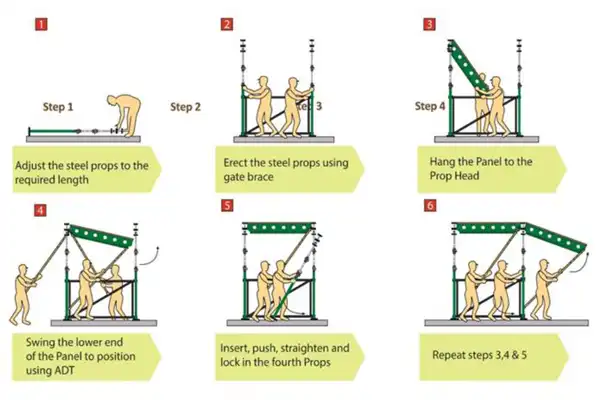
The first step in getting a site ready for panels is to check the foundation and do alignment surveys to set up reference lines. The assembly teams put up the vertical supports based on the engineering plans. They then connect the horizontal walers and corner braces to make the framework rigid. Installing panels is done in a planned way, starting at ends and working your way along straight lines.
Before attaching ties that keep the wall width at the right level, workers put release agents on the surfaces of the panels. Continuous monitoring during the pouring of concrete makes sure that the mixture fills evenly and there are no gaps or separations. The curing process depends on the temperature and humidity of the area, but for vertical parts, it usually takes 18 to 24 hours before the first stripping. The last steps of disassembly are done backward, starting with cleaning the panels right away to protect the coatings and get the units ready for re-use.
Design Principles for Optimal Performance
To figure out the right panel width and support space, load-bearing calculations take into account the density of the concrete, the rate at which it is poured, and the effects of vibration. Modular dimensions make it easy to change the layout quickly, even if the wall height or layout geometry changes. Wedge pins or cam locks in connection systems make it possible to put things together without using any tools. This cuts down on the time and skill needed to do the job.
Formwork should be thought of as a temporary structure that can be affected by wind loads and construction traffic. This means that it needs strong bracing and enough factor-of-safety margins. At GREEN FORMWORK, our engineering team gives expert advice to make sure that system specs are met by project needs while also following local safety and building codes.
Advantages of Steel Formwork Over Traditional Formwork Solutions
Modern building requires materials that consistently deliver high quality while keeping costs low over long project timelines. These needs are met by steel formwork systems, which have better performance than other options thanks to their designed design features and the way the steel itself is made.
Comparative Material Analysis
Timber formwork is still commonly used for small-scale home projects, but it has big problems with staying the same size and being able to be used again. Wood soaks up water from new concrete, which makes it swell and creates surface flaws that need a lot of work to fix. Most timber forms can only be used 5 to 10 times before they break down and need to be replaced, which creates large amounts of waste.
While aluminum systems are lighter than steel ones, they need more support for tall walls or complicated shapes because they are not as stiff. Plastic formwork is good for specific uses like artistic panels but can't hold the weight of solid concrete elements that are more than 200 mm thick.
Steel formwork is better than these options because it has better strength-to-weight ratios, which let you make bigger panels with fewer joins. Q235 carbon steel stays elastic under working loads and goes back to its original shape after being stripped without permanently changing.
If you follow the manufacturer's maintenance instructions, corrosion-resistant coats can last longer than 300 casting processes, which greatly lowers the cost of materials used each time. Steel formwork construction benefits significantly from this durability, as the reduced wear ensures consistent dimensional accuracy over repeated use. Electrostatic powder coating is used in our factory to protect steel surfaces from alkaline cement paste and the elements. It sticks to steel molecules very strongly.
Economic and Operational Benefits
Initial procurement costs of buying steel systems are usually 40 to 60 percent higher than investments in wood systems, but lifecycle analysis shows that they are much more cost-effective in the long run. Let's say that a 15-story mid-rise apartment building needs 5,000 square meters of wall formwork. Using the same timber forms eight times would require buying about 9,400 square meters of materials over the course of the job.
Steel panels that can be used 50 times only need an initial investment of 5,000 square meters. This cuts down on the need to buy and store them over and over again. Labor productivity gains increase labor output. Skilled crews can build steel formwork 30 percent faster than timber equivalents because the connections are standard and there are fewer handling requirements per unit area.
Construction safety metrics improve measurably when designed steel systems are used. Standardized parts cut down on creativity and last-minute changes that increase the risk of failure. Our formwork panels are load-tested to make sure they can hold the weight that was planned for them. This gives us written information about how well they worked that helps with safety planning and government inspections. Contractors who work in places with strict job safety laws will pay less for insurance and be less likely to be sued because of these factors.
Practical Installation and Maintenance Guidelines for Steel Formwork
Pre-Installation Preparation
Cleaning the panel surfaces well gets rid of any leftover concrete or buildup that stops the release agent from working properly. Check all of the panels for dents, bent edges, or broken connection points that could make it harder to line them up when they are put together. Replace any tie holes that are worn out and make sure the closing devices work smoothly without too much play.
Sort panels by size and clearly label them to make them easier to find when the structure is up. Set aside specific places to store things that can drain well and keep ground moisture out. At GREEN FORMWORK, we suggest keeping an inventory log that keeps track of how each panel has been used. This way, units that are getting close to the end of their useful lives can be retired before they break down.
Assembly Best Practices
If the ground is likely to settle, use wooden spreading plates to keep the movable props in place on stable surfaces. Carefully lower vertical parts using spirit levels and optical tools, fixing any errors before moving on to the next area. Tighten the tie rods evenly to the torque values given.
This will stop overstressing certain areas, which can bend the panel. To make sure the geometry is square, take diagonal measurements across large panel assemblies. Use permitted release agents in thin, even coats so they don't pool in corners or build up too much that moves to concrete surfaces. Plan when to apply the concrete so that it has enough time to dry properly before it is poured. Depending on the temperature and humidity, this usually takes 30 to 60 minutes.
Maintenance and Storage Protocols
To keep steel formwork construction in top condition, cleaning up right away after stripping gives better results than waiting and letting the concrete residue harden all the way. To get rid of bulky items without damaging protective coatings, use plastic scrapers or wooden tools. For regular cleaning, pressure washing with normal water is enough. Chemical cleaners are only needed for tough stains. After each use, check the coatings and fix any damage with paint that is compatible to stop corrosion from starting.
Panels should be stored vertically in racks that support the edges without putting point loads on the face surfaces. Outdoor storage can be protected with tarps that let air flow but keep direct rain out. Inspections done once a month when the panels are not in use find damage early so that it can be fixed before the panels are put back into service. Our technical support team gives thorough maintenance manuals and can set up refresher training for site staff to make sure they know how to handle things properly.
Procurement Insights: Choosing the Right Steel Formwork Supplier and Product
Essential Evaluation Criteria
Quality certifications are objective proof of controlled manufacturing and consistent processes. ISO 9001 certification shows that quality management is systematic, and ISO 14001 certification shows that production operations are environmentally responsible. Getting ISO 45001 approval shows that you care about worker safety during all stages of production.
GREEN FORMWORK has these credentials, which give buyers peace of mind that the goods they buy come from factories that follow widely known standards. Ask for official test results that show what the material is made of, how well it welds, and how well it supports weight. Testing by a third party outside of the project team adds authority, especially for projects that need official engineering approval.
Supplier production capacity directly affects delivery reliability during peak construction seasons. Manufacturers with various forming lines and automatic welding cells can keep up the same level of output even when the number of orders goes up. Our building is 79,800 square meters and has twelve welding robots and four dedicated cold roll forming lines.
This lets us handle large orders without lowering quality or lengthening lead times. Check to see if the supplier is willing to work with your specific needs. Manufacturers that offer CNC cutting and custom engineering support are helpful for projects with curved walls, unique openings, or non-standard sizes.
Comparing Market Options
The foreign market for formwork is dominated by a few well-known companies, each with its own unique value offers. Manufacturers in Europe, such as Doka and Peri, offer complete system options with large rental networks and expert support on-site.
Their high prices are due to the fact that they have strong technical support and a wide range of accessories. Asian makers, like GREEN FORMWORK, offer similar technical performance at much lower costs, which is especially helpful for projects that need to stick to tight budgets. Our Q235 carbon steel panels meet European standards for flatness tolerance and number of reuse cycles, and they also cut the cost of buying them by 40 to 50 percent.
Check out the company's after-sales service, such as its training programs, supply of spare parts, and expert support. When urgent requests come in for parts, suppliers with regional distribution centers respond faster than those who only ship from faraway manufacturing sites. Steel formwork construction also benefits from this responsive support, as timely spare parts and on-site guidance are critical to maintaining project schedules and structural accuracy.
We offer samples so that you can check the quality before you place a large order, and we also offer ongoing technical support via email at sdxingruiqp@126.com to answer questions quickly from the field. Instead of just looking at the initial price, you should think about the total cost of ownership, which includes the initial purchase, maintenance supplies, replacement parts, and the value that will still be there after the project is finished.
Environmental and Economic Impact of Using Steel Formwork
Sustainability Advantages
Steel formwork can be used over and over again, which saves resources and reduces waste. Each panel that goes through 50 casting rounds replaces 50 sets of single-use wooden forms, which keeps a lot of trees from being cut down and reduces the amount of trash that ends up in landfills. Making steel from recovered scrap takes a lot less energy than making metal from scratch, which lowers the amount of carbon that is built into formwork systems.
When a project is over, the steel panels are still worth something as scrap and are recycled in ways that get almost all of the material back for use in making new steel. This closed-loop material flow is very different from how wood formwork is thrown away, which usually involves burning it or breaking it down, which releases carbon.
Water consumption during concrete curing decreases when using steel formwork because non-absorbent surfaces prevent moisture loss from fresh concrete. People who live in dry areas where water is scarce find this trait especially useful. With our powder-coated panels, you don't need the oil-based form oils that are usually used with wood systems. This means that you don't have to handle as many chemicals on the job site, and spills are less likely to pollute waterways.
Lifecycle Cost Analysis
A full Lifecycle Cost Analysis takes into account all the costs, from buying something to getting rid of it or selling it again. Let's look at a basic case where 10,000 square meters of formwork are used for a 24-month project. Formwork made of wood costs $15 per square meter and lasts for eight uses before it needs to be replaced completely three times, which costs $45 per square meter plus dumping fees.
At $65 per square meter, steel formwork can be used 50 times, which means it can be used for the whole job and still have a $45 leftover value after its service life. The net cost of steel is $20 per square meter, while the net cost of wood is $45. This means that the example project will save $250,000.
Schedule perks add up to cash rewards. Faster stripping times allow for faster formwork cycles, which shortens critical path lengths and could speed up project finish by several weeks. This shortening of the schedule means that business developments can start making money sooner or that public assets can get cheaper financing.
When changes are made to the design in the middle of a project, our modular systems from GREEN FORMWORK allow for quick configuration changes. This avoids the costly delays that come with custom wood manufacturing. Because of these economic factors, steel formwork is a smart investment for builders and developers who want to get the best returns on a variety of project factors.
Conclusion
Steel formwork construction delivers measurable advantages through enhanced durability, superior dimensional accuracy, and favorable lifecycle economics compared to traditional alternatives. Procurement professionals evaluating formwork options should prioritize suppliers demonstrating robust quality certifications, adequate production capacity, and comprehensive technical support capabilities.
Proper installation procedures and diligent maintenance practices unlock the full reuse potential of steel systems, driving down per-use costs while supporting sustainability objectives. As construction projects grow in scale and complexity, the reliability and performance consistency of engineered steel formwork systems become increasingly valuable to achieving schedule and budget targets.
FAQ
How does steel formwork differ from timber alternatives?
Steel formwork has flat, non-absorbent surfaces that stay the same size through 50+ casting processes, while wood forms soak up water, bend after 5–10 uses, and need to be replaced often. Steel systems are more expensive at first, but they cost less per use because they last longer.
What maintenance extends steel formwork longevity?
Use plastic scrapers and water to get rid of any concrete dust on the panels right away after cleaning them. After each use, check the protective coatings and use compatible paint to fix any damage you find. To keep panels from rusting between projects, store them vertically in racks that are covered and have good drainage.
Can steel formwork accommodate complex architectural shapes?
Advanced suppliers can use CNC cutting to make curved panels, special openings, and custom shapes that match architectural drawings. As an alternative to our catalog options, GREEN FORMWORK offers engineering advice and custom manufacturing for projects that need non-standard shapes.
What certifications should buyers verify?
Check for ISO 9001 certifications for quality management, ISO 14001 certifications for environmental systems, and ISO 45001 certifications for safety at work. Ask for material test records that show the grade of steel, any size or shape variations, and the load-bearing abilities that have been confirmed by testing in a separate lab.
Partner with GREEN FORMWORK for Superior Steel Formwork Solutions
GREEN FORMWORK makes high-quality steel formwork construction systems that are designed to handle tough concrete uses in commercial and infrastructure projects. Our Q235 carbon steel panels are flat to within ±2mm and can be used more than 50 times. They are certified by ISO 9001, ISO 14001, and ISO 45001, which shows that they are reliable. We make reliable formwork that people in over 100 countries trust from our 79,800-square-meter factory in Rizhao, China. We use advanced robotic welding and strict quality control to make our products.
Whether you need standard modular panels or solutions that are made to order for complicated shapes, our expert team can help you with everything, from reviewing your specifications to fixing problems on-site. Contact our steel formwork construction supplier team at sdxingruiqp@126.com to talk about your project needs and ask for sample panels to check the quality.
References
1. American Concrete Institute. (2014). Guide to Formwork for Concrete (ACI 347R-14). Farmington Hills: ACI Committee 347.
2. British Standards Institution. (2012). Falsework – Performance Requirements and General Design (BS EN 12812:2008). London: BSI Standards Publication.
3. Hurd, M.K. (2005). Formwork for Concrete (7th Edition). Farmington Hills: American Concrete Institute.
4. Peurifoy, R.L. & Oberlender, G.D. (2011). Formwork for Concrete Structures (4th Edition). New York: McGraw-Hill Education.
5. The Concrete Society. (2012). Formwork: A Guide to Good Practice (3rd Edition). Camberley: The Concrete Society.
6. Underwriters Laboratories. (2019). Standard for Safety: Concrete Construction Materials and Accessories (UL 2524). Northbrook: UL LLC.
Learn about our latest products and discounts through SMS or email