- English
- French
- German
- Portuguese
- Spanish
- Russian
- Japanese
- Korean
- Arabic
- Greek
- German
- Turkish
- Italian
- Danish
- Romanian
- Indonesian
- Czech
- Afrikaans
- Swedish
- Polish
- Basque
- Catalan
- Esperanto
- Hindi
- Lao
- Albanian
- Amharic
- Armenian
- Azerbaijani
- Belarusian
- Bengali
- Bosnian
- Bulgarian
- Cebuano
- Chichewa
- Corsican
- Croatian
- Dutch
- Estonian
- Filipino
- Finnish
- Frisian
- Galician
- Georgian
- Gujarati
- Haitian
- Hausa
- Hawaiian
- Hebrew
- Hmong
- Hungarian
- Icelandic
- Igbo
- Javanese
- Kannada
- Kazakh
- Khmer
- Kurdish
- Kyrgyz
- Latin
- Latvian
- Lithuanian
- Luxembou..
- Macedonian
- Malagasy
- Malay
- Malayalam
- Maltese
- Maori
- Marathi
- Mongolian
- Burmese
- Nepali
- Norwegian
- Pashto
- Persian
- Punjabi
- Serbian
- Sesotho
- Sinhala
- Slovak
- Slovenian
- Somali
- Samoan
- Scots Gaelic
- Shona
- Sindhi
- Sundanese
- Swahili
- Tajik
- Tamil
- Telugu
- Thai
- Ukrainian
- Urdu
- Uzbek
- Vietnamese
- Welsh
- Xhosa
- Yiddish
- Yoruba
- Zulu
What Load Capacity Does Crab Type Scaffolding Really Offer Safely?
If you're managing a bridge shoring project or specifying formwork for a large-span industrial facility, the first question you ask about any support system is simple: how much load can it actually carry without risk? For crab type scaffolding, the answer is backed by test data. A single standard in this system can bear between 40kN and 75kN, depending on upright diameter, ledger spacing, and configuration.
Built from Q235 premium steel with 60.3mm outer diameter uprights and a self-locking chrysanthemum disc node, this modular shoring system delivers verified axial capacity that traditional tube-and-clamp systems simply cannot match at the same height and speed.
Understanding Crab Type Scaffolding and Its Load Capacity
Prior to agreeing to a temporary works system, it is helpful to know what makes it work and where the numbers come from.
What the Node Design Actually Does
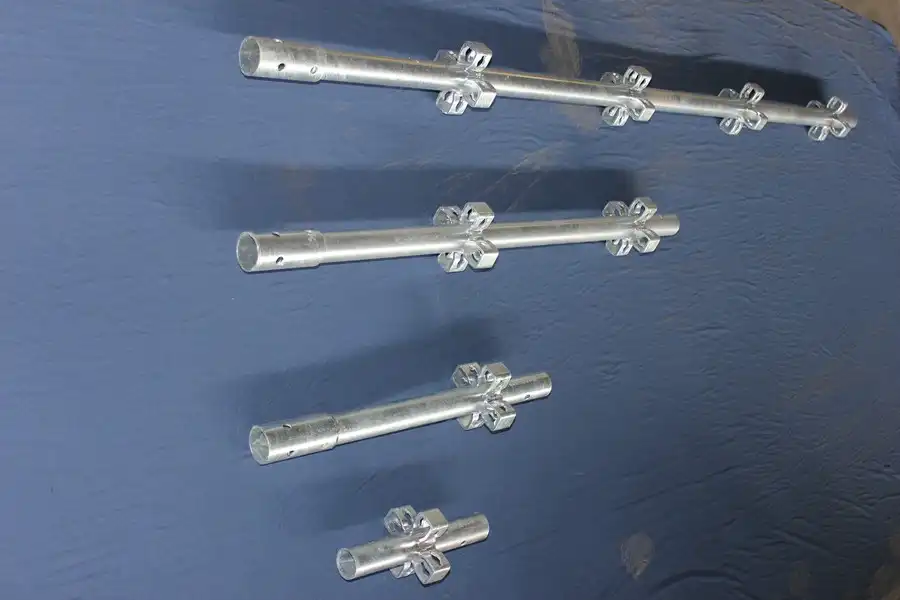
The disk node in this system is made like a crab's claw and has eight holes grouped in a chrysanthemum pattern. With this shape, ledgers can connect from different directions at a fixed step distance of 1.5 m. Importantly, the joint doesn't depend on torque applied by hand. The wedge-lock gets tighter as the vertical load goes up. This instantly raises the shear strength at each node.
Material and Geometry Behind the Numbers
This system has a larger cross-sectional area than standard 48mm options because the uprights are 60.3 mm in diameter and the walls are 3.0 mm to 3.5 mm thick. Independent axial load tests show that the 60-series systems do better than 48mm systems by about 35% when compression loads are applied for a long time. The base material of Q235 carbon steel meets the requirements of EN 10025 structural steel, so the yield strength is the same for every batch of parts.
Compliance Standards That Govern Safe Limits
You can only trust structural performance if it has been checked against well-known standards. With a safety factor of at least 3:1 (final load vs. allowed load), this system meets the requirements of EN 12810-1 and ANSI/SSFI SC100-5/05. Shandong Xingrui Building Materials Co., Ltd. is certified by ISO 9001, ISO 14001, and CE. They use 12 welding robots and 6 automatic welding lines to make their products. They have standardized workshops that cover more than 40,000 square meters in Rizhao, Shandong, which is a UN-accredited livable city with a seaport, airport, and high-speed rail for easy export logistics.
Systematic Analysis of Load Capacity: How to Ensure Safe Usage
It's not enough to just know the maximum size. Load failures on real job sites are almost always caused by process failures rather than material failures.
The Three Most Common Overload Risks
Site investigations always find three main reasons why scaffolds are overloaded: uneven load distribution across standards, removing base jacks before the concrete reaches its design strength, and building debris building up on working platforms. Each situation changes where the load is concentrated on different nodes and goes around the system's design assumptions. Crab type scaffolding is no exception, as it follows the same structural principles and is equally vulnerable to these three causes of overloading.
Correct Load Distribution Across the Frame
When the shoring tower is set up correctly, the vertical force is spread evenly across the frame grid. For bridge deck pours, engineers should use ACI 347 guidelines to figure out the wet concrete pressure and make sure that no single upright is carrying more weight than it can safely handle at the given ledger spacing. The most reliable site-specific verification comes from physical load tests on trial bays before full deployment.
Inspection Protocol Before and During Each Pour
During the curing period of concrete, the following steps keep the load capacity within safe working limits:
- Pre-pour check: Confirm all wedge pins are fully seated, base jacks are plumb within 1/500 of height, and no uprights show visible deformation or corrosion pitting at node zones.
- During pour: Station inspectors at perimeter and interior bays to monitor for differential settlement or lateral movement exceeding 5mm.
- Post-pour: Retain shoring until concrete reaches at least 75% of specified compressive strength, verified by cylinder tests, before beginning any staged dismantling.
When you take these steps, you can stop the chain reactions that lead to the worst scaffold crashes that OSHA keeps track of.
Crab Type Scaffolding vs. Traditional Scaffolding: Load Capacity and Performance Comparison
Many buying teams automatically choose cup-lock or tube-and-clamp methods just because they are used to them. It's easy to see where that comfort costs something when you do a straight technical comparison.
Axial Capacity and Node Consistency
In the field, where worker skill affects how tight the joints are, traditional cup-lock systems with 48mm uprights usually reach 20kN to 35kN per standard. The wedge-locking node in the crab type scaffolding system gets rid of that variable completely. It doesn't matter who put the joints together; they all connect in the same way. In real life, this uniformity immediately supports the 40kN–75kN capacity range instead of weakening it.
Durability and Corrosion Resistance
Both systems need to protect the surface, but hot-dip galvanization with a zinc coating of 60–80 microns is the higher standard. This process makes the service life longer than 15 years, even in places like chemical plants or the coast, where salt and humidity speed up the rusting of steel. Under the same conditions, standard paint-coated cup-lock parts usually need to be fixed up or replaced every 5 to 8 years.
Total Cost of Ownership for Rental Companies
The modular crab system is more cost-effective for rental fleet owners with a lot of boats because its parts can be used on different types of projects. Because the eight-hole disk can hold ledgers at any angle, the same stock can be used for both bridge projects and industrial facilities next quarter. When you add up the higher rental yield per component and the longer service life, you get a better asset return rate than with single-geometry systems.
Choosing the Right Crab Type Scaffolding for Your Project: Procurement Considerations
Technical specs don't mean as much if the buying process adds risk by making specs unclear or delivery not guaranteed.
Match System Variant to Project Load Class
We don't always need the 60.3mm diameter system for our projects. For industrial formwork with a typical height of less than 8 meters, a 48mm crab type scaffolding version may meet load requirements at a lower cost. The 60-series, which has a normal capacity of 40kN to 75kN, is the right choice for ultrahigh formwork above 20 meters, heavy-load support in the basement, or long-span bridge propping. To avoid substitution risk, make sure that your bill of quantities lists the exact upright diameter, wall thickness, and disk configuration.
Supplier Verification Checklist
When checking out a heavy-duty shoring provider, these are the most important things to look for:
- Third-party structural test reports matching the specific diameter and configuration you are purchasing
- ISO 9001 quality management certification with documented weld inspection records
- Demonstrated capacity for custom non-standard components with dimensional tolerances within ±0.5mm
- Confirmed batch delivery schedule aligned to your site's phased installation plan
- Sample provision policy with accompanying technical calculation package
—structural test reports from a third party that match the width and shape you are buying
Custom Fabrication and Non-Standard Components
These factors separate sellers who can work on high-accountability projects from those who can't.
Maintenance and Safety Tips to Sustain Load Capacity Over Time
A scaffold system that can hold up to 75kN can become very weak if maintenance is put off for a long time.
Routine Inspection Schedule
After each use, check all of the wedge pins and disk nodes. Any pin that has lost more than 10% of its cross-section due to wear should be replaced. Inspect the upright ends for deformation caused by repeated base jack pressure. Also, make sure that the zinc coating is still in place and that there are no bare steel areas at the joint zones.
Storage and Handling Practices
To keep the bow from permanently deforming, stack the uprights horizontally on level dunnage. Keep disks and pins in a dry place, sorted by type of part. A lot of early capacity loss is caused by mechanical damage that happens when things are moved around in the yard. Inspection systems often miss this until the failure happens.
Personnel Training Requirements
Assign at least one qualified temporary works supervisor to each shoring bay while they are being set up and taken down. For formwork shoring over 6 feet, OSHA 29 CFR 1926 Subpart Q calls for specific proof of competency. In training, people should learn how to read manufacturer load tables, spot node engagement failures, and do staged dismantling under load in the right order.
Conclusion
In conclusion, crab type scaffolding provides a reliable solution for heavy-duty shoring projects where load capacity, structural stability, and long-term performance are critical. With its high axial load capacity, self-locking node design, durable Q235 steel construction, and compliance with international standards, it offers advantages for bridges, industrial facilities, and large-span formwork applications. By selecting the right system configuration, verifying supplier quality, and following proper inspection and maintenance procedures, contractors can maximize safety and project efficiency.
FAQ
What is the maximum safe load per standard for this system?
Under normal conditions, with 60.3 mm uprights and 1.5 m between ledgers, the maximum load that can be used is between 40kN and 75kN. The actual working load is based on the height of the upright, the condition of the base, and the shape of the configuration. Before accepting the shoring plan, you should always compare the manufacturer's load tables with the work of a separate structural expert.
How does the self-locking node prevent overload failure?
As the vertical pressure rises, the wedge-lock mechanism gets tighter. This keeps the node shear strength high even as loads get close to the design limit. This is fundamentally different from systems that tighten joints by hand, where the strength of each joint relies on how consistent each worker is.
Can non-standard dimensions be fabricated to match project geometry?
Yes, Shandong Xingrui Building Materials Co., Ltd. can make special orders based on plans provided by the customer as long as the manufacturing tolerances are within ±0.5mm. You can check sample parts that come with technical paperwork before they are made in large quantities. This is very important for bridge deck shoring because span geometry doesn't always match standard grid modules.
What certifications should I request before procurement?
Ask for ISO 9001 quality management certification, third-party structural load test results for the diameter and wall thickness you want, as well as proof of CE certification and the manufacturer's material tracking records for arriving Q235 steel stock.
How often should wedge pins be replaced?
When cross-section wear is more than 10% of the original thickness, wedge pins need to be replaced. If you have busy rental fleets that go through several projects a year, you should check the pins at least every third release and keep a written replacement log for each batch of parts.
Partner with GREEN FORMWORK for Your Next Heavy-Load Project
Shandong Xingrui Building Materials Co., Ltd. makes GREEN FORMWORK, which is a type of crab scaffolding that comes with ISO 9001, ISO 14001, and CE certifications. Before placing a large order, you can get examples and full technical calculation packages. If you need a verified supplier of crab-type scaffolding for bridge shoring or large-span industrial support, please email our technical team at sdxingruiqp@126.com or visit sdxingrui.com to get pricing and specifications that are specific to your project.
References
1. American Concrete Institute. ACI 347R-14: Guide to Formwork for Concrete. ACI, 2014.
2. British Standards Institution. EN 12810-1: Façade Scaffolds Made from Prefabricated Components — Part 1: Product Specifications. BSI, 2003.
3. Occupational Safety and Health Administration. OSHA 29 CFR 1926 Subpart Q: Concrete and Masonry Construction. U.S. Department of Labor, 2015.
4. Scaffold and Access Industry Association. ANSI/SSFI SC100-5/05: Scaffolding — Safety Requirements. SAIA, 2005.
5. Peng, J.L., Pan, A.D., and Chan, S.L. "Simplified Models for Analysis and Design of Modular Falsework Systems." Journal of Structural Engineering, ASCE, 1998.
6. Chandrangsu, T., and Rasmussen, K.J.R. "Investigation of Geometric Imperfections and Joint Stiffness of Support Scaffold Systems." Journal of Constructional Steel Research, Elsevier, 2011.
Learn about our latest products and discounts through SMS or email