- English
- French
- German
- Portuguese
- Spanish
- Russian
- Japanese
- Korean
- Arabic
- Greek
- German
- Turkish
- Italian
- Danish
- Romanian
- Indonesian
- Czech
- Afrikaans
- Swedish
- Polish
- Basque
- Catalan
- Esperanto
- Hindi
- Lao
- Albanian
- Amharic
- Armenian
- Azerbaijani
- Belarusian
- Bengali
- Bosnian
- Bulgarian
- Cebuano
- Chichewa
- Corsican
- Croatian
- Dutch
- Estonian
- Filipino
- Finnish
- Frisian
- Galician
- Georgian
- Gujarati
- Haitian
- Hausa
- Hawaiian
- Hebrew
- Hmong
- Hungarian
- Icelandic
- Igbo
- Javanese
- Kannada
- Kazakh
- Khmer
- Kurdish
- Kyrgyz
- Latin
- Latvian
- Lithuanian
- Luxembou..
- Macedonian
- Malagasy
- Malay
- Malayalam
- Maltese
- Maori
- Marathi
- Mongolian
- Burmese
- Nepali
- Norwegian
- Pashto
- Persian
- Punjabi
- Serbian
- Sesotho
- Sinhala
- Slovak
- Slovenian
- Somali
- Samoan
- Scots Gaelic
- Shona
- Sindhi
- Sundanese
- Swahili
- Tajik
- Tamil
- Telugu
- Thai
- Ukrainian
- Urdu
- Uzbek
- Vietnamese
- Welsh
- Xhosa
- Yiddish
- Yoruba
- Zulu
Why Crab System Scaffolding Improves Safety on Complex Job Sites
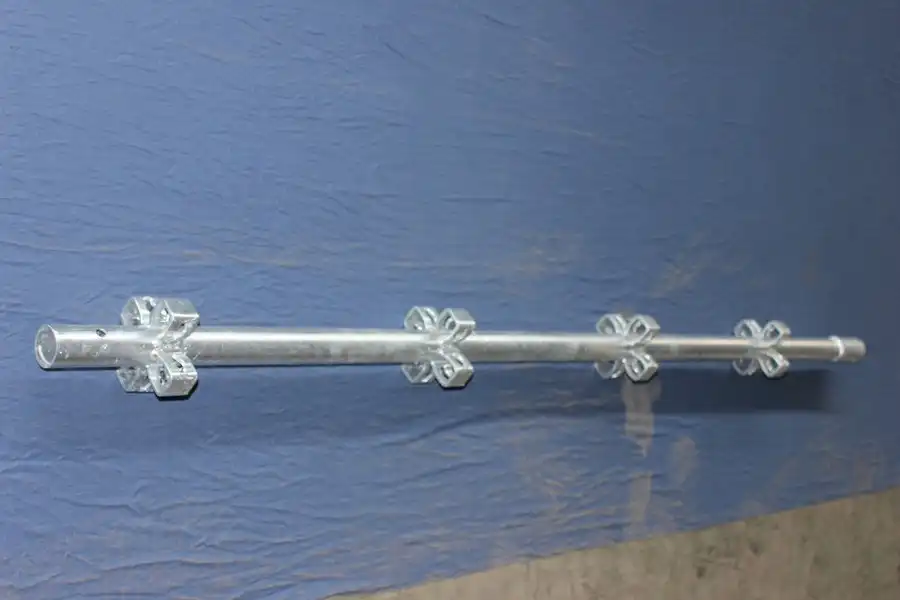
Crab system scaffolding has become a preferred structural support solution for complex construction environments where conventional systems fall short. Built on a modular, multi-directional disc-locking principle, this system delivers exceptional load stability—up to 200kN per tower—making it well-suited for bridge shoring, tunnel construction, and high-clearance formwork. Its wedge-locking nodes reduce assembly errors, cut installation time by roughly 50%, and keep workers away from hazardous zones longer. For procurement teams managing large-scale or irregular-geometry projects, this system offers a measurable improvement in both site safety and operational efficiency.
Understanding the Safety Challenges on Complex Job Sites
Working at Heights on Irregular Structures
Bridge piers, stadium canopies, and tunnel portals share one problem: their geometry rarely fits standard scaffolding grids. When workers adjust tube-and-clamp systems mid-air to compensate for odd angles, they spend more time in vulnerable positions. According to the U.S. Bureau of Labor Statistics (2022), falls account for approximately 36% of construction fatalities annually. That number climbs when platforms are improvised or poorly fitted to the structure.
Unstable Platforms Under Dynamic Loads
Cast-in-situ concrete pours generate significant lateral pressure and vibration. Traditional cuplock and H-frame systems can deflect under these loads if bracing is inadequate. A single loose fitting under a concrete pour is enough to initiate progressive collapse. The Occupational Safety and Health Administration (OSHA) Standard 29 CFR 1926.451 requires scaffolds to support at least four times their intended load, a threshold many tube-and-clamp configurations struggle to maintain on uneven ground.
Constrained Access and Slow Assembly
Narrow working corridors in industrial facilities and underground environments force crews to assemble crab system scaffolding in restricted spaces. Slow or complicated assembly means workers stay in high-risk zones longer. Every additional minute spent fitting couplers in a confined tunnel section increases exposure to falling objects, equipment movement, and poor air quality.
What Is Crab System Scaffolding and How Does It Work?
The Eight-Hole Disc Node
In this method, a disk with eight holes is attached to upright standards at regular intervals. This is what makes it different. To join to this disk, cross bars, diagonal members, and ledgers all use tapered wedge pins. Because of the way the pin is formed, when the link is loaded, gravity pulls it tighter. During a shift, you don't need to use a torque wrench or look for loose parts.
Q235 Steel and Galvanized Durability
The 60-series standards from Xingrui are made of Q235 quality carbon steel and have a 60mm outside diameter and 3.2mm thick walls. A zinc layer of 60–80μm is added during hot-dip galvanization, which is what ISO 1461 says the surface is. This process stops the steel from rusting in warm, seaside, and underground places. This means that the item can be used over and over again and still last up to 15 years.
Adapting to Uneven Terrain
Heavy-duty U-head and base screw jacks can be linked to the bottom and top of vertical standards to level the ground perfectly in areas that are sloped or have been dug out. Not having to pack or shim each leg is a big reason why bridge abutment and trestle shoring sites often become unsteady. The tower stays level even if the base isn't because the bases can be moved and the nodes are fixed.
Key Safety Benefits of Using Crab System Scaffolding
This flexible disk system's safety case for crab system scaffolding is based on three engineering facts that make it less likely that something bad will happen. The most important things to those in charge of purchasing and site safety are these KPIs:
- Structural rigidity under 200kN vertical load per tower: The wedge-lock node eliminates rotational play between members. Under EN 12811-1 structural design criteria, the eight-way connection geometry distributes both vertical and lateral forces evenly across the frame, preventing the sway and racking that cause tube-and-clamp systems to fail during concrete pours.
- 50% faster assembly compared to traditional methods: Because the wedge pins are self-aligning and require no tools, crews complete bay erection in roughly half the time. Shorter assembly windows mean workers spend less time on elevated, incomplete structures—which is when most scaffold-related injuries occur.
- Reusable components with traceable quality control: Each component passes dimensional tolerance checks to ensure zero-play wedge fit. Xingrui's manufacturing facility operates under ISO 9001, ISO 14001, and ISO 45001 certifications, with batch-level quality documentation available per shipment.
Less accidents, lower insurance costs, and more accurate project timelines are all directly linked to these performance traits. All of these results are important for companies that give out equipment and do EPC work because they need to keep track of their assets.
Real-World Case Studies: Crab System Scaffolding in Action
Bridge Viaduct Shoring in Southeast Asia
A regional EPC contractor changed from an H-frame system to a 60-series disk system when their tube-and-clamp towers began to bend during the first concrete pours on a highway bridge. The girders were cast-in-situ. After the move was made, load tests showed that the disk system stayed geometrically stable for the full 72 hours. This meant that there was no need for any fixes. The person in charge of safety said that there were no crashes on the other 14 spans' platforms.
Industrial Power Plant Maintenance Platform
There were non-round entry platforms around boiler buildings that the repair team at a refinery needed. Most frame supports would not have been able to bend around the curves. The eight-way disk connection made it possible to set diagonal members at exact angles that were not standard. This made a platform that fit perfectly and didn't need any extra work with clamps and tubes. The platform was 40% faster to put together than the old entry option, and it passed standards set by a third party under EN 12810.
Tunnel Formwork Support in Underground Construction
A company that builds subways used crab system scaffolding as high formwork shoring inside a bored tunnel segment. It was necessary for the small circle cross-section to have diagonal support at angles that aren't orthogonal. Disk nodes can do this without any changes. The maker said that the system's parts were all the same size, which cut down on the time it took to put it together and kept the project from needing any repairs.
How to Select and Procure the Right Crab System Scaffolding for Your Site?
Compliance and Certification Verification
Procurement teams in the U.S. and European markets should confirm that the supplier's product documentation includes EN 12810 and EN 12811 calculation reports, a CE Declaration of Performance (DoP), and ISO management system certificates. OSHA 29 CFR 1926.451 governs scaffold safety in U.S. projects; suppliers should be able to provide load test data that aligns with the four-times safety factor requirement.
Comparing System Types for Your Application
Ringlock and cuplock systems are cost-effective for standard-height access scaffolding. However, when vertical loads exceed 100kN per leg, or when geometry is non-rectilinear, the 60mm disc system provides a measurable structural advantage. For high-clearance shoring applications—bridge decks, stadium structures, large-span roofs—the heavier-gauge disc system is the technically appropriate choice.
Sampling and Custom Configuration
Reputable suppliers should offer sample delivery within 7–14 days from drawing confirmation and provide technical assistance throughout the specification process. Xingrui accepts custom dimensions and configurations based on client-supplied drawings, with full OEM support available under NDA. Flexible trade terms including FOB and CIF are available, with shipments departing from Rizhao Port in Shandong Province.
Conclusion
Real loads, odd shapes, and tight deadlines on very complicated job sites are things that crab system scaffolding structures need to be able to handle. All of these needs are met by the modular disc-locking system, which has precisely designed nodes, a high load capacity, and easy, quick assembly. If you are in charge of purchasing for projects like stadiums, tunnels, factories, or bridges, you have to choose a system with strong certifications and a strong supply chain to keep workers safe and finish the project on time. For safety reasons and to protect the value of the asset over time, this study shows that the disk method is a good investment.
FAQ
Q1: Is this system suitable for U.S. construction projects under OSHA regulations?
A: Yes. The system's load-bearing capacity and node rigidity align with OSHA 29 CFR 1926.451 requirements. Suppliers should provide structural calculation reports and load test data specific to your configuration to support compliance documentation.
Q2: What certifications should I request from a supplier?
A: Request ISO 9001, ISO 14001, and ISO 45001 management system certificates, a CE Declaration of Performance, and EN 12810/12811 calculation reports. Batch-level inspection reports and material mill certificates add traceability for project owner requirements.
Q3: How does the disc system compare to ringlock for safety?
A: Both use wedge-lock nodes. The 60mm disc series carries higher vertical loads (up to 200kN per tower) and is specifically optimized for shoring rather than access, making it the stronger choice for high-clearance or high-load applications.
Q4: Can the system handle uneven ground conditions?
A: Yes. Heavy-duty screw base jacks allow vertical adjustment to compensate for grade changes without shimming or packing individual legs.
Q5: What is the minimum order quantity for trial procurement?
A: Contact the supplier directly for MOQ details. Most established manufacturers offer small trial batches for initial project qualification before committing to full-volume orders.
Get a Custom Quote from GREEN FORMWORK Today
GREEN FORMWORK gives crab system support to projects in more than 100 countries with the help of Shandong Xingrui Building Materials Co., Ltd. We can help you with technical drawings, sending you samples within 7–14 days, and all the paperwork you need for export, whether you need a standard configuration or a shoring solution that is specially designed for your needs. Send us an email at sdxingruiqp@126.com to get a price from a reputable crab system scaffolding factory.
References
1. European Committee for Standardization. EN 12811-1: Temporary Works Equipment — Scaffolds: Performance Requirements and General Design. CEN, 2003.
2. European Committee for Standardization. EN 12810-1: Facade Scaffolding Made of Prefabricated Components: Product Specifications. CEN, 2003.
3. Occupational Safety and Health Administration. 29 CFR 1926.451: Scaffolding Standards for the Construction Industry. U.S. Department of Labor, 2020.
4. U.S. Bureau of Labor Statistics. Census of Fatal Occupational Injuries Summary. U.S. Department of Labor, 2022.
5. International Organization for Standardization. ISO 1461: Hot Dip Galvanized Coatings on Fabricated Iron and Steel Articles. ISO, 2009.
6. Health and Safety Executive (HSE). Working at Height: A Brief Guide. HSE Books, 2014.
Learn about our latest products and discounts through SMS or email