- English
- French
- German
- Portuguese
- Spanish
- Russian
- Japanese
- Korean
- Arabic
- Greek
- German
- Turkish
- Italian
- Danish
- Romanian
- Indonesian
- Czech
- Afrikaans
- Swedish
- Polish
- Basque
- Catalan
- Esperanto
- Hindi
- Lao
- Albanian
- Amharic
- Armenian
- Azerbaijani
- Belarusian
- Bengali
- Bosnian
- Bulgarian
- Cebuano
- Chichewa
- Corsican
- Croatian
- Dutch
- Estonian
- Filipino
- Finnish
- Frisian
- Galician
- Georgian
- Gujarati
- Haitian
- Hausa
- Hawaiian
- Hebrew
- Hmong
- Hungarian
- Icelandic
- Igbo
- Javanese
- Kannada
- Kazakh
- Khmer
- Kurdish
- Kyrgyz
- Latin
- Latvian
- Lithuanian
- Luxembou..
- Macedonian
- Malagasy
- Malay
- Malayalam
- Maltese
- Maori
- Marathi
- Mongolian
- Burmese
- Nepali
- Norwegian
- Pashto
- Persian
- Punjabi
- Serbian
- Sesotho
- Sinhala
- Slovak
- Slovenian
- Somali
- Samoan
- Scots Gaelic
- Shona
- Sindhi
- Sundanese
- Swahili
- Tajik
- Tamil
- Telugu
- Thai
- Ukrainian
- Urdu
- Uzbek
- Vietnamese
- Welsh
- Xhosa
- Yiddish
- Yoruba
- Zulu
Crab System Scaffolding Uses in Construction and Maintenance Work
The modular steel frame of the crab system scaffolding can be used to make walls, access platforms, and temporary supports. Building projects of all sizes use it to support high forms, dig tunnels, and build bridges. It helps maintenance teams check, fix, and paint industrial equipment and the outside and inside of buildings. Crews can match up shapes that aren't straight because the eight-way disk joint lets bars connect in a lot of different ways. Shandong Xingrui Building Materials Co., Ltd. helps GREEN FORMWORK make a 60-series system out of Q235 steel and gives them samples and technical advice. It tells you how to pick it up and where to put it.
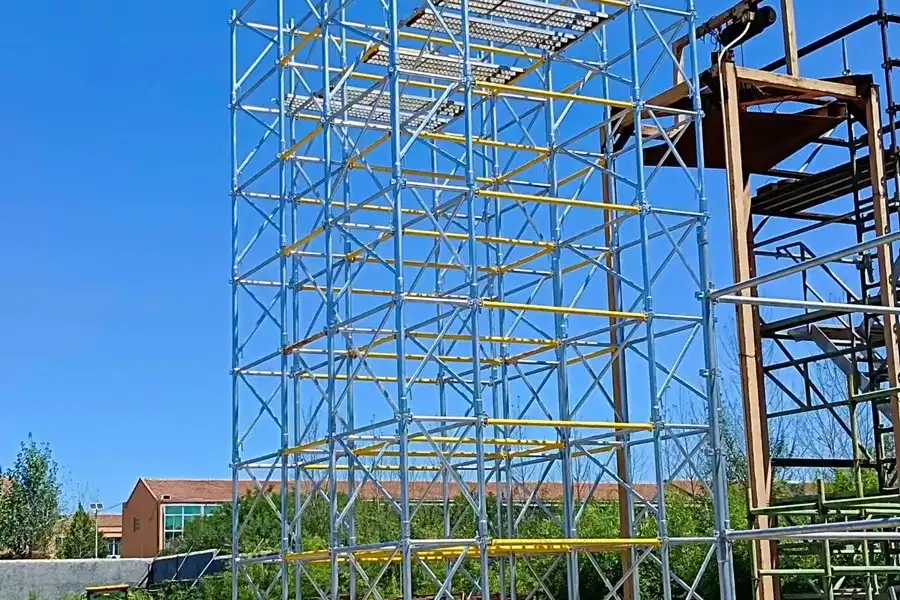
What Crab System Scaffolding Is and How It Works?
A Modular Steel Frame With Multi-Directional Joints
It is a type of modular scaffolding that is built in the shape of a socket. It is also called crab system scaffolding or crab type scaffolding. It comes with U-head jacks, adjustable bases, diagonal braces, vertical standards, ledgers, and more. Each standard has a welded disk on it, and wedge-lock pins hold the horizontal and diagonal bars in place. Because all the parts are the same size, crews can plan the bays, lifts, and access points on paper before the first truck arrives. When loads go through the same joints over and over, the behavior can be predicted. That being said, performance is still based on the approved layout, the ground, the rules in the area, and the condition of the parts. An experienced engineer should check out each configuration.
Key Specifications of the 60-Series System
The main parts of the system we make in Rizhao, Shandong, are shown below.
| Parameter | Specification |
|---|---|
| Material | Q235 carbon steel |
| Standard diameter | 60 mm |
| Wall thickness | 3.2 mm |
| Connection | Eight-hole disc with wedge-lock pins |
| Surface treatment | Hot-dip galvanization (ISO 1461), 60–80 μm zinc coating |
| Load capacity | Up to 200 kN per tower, with proper bracing |
| Standards and certifications | ISO 9001, ISO 14001, ISO 45001, EN 12810/12811 |
On the eight-way disk, bars can leave one node in more than one direction. This lets you make shapes with lots of different parts. For sure, check the 200 kN number against the load you know. There are braces at the tower level that led to this number.
How It Differs From Tube-and-Clamp Scaffolding
When workers use tube-and-clamp scaffolding, they have to tighten each coupler one at a time. With each coupler, there is a chance that they will miss a fitting. That wedge-lock joint takes care of those loose parts, and the disks set the bar angles on their own. Assembling with self-aligning behavior is faster and less likely to go wrong. Our product data shows that installation is about 50% faster than with traditional tube-and-clamp methods. The disk has eight holes, and cross bars, diagonal bars, and tie bars can connect in any direction. This is useful for plans that aren't square or straight. The 60 mm standard is more for supporting work than just getting to places on ringlock-style access scaffolds.
Where Crab System Scaffolding Works Best on Site
Tunnels, Bridges, and High Formwork Support
The 60 mm standards work well when heavy shoring is used. The frame holds up cast-in-situ concrete beams on bridges and viaducts while the concrete gets stronger. Modular bays can be put together to make frames that are arched or shaped in an odd way to fit the small space underground. This is used in tunnel and subway work. The disks that can be used in different directions let the crews put bars where the slab or beam layout calls for them. This is helpful for supporting high formwork in large venues and buildings. Before getting a quote, I suggest telling the supplier the slab thickness, clear height, and bay spacing. This is because each of these jobs needs a clear load path.
Industrial, Façade, and Large-Venue Access
Sometimes you don't need heavy shoring. Crews also use crab system scaffolding as work platforms around boilers, pipes, tanks, and silos in power plants and refineries, where space is limited and platforms need a solid base. On construction sites, the same parts allow work to be done on the building's facade, masonry, roof, and exterior finish. This eight-way link is useful for big events and bridge piers that aren't round. For each case, you need to look at the working height, air flow, ties, bracing, and wind exposure. To make your question fit the work environment, add guardrails, toe boards, and stair towers.
Maintenance, Inspection, and Repair Access
Repair crews use the same modular parts to clean, paint, waterproof, and fix the surface. The work fronts change a lot when the plant is shut down, and the bars can be moved and put back in place as the job changes. The fronts, roofs, balconies, and public buildings of all kinds work the same way. After storm, flood, or fire damage, crews can build temporary access, but first, a qualified person needs to check out the building. Before you start installing, check for any tight spots, uneven surfaces, air flow restrictions, and escape routes. This type of service works well with reusable galvanized parts because the stock moves from one asset to the next.
Efficiency, Load Performance, and Reuse
Faster Assembly and Fewer Site Errors
Speed comes from the joint. The wedge is driven after a bar is dropped into the disk. The crew doesn't have to keep track of any bolts or loose couplers. From what we know, installation goes about 50% faster than with tube-and-clamp. Self-aligning geometry makes it less likely for mistakes to happen during assembly, which saves time on inspection and redo work. Even though it's easy to learn, I think you should quickly go over wedge-locking and load-path design before your first erection. Standard parts also make it easier to keep track of stock, replace parts, and set up trades because everyone works from the same list of parts. There is also less stuff to lose, count, or replace when there are fewer loose fittings.
Load-Bearing Strength and Stability
Up to 200 kN can be held by each 60-series tower with the right bracing. Because the diagonal bars lock at set angles, the frame doesn't bend to the side and stays in shape while it's being built. The wedge stays in place by gravity, so it doesn't move even when it shakes. This is important near people, machines, and concrete pours. Heavy-duty screw jacks, U-head jacks, and base jacks can level the frame when the ground isn't level. This saves time on site preparation. OSHA rules in the US say that a scaffold must be able to hold at least four times the most weight it was made to hold. When your engineer sizes the layout, he or she should keep this in mind.
Reusable Steel and Total Cost of Ownership
When Q235 steel is hot-dip galvanized to ISO 1461 standards, a 60–80 μm zinc coating forms on it. That part's coating can last up to 15 years, and it can be used in a lot of different projects. Repeat cycles are good for both renters and contractors because they mean things don't have to be replaced as often. Don't just look at the price per unit when you compare quotes. Think about how much it will cost to hire people, store things, keep them from rusting, get spare parts, get technical help, expect them to be used again, and deal with schedule changes. It might be cheaper to buy a set that breaks down more often, but it might cost less per use to buy a set that is easy to put together and lasts for more than one project.
Safety, Compliance, and Common Mistakes
Standards, Certifications, and Documents
When we make our products, we follow the management systems for ISO 9001, ISO 14001, and ISO 45001, and our specs say they meet EN 128010 and EN 128111. Our goods also have the CE mark on them. At every step, we keep track of the raw materials and finished goods, which means that each batch can always be found. The quality is judged by how strong the weld is, how much weight it can hold, how well the disks and wedge pins fit together, and how well the zinc coating sticks. For US projects, OSHA 29 CFR 1926 Subpart L tells us what rules we need to follow for scaffolding. Your lead engineer will decide what the site needs. Ask us for test reports, certificates, load tables, and records of the materials used to finish your project file.
Inspection, Load Planning, and Site Rules
You need the right design, trained installation, strong bases, and regular checks to make sure crab system scaffolding is safe to use. OSHA rules say that a qualified person must check scaffolds for obvious problems before every work shift and after anything that could have gone wrong with their structure, like a fall or bad weather. OSHA also says that people who work on scaffolds that are more than 10 feet above a lower level need to wear safety gear in case they fall. Take into account the weight of the items being stored, the wind, ties, braces, and anchors. To keep the base stable and level if the ground is soft, add sole boards.
Mistakes to Avoid on Site
Four mistakes keep happening. When people choose parts based only on price, the tolerances may not be as tight as they should be. Second, crews put together parts from various systems without checking to see if they can work together. This changes the way joints support weight. Third, someone takes down braces, extends a platform, or builds a cantilever that isn't legal, and no one notices the danger until something moves. For the fourth time, foundations were put down on uneven, wet, or soft ground without using base jacks, sole boards, or drainage. Plans should be made for delivery access, staging, lifting, storage, and transporting back. This will also lower the cost of repairs, damage, and traffic.
Selecting, Customizing, and Deploying for B2B Projects
Selection Checklist for Procurement Teams
Start with what it will be used for: how high you will work, how big the platform will be, how much weight you expect it to hold, how long the project will last, and how often it will be used. Then look at how well they fit together, how strong the connection is, how well they protect against corrosion, and how well they work with your design. An owner or auditor will likely ask for test records and batch traceability. Next, check to see how much the supplier can do. Rizhao is a port city that has its own airport, seaport, and hub for high-speed rail. It is the place where Shandong Xingrui Building Materials Co., Ltd. began in 2007. Our site is 79,800 square meters, and the workshops take up more than 40,000 square meters. There are 920 people working for us, 12 robots that weld, and 6 automatic welding lines. Our goods go to more than 100 different places around the world.
Made-to-Order Sizes, Samples, and Technical Help
We can process your samples or drawings in a way that fits your design, so the lengths of the bays and the sizes of the parts of crab system scaffolding can be changed. We send samples for approval and help with technical issues while the order is being made and chosen. This way, stores that sell goods can offer a wider range, rental businesses can make sure their items work with each other, and contractors can match the exact shape of a tunnel section or bridge pier. First, you should send your drawing along with information about who you want to buy it, how many you need, and where you want it delivered. It takes less time to get a correct quote and a set-up that your engineer can check to see if the information is correct.
A Practical Deployment Workflow
The first thing you should do is make a site survey that includes the building, the ground, the access points, any dangers above, traffic, and the weather. Next, everyone on your team agrees on a load plan and layout that shows where the loads will go, how high you can work, necessary bracing, and ties. Crews check each part for damage, corrosion, deformation, and missing parts before putting it all together. Trained people set up the system while being watched by someone who knows what they're doing. They followed the manufacturer's instructions and your method statement. Take care of any changes, keep track of inspections, and decide who can come in after the handover. It's time to take it apart carefully. Save the parts that can be used again so they're ready for the next job.
Conclusion
The crab system scaffolding is made up of a steel frame that can be put together in different ways. It can be used for both building and maintenance work. This piece of writing talked about how its multi-directional disk joint and wedge-lock pins make a structure that is stable and can be used over and over. The Q235 version from the 60-series is good for tunnels, bridges, high formwork support, roof access, repair access, and industrial access.
Putting it together is easier, each tower can hold up to 200 kN with bracing, and the parts are galvanized and can be used again and again, which saves time and money on many projects. It's still important to have well-thought-out layouts, trained installers, regular checks, and parts that fit together. People who want to buy something should be clear from the start about loads and heights, check the standards and paperwork, and think about more than just price.
FAQ
What are the main uses of crab system scaffolding?
Tunnel, bridge, and tall form support beams can be put up on it. Factory access platforms, facades, painting, inspection, and repair work are also built by this company.
Can I use it on uneven ground?
Yes. Heavy-duty screw jacks, like U-head and base jacks, make the frame level on different types of floors. If the ground is soft, add drainage and sole boards, and have an engineer check the base.
Can I mix components from different scaffold systems?
Yes, but not until it's proven that they are compatible. Putting together parts from different systems can change how loads move through the frame because the joints are not all the same size and shape. Ask your engineer first.
What information do you need for a quote?
Send drawings, the working height, the size of the platform, the loads that are expected, the standards that apply, the quantities, the delivery port and date, and any other instructions that you may have. It takes less time to quote when you give full details.
Do you supply samples?
Yes. We can send you samples, help you with technical issues, and make things just for you based on the samples or drawings you give us.
Request Crab System Scaffolding Samples From GREEN FORMWORK
Green Formwork is a supplier of crab system scaffolding that can make sizes to order, give you samples, and help you with technical issues. Talk to them about your project. Our team will help you pick the best configuration if you send us your drawings, working heights, loads, and delivery port at sdxingruiqp@126.com. An ISO 9001, ISO 14001, and ISO 45001 management system is used by Shandong Xingrui Building Materials Co., Ltd. to make the Q235 system.
References
1. OSHA, 29 CFR 1926 Subpart L: Scaffolds, 1996
2. OSHA, Publication 3150: A Guide to Scaffold Use in the Construction Industry, 2002
3. EN 12811-1: Temporary Works Equipment – Scaffolds – Performance Requirements and General Design, 2003
4. EN 12810-1: Façade Scaffolds Made of Prefabricated Components – Product Specifications, 2003
5. ISO 1461: Hot Dip Galvanized Coatings on Fabricated Iron and Steel Articles – Specifications and Test Methods, 2022
6. ANSI/ASSP A10.8: Scaffolding Safety Requirements, 2019
Learn about our latest products and discounts through SMS or email