- English
- French
- German
- Portuguese
- Spanish
- Russian
- Japanese
- Korean
- Arabic
- Greek
- German
- Turkish
- Italian
- Danish
- Romanian
- Indonesian
- Czech
- Afrikaans
- Swedish
- Polish
- Basque
- Catalan
- Esperanto
- Hindi
- Lao
- Albanian
- Amharic
- Armenian
- Azerbaijani
- Belarusian
- Bengali
- Bosnian
- Bulgarian
- Cebuano
- Chichewa
- Corsican
- Croatian
- Dutch
- Estonian
- Filipino
- Finnish
- Frisian
- Galician
- Georgian
- Gujarati
- Haitian
- Hausa
- Hawaiian
- Hebrew
- Hmong
- Hungarian
- Icelandic
- Igbo
- Javanese
- Kannada
- Kazakh
- Khmer
- Kurdish
- Kyrgyz
- Latin
- Latvian
- Lithuanian
- Luxembou..
- Macedonian
- Malagasy
- Malay
- Malayalam
- Maltese
- Maori
- Marathi
- Mongolian
- Burmese
- Nepali
- Norwegian
- Pashto
- Persian
- Punjabi
- Serbian
- Sesotho
- Sinhala
- Slovak
- Slovenian
- Somali
- Samoan
- Scots Gaelic
- Shona
- Sindhi
- Sundanese
- Swahili
- Tajik
- Tamil
- Telugu
- Thai
- Ukrainian
- Urdu
- Uzbek
- Vietnamese
- Welsh
- Xhosa
- Yiddish
- Yoruba
- Zulu
How Is Aluminum Building Formwork Installed and Removed Safely?
Aluminum building formwork is installed by assembling precision-engineered panels in a defined sequence—walls and columns before slabs—secured with pin-and-wedge connections, then braced with diagonal supports. Removal follows verified concrete curing: typically 36–48 hours for slab and beam panels using the Early Stripping System, while vertical props remain until full strength is confirmed. Throughout both phases, trained crews wearing proper PPE, combined with structured inspection checkpoints, ensure that neither personnel nor the formwork system sustains damage. Safe handling begins with a reliable product specification—and that starts at the procurement stage.
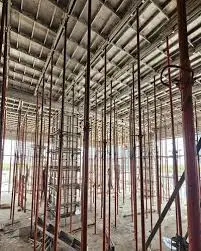
Understanding Aluminum Formwork and Its Onsite Safety Requirements
Aluminum Building Formwork is becoming more popular in modern building over wood and steel shuttering for more than one reason. The material directly lowers physical handling injuries, which the U.S. Bureau of Labor Statistics says are one of the most common reasons for accidents on building sites.
6061-T6 aviation-grade aluminum alloy panels are very light—only 20–25 kg/m²—so two workers can move a full-height wall panel without using a crane. OSHA's 29 CFR 1926 Subpart Q for concrete formwork operations talks about how that one trait lowers the chance of dropped-load accidents.
Key Safety Specifications to Verify Before Any Project
A procurement team should make sure of three things before the panels arrive on-site: the alloy grade (6061-T6), the dimensional tolerance (±1mm), and the load-bearing rating. Shandong Xingrui's system has an approved capacity of 60 kN/m², which is enough to meet the needs of monolithic wall pours for horizontal pressure. Panels are also certified by ISO 9001 and ASTM B209. This means that safety officers can file them with their OSHA paperwork and use them as proof of quality that can be checked. Aluminum Building Formwork from this supplier meets these critical specifications, offering verified load ratings and full material traceability for construction site compliance.
Personal Protective Equipment and Inspection Protocols
As a minimum, hard hats, steel-toed boots, cut-resistant gloves, and high-visibility vests must be worn during every cycle, whether it's installation or removal. In addition to gear, a pre-pour inspection list should check the depth of the pin engagement, the angle of the brace (usually 60° to 75° from horizontal), and the coverage of the panel face with release agent to avoid concrete adhesion and forced stripping damage.
Step-by-Step Safe Installation of Aluminum Concrete Formwork
Quality of installation affects both the outcome of the structure and the safety of the workers. A panel that isn't lined up right can cause uneven hydraulic pressure, which can lead to blowout. The American Concrete Institute's ACI 347R book on formwork design specifically warns against this happening.
For a typical home floor, these are the main steps for installation:
- Site preparation and panel inspection: Set up the panels according to the layout shown on the shop plan. Check each panel for surface damage, bent ribs, or pin holes that won't open. Panels whose wall thickness is less than what is required must be put in a special area right away. This happens a lot when low-quality sources cut corners on materials to save money.
- Wall and column erection: Use movable diagonal braces that are attached to the slab to keep the wall panels straight. The quick-lock pin-and-wedge method on Xingrui panels doesn't need any special tools; the required connection force can be reached with a regular hammer drive. To keep grout from leaking at panel joints, alignment tolerance must stay within ±1 mm.
- Beam and slab deck placement: Place the beam and slab deck by putting beam panels between the column heads and then laying slab panels on top of them. The Early Stripping prop head design lets the flat panel be taken off after 36 to 48 hours, but the vertical prop stays in place to keep the structure stable without stopping the floor cycle.
- Pre-pour supervisor sign-off: Before the concrete is poured, a licensed site engineer must walk the system that has been put together. This checkpoint finds problems like missing kicking plates, brace spacing that is too close together, or not enough pins, which are what most formwork-related failures are reported as.
If you follow these steps exactly, the 4-day floor cycle that this Aluminum Building Formwork system can achieve on projects with more than 20 stories will always work. When compared to traditional wood shuttering, the modular panel method requires about 40% less skilled work because the pin-and-wedge joint doesn't require much carpenter knowledge.
Efficient and Safe Removal of Aluminum Formwork Panels
Crews can make one of the worst mistakes possible by stripping too soon. The increase in compressive strength of concrete follows a well-known curve. At 20°C, standard OPC concrete reaches about 70% of its 28-day strength within 7 days. However, vertical wall forms can be removed earlier—usually 12–24 hours after pouring—as long as the mix design and ambient temperature are confirmed by a site engineer.
The safe removal order is the opposite of how Aluminum Building Formwork was put together: slab and beam panels come off first (using the Early Stripping prop head), then wall panels and column forms. The load path stays the same until the very end thanks to this sequence. Important things to do during removal are:
- Release-agent verification: Panels that have been treated with the right mold-release agent come off easily and without any force. Because forced extraction damages pin holes and bends ribs, the turnover life falls below the recommended 300+ cycles.
- Panel stacking and transport: Always stack panels flat on A-frame racks and never lean them against finished concrete walls. Each Xingrui panel weighs 20–25 kg/m², which means that two workers can easily move a 3m wall panel. However, the height of the stacking should not go above 1.2m to keep the rack from falling over.
- Post-strip inspection: Check pin holes for elongation, rib welds for cracks, and surface anodization consistency after each pass. Before the next floor cycle starts, any tools that are broken (pins, wedges, diagonal braces, etc.) should be replaced. Xingrui's quick consumable refill service helps keep projects on schedule by avoiding the downtime that comes from waiting for accessories to arrive.
A common mistake on the job site is giving removal to a different crew than installation without giving them a good handover training first. As a result, the strips are not removed in the right order, and damage that is not reported builds up cycle after cycle.
Aluminum Formwork Safety Versus Timber and Steel Alternatives
A review of facts makes it clear why Aluminum Building Formwork is safer than other methods. Timber plywood shuttering absorbs water, warps, and gets surface flaws that cause uneven pressure during pouring, which is the main cause of surface honeycombing. Steel gang forms are very rigid, but they weigh 40–60 kg/m², which means they often need to be lifted by a crane. This creates risks related to suspended loads that aluminum's weight class doesn't have at all.
The one-piece extruded panel structure of aluminum gets rid of the laminated-ply failure mode and keeps rust away without the need for coating upkeep. Because the surface of Xingrui panels has been anodized, no rust gets into the concrete mix. This is an important quality issue for post-tensioned slabs because chloride contamination is very bad for the structure. From a lifetime point of view, 300+ usage cycles spread the cost and carbon footprint over a longer period of time than wood, which only gets 8–15 uses on average.
Procurement Considerations That Directly Affect Site Safety
When a supplier switches to thinner extrusions to save money on materials, the safest Aluminum Building Formwork system on paper becomes dangerous. The best way to avoid this risk is to include 6061-T6 metal in the purchase agreement and demand mill papers with every delivery. Shandong Xingrui makes panels in its own 40,000 m² factory with 12 welding robots and 6 automatic production lines. This gets rid of the variations in size that come from subcontracting, which is a problem.
Also, procurement teams should check to see if a supplier offers "deep-design detailing." These are shop drawings made from architectural plans that show every window opening, stairwell, and MEP penetration. When there are gaps in the details, field changes happen, which is where most accidents on the job site start. Xingrui's engineering team sends full shop plans and technical staff to the job site to help with orientation. This cuts the time it takes for new workers to learn to do their jobs down to just one floor cycle.
Conclusion
Three things work together to make sure that installing and removing Aluminum Building Formwork is safe: the right materials are used, trained people follow a set order, and the supplier stays involved with the project after the delivery. Panels made to 6061-T6 specifications, with ±1mm tolerance, can hold 60 kN/m² of weight, and come with approved quality proof give site teams the peace of mind they need to keep up a 4-day floor cycle without putting worker safety or the structure at risk. The choice starts with procurement: pick a maker whose production ability can be checked, whose design support is complete, and whose consumables can be easily restocked.
FAQ
How often should aluminum formwork panels be inspected during a project?
After each turn of cleaning, check each Aluminum Building Formwork panel. Check to see if pin holes have gotten longer, rib welds have cracked, and surface coatings have worn away. Before every pour, there should also be an official sign-off check.
What certifications should a reliable supplier hold?
Look for certifications like ISO 9001 for quality management, ASTM B209 for material compliance, and CE for safety. These papers show that the ways the goods are made and the types of materials used are in line with international norms that can be checked.
Is aluminum formwork suitable for high-rise residential buildings?
Yes. It is the standard for buildings with more than 20 floors. The Early Stripping System allows for a 4-day floor cycle, and its 60 kN/m² load capacity can reliably handle the hydrostatic pressure of full-height wall pours.
Can panels be reused after a design change?
To fit new floor plans, modular panels can be rearranged with the addition of extra filler pieces. If a supplier has its own design team, they can make changes to shop drawings and only make the affected parts, so the whole system doesn't have to be replaced.
What is the typical lifespan of an aluminum formwork set?
A good set can go through 300+ rounds if the release agent is used correctly, the strips are removed in the right order, and the products are replaced on time. The Xingrui's anodized surface treatment and 6061-T6 alloy base make this rated lifespan possible in normal site conditions.
Get a Custom Aluminum Formwork Solution from GREEN FORMWORK
GREEN FORMWORK, backed by Shandong Xingrui Building Materials Co., Ltd., delivers certified Aluminum Building Formwork manufactured to ±1mm precision with 300+ cycle durability. Whether you need a complete shop-drawing package or urgent consumable replenishment, our engineering team is ready to support your floor cycle from day one. Contact us at sdxingruiqp@126.com to request a quote from a trusted Aluminum Building Formwork manufacturer with export experience across 100+ countries.
References
1. U.S. Bureau of Labor Statistics. Injuries, Illnesses, and Fatalities in Construction. BLS, 2022.
2. Occupational Safety and Health Administration. 29 CFR 1926 Subpart Q – Concrete and Masonry Construction. OSHA, U.S. Department of Labor.
3. American Concrete Institute. ACI 347R-14: Guide to Formwork for Concrete. ACI, 2014.
4. Health and Safety Executive. Formwork Failures and Lessons Learned. HSE, 2020.
5. ASTM International. ASTM C39/C39M: Standard Test Method for Compressive Strength of Cylindrical Concrete Specimens. ASTM, 2021.
6. ASTM International. ASTM B209: Standard Specification for Aluminum and Aluminum-Alloy Sheet and Plate. ASTM, 2021.
Learn about our latest products and discounts through SMS or email