- English
- French
- German
- Portuguese
- Spanish
- Russian
- Japanese
- Korean
- Arabic
- Greek
- German
- Turkish
- Italian
- Danish
- Romanian
- Indonesian
- Czech
- Afrikaans
- Swedish
- Polish
- Basque
- Catalan
- Esperanto
- Hindi
- Lao
- Albanian
- Amharic
- Armenian
- Azerbaijani
- Belarusian
- Bengali
- Bosnian
- Bulgarian
- Cebuano
- Chichewa
- Corsican
- Croatian
- Dutch
- Estonian
- Filipino
- Finnish
- Frisian
- Galician
- Georgian
- Gujarati
- Haitian
- Hausa
- Hawaiian
- Hebrew
- Hmong
- Hungarian
- Icelandic
- Igbo
- Javanese
- Kannada
- Kazakh
- Khmer
- Kurdish
- Kyrgyz
- Latin
- Latvian
- Lithuanian
- Luxembou..
- Macedonian
- Malagasy
- Malay
- Malayalam
- Maltese
- Maori
- Marathi
- Mongolian
- Burmese
- Nepali
- Norwegian
- Pashto
- Persian
- Punjabi
- Serbian
- Sesotho
- Sinhala
- Slovak
- Slovenian
- Somali
- Samoan
- Scots Gaelic
- Shona
- Sindhi
- Sundanese
- Swahili
- Tajik
- Tamil
- Telugu
- Thai
- Ukrainian
- Urdu
- Uzbek
- Vietnamese
- Welsh
- Xhosa
- Yiddish
- Yoruba
- Zulu
Is 48 Series Ringlock Scaffolding Better Than Other Tube Systems?
When procurement managers ask whether 48 series ringlock scaffolding outperforms traditional tube systems, the answer is largely yes — for the right project scope. Built on Q235 premium steel with a 48.3mm outer diameter, this modular system delivers a rated single upright load of 60kN, a self-locking wedge connection, and hot-dip galvanized surface treatment that lasts over 15 years. For high-rise residential and civil construction where speed, safety, and asset turnover all matter, the 48 series consistently edges out older tube-and-coupler alternatives on labor cost, structural consistency, and long-term ROI.
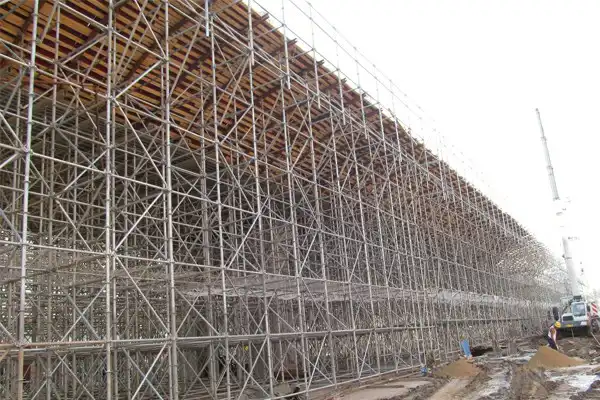
Understanding the 48 Series Ringlock Scaffolding System
You should know how the 48 series works before you compare it to other systems.
Core Design and Modular Architecture
The method is based on a vertical standard that is 48.3 mm in diameter and has a rosette disk welded to it every 500 mm along its length. Each rosette can hold up to eight connection points at the same time. This lets site engineers branch ledgers and diagonal braces in different directions from a single node. This modular shape lets you make different bay arrangements without having to make unique ones.
Key Technical Specifications
The walls of this system are made by Shandong Xingrui Building Materials Co., Ltd. and are 3.2 mm thick. The whole system is made of Q235 premium steel. You can get cross bars in lengths of 0.9m, 1.2m, or 1.5m. The hot-dip galvanization coat is at least 80 microns thick, which protects against rust in seaside and industrial settings. The system is certified by ISO 9001, ISO 14001, and CE, and the factory uses 12 welding robots on 6 automatic welding lines to make sure that the dimensions are always the same.
Self-Locking Wedge Mechanism
Not any loose nuts or bolts. The ledger blade is put into the rosette slot, and the wedge pin is driven in with a hammer. Because of how the wedge is shaped, it pulls tighter when it's under load. This means that as the weight goes up, the link gets stronger. When compared to standard tube-and-clamp methods, this behavior cuts setup time by up to 40% and lowers the chance of accidentally taking it apart. These advantages are why 48 series ringlock scaffolding has become a preferred choice on many job sites.
Comparing 48 Series Ringlock Scaffolding with Other Tube Systems
There are a number of rival methods on the market. Procurement teams can better allocate capital when they know where each one fits in.
48 Series vs. Traditional Tube and Coupler
Individual swivel and fixed clamps that are tightened with a torque wrench hold tube-and-coupler supports together. Every joint has to be tightened by hand according to the specifications, which adds variation and makes the erection time much longer. With fixed-geometry rosette connections, the 48 series gets rid of that variation. That difference adds up to measurable work savings per floor turn in a 20-story apartment building.
48 Series vs. Cuplock and Kwikstage
Cuplock systems work well with standard grid plans because the top cup can be rotated to lock multiple ledgers at the same time. A pressed steel spigot connection is used by Kwikstage. On simple rectangular shapes, both methods work well enough. The 48 series is better for mixed-angle layouts because its rosette can accept connections at 45-degree intervals around the full 360 degrees. This lets diagonal bracing happen without the need for extra fittings.
48 Series vs. 60 Series Ringlock
The 48 series ringlock scaffolding is made with a 48 mm tube. The 60 series is made with a 60 mm tube and is designed for heavy-duty shoring on bridge decks and in big concrete pours where radial loads are very high. With a rated upright capacity of 60kN, the 48 series ringlock scaffolding is the right size for normal high-rise residential and industrial building construction. The 48 series ringlock scaffolding is also lighter, which is good for rental fleets because lighter parts mean lower freight costs per ton and easier handling on upper floors.
Procurement Considerations for 48 Series Ringlock Scaffolding
When you buy in bulk, you need to do more than just compare description sheets. These are the things that make the difference.
Pricing, Wall Thickness Verification, and Steel Market Timing
Spot steel prices change every three months, and when suppliers cut wall thickness to protect their margins, they leave downstream users vulnerable to safety risks. Buyers should ask for material certificates with every shipment and use calipers to check the wall thickness when it arrives.
The normal wall thickness of 3.2 mm is a straight purchase checkpoint; any departure from this level shows a lack of quality. Both financial and organizational risk can be cut by locking in prices when the steel market is weak and planning deliveries around project plans.
Supplier Qualification and Quality Assurance
There should be third-party test reports on the weld pull-out strength at the rosette joint, salt spray test results for the galvanization layer, and measurement tolerance records from a reputable 48 series ringlock scaffolding provider. Shandong Xingrui's 79,800-square-meter building has spectrometers for testing raw materials and full assemblies to see how much weight they can hold. It is common to ask for a first-batch review before placing an order for a full container. This protects the quality of assets at scale.
Lead Times, Logistics, and Custom Orders
Production spots are crowded during the busiest buying season, which is usually February through April, before the main building ramp starts. People who order 6–8 weeks ahead of time get to choose when they want their goods delivered. The system is custom-built and can be used again and again. OEM processing is also possible based on customer models. Over 100 countries are served by Shandong Xingrui. Rizhao's harbor, airport, and high-speed rail connections allow for both full container exports and partial shipping.
Why Choose 48 Series Ringlock Scaffolding? An In-Depth Look
Capital planning includes the choice of whether to repair or improve a fleet of scaffolding. Here are the main reasons why people who work in procurement keep coming back to this system.
The 48 series ringlock scaffolding has a mix of features that older systems at the same price point just can't match: long asset life, accessory connectivity, and site efficiency. Since hot-dip galvanization makes things last longer than 15 years, the cost of loss drops by a lot compared to painting or untreated options.
The 48 series ringlock scaffolding's 48.3mm tube width also meets world standards for accessories, so rental companies that work in Southeast Asia, the Middle East, or China can easily add new equipment to their fleets without any problems.
- Asset residual value: Galvanized components retain resale value longer, which matters for rental companies managing large inventory turnover.
- Labor cost reduction: Self-locking connections cut skilled-labor requirements per erection cycle, directly affecting project margin.
- Regulatory alignment: CE certification and compliance with EN 12810-1 satisfy safety audits in European and Middle Eastern project environments.
- Rental compatibility: The 48 series' broad accessory market means replacement parts are available through multiple channels, reducing downtime risk.
Higher utilization rates, fewer on-site incidents, and more predictable maintenance cycles are all things that these traits directly address the operational concerns of rental fleet owners and general contractor materials departments.
Installation and Maintenance Best Practices for 48 Series Ringlock Scaffolding
When you put something correctly, you protect both the structure and the value of your goods.
Pre-Assembly Inspection Protocol
Before starting any erection, check each upright for bent sections, cracked rosette welds, or zinc coating damage that covers more than 10% of the surface area of each part. If the head of a wedge pin is deformed, shrinking, or mushrooming, it should be taken out of service right away. A planned check before erecting cuts down on problems that happen in the middle of a project and keeps site safety records clean.
Step-by-Step Assembly Sequence
Place the base plates on level ground first, and then use spigot joints to stack the uprights. Before placing wedge pins, put ledgers into the rosette slots at each level. Start at the bottom and work your way up, finishing full horizontal frames before moving up. At regular times set by the project engineer, tie the scaffold to the building structure. Do not move ahead of the last shared level by more than two lifts.
Routine Maintenance and Storage
Clean the rosette sides of mud and concrete splashes after each project cycle before putting them away. Check the wedge pins again and replace any that are worn out. Stack parts by type and length in a covered storage area to keep the zinc coating on the edges from wearing away too quickly from UV light. A simple system of tags—marking parts that pass inspection and parts that need to be fixed—keeps the quality of the rental fleet uniform across seasons and lowers the total amount of damage that is done.
Conclusion
For normal high-rise residential and civil building, the 48 series ringlock scaffolding works much better than tube-and-coupler and most other competing modular systems. Its self-locking rosette connection, Q235 steel build, 60kN upright capacity, and 15-year galvanized service life all work together to lower the cost per cycle and improve site safety.
The 48 series is the sensible and cost-effective choice for buying teams looking to add to their fleet or enter a new market. GREEN FORMWORK helps buyers by providing examples, technical information, and direct factory prices. This makes the whole process of buying easy, from the initial request to the final delivery.
FAQ
What is the maximum load per upright for the 48 series system?
The rated single upright load-bearing capacity is 60kN under standard configuration. Actual load limits depend on the full structural design, including bracing pattern, tie spacing, and ground bearing pressure. Always obtain project-specific engineering approval before exceeding standard configurations.
How does the 48 series compare to other systems on safety?
The self-locking wedge connection reduces human error compared to manually torqued coupler systems. Each rosette distributes forces across up to eight connection points, improving load transfer and reducing stress concentration. The system meets EN 12810-1 and carries CE certification.
Can components from different 48 series manufacturers be mixed on site?
Many 48 series components share the same nominal dimensions, but rosette thickness and wedge angle vary by manufacturer. A physical fit test is mandatory before mixing brands on a live project. Mixing untested components voids any engineering certification.
Is customization available for large-scale orders?
Yes. Made-to-order production with OEM processing based on customer drawings is available. Samples can be provided before full production runs.
What surface treatment does the system use?
All components receive hot-dip galvanization with a zinc coating of ≥80 microns, confirmed by magnetic thickness testing during quality control.
Get a Direct Quote from GREEN FORMWORK's 48 Series Ringlock Scaffolding Manufacturer
With 12 welding robots, GREEN FORMWORK makes sure that every order is the same size by following ISO 9001, ISO 14001, and CE standards for their certified 48 series ringlock scaffolding. Our team can help you with samples, technical support, and flexible delivery times, whether you need to replace your whole rental fleet or just order one container to try out. You can email us at sdxingruiqp@126.com or go to sdxingrui.com right now to ask about prices and delivery times.
References
1. European Committee for Standardization. EN 12810-1: Facade Scaffolds Made from Prefabricated Components — Part 1: Product Specifications. CEN, 2003.
2. Standards Australia / Standards New Zealand. AS/NZS 1576: Scaffolding — General Requirements. SAI Global, 2010.
3. International Organization for Standardization. ISO 9001: Quality Management Systems — Requirements. ISO, 2015.
4. International Organization for Standardization. ISO 14001: Environmental Management Systems — Requirements with Guidance for Use. ISO, 2015.
5. American National Standards Institute / Scaffold & Access Industry Association. ANSI/ASSE A10.8: Safety Requirements for Scaffolding. SAIA, 2019.
6. Peng, J.L., Pan, A.D., & Chen, W.F. "Approximate Analysis Method for Modular Tubular Falsework." Journal of Structural Engineering, ASCE, 2001.
Learn about our latest products and discounts through SMS or email