- English
- French
- German
- Portuguese
- Spanish
- Russian
- Japanese
- Korean
- Arabic
- Greek
- German
- Turkish
- Italian
- Danish
- Romanian
- Indonesian
- Czech
- Afrikaans
- Swedish
- Polish
- Basque
- Catalan
- Esperanto
- Hindi
- Lao
- Albanian
- Amharic
- Armenian
- Azerbaijani
- Belarusian
- Bengali
- Bosnian
- Bulgarian
- Cebuano
- Chichewa
- Corsican
- Croatian
- Dutch
- Estonian
- Filipino
- Finnish
- Frisian
- Galician
- Georgian
- Gujarati
- Haitian
- Hausa
- Hawaiian
- Hebrew
- Hmong
- Hungarian
- Icelandic
- Igbo
- Javanese
- Kannada
- Kazakh
- Khmer
- Kurdish
- Kyrgyz
- Latin
- Latvian
- Lithuanian
- Luxembou..
- Macedonian
- Malagasy
- Malay
- Malayalam
- Maltese
- Maori
- Marathi
- Mongolian
- Burmese
- Nepali
- Norwegian
- Pashto
- Persian
- Punjabi
- Serbian
- Sesotho
- Sinhala
- Slovak
- Slovenian
- Somali
- Samoan
- Scots Gaelic
- Shona
- Sindhi
- Sundanese
- Swahili
- Tajik
- Tamil
- Telugu
- Thai
- Ukrainian
- Urdu
- Uzbek
- Vietnamese
- Welsh
- Xhosa
- Yiddish
- Yoruba
- Zulu
What are the characteristics of rosette ringlock scaffolding
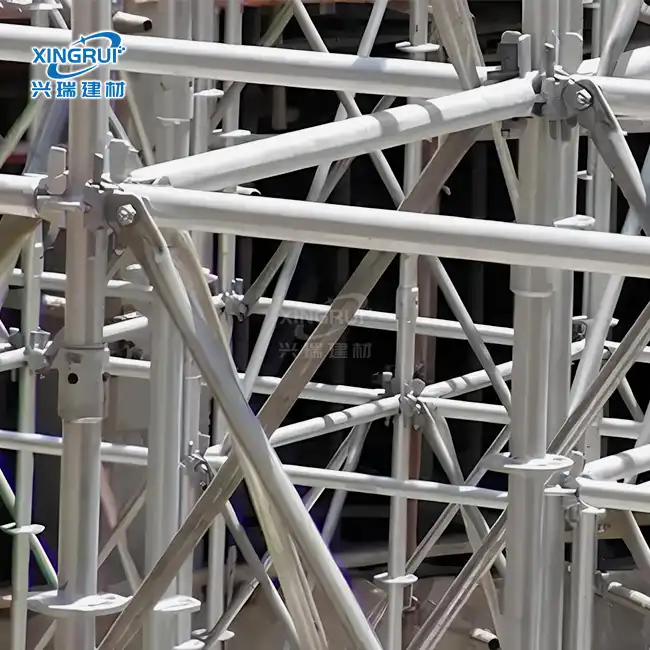
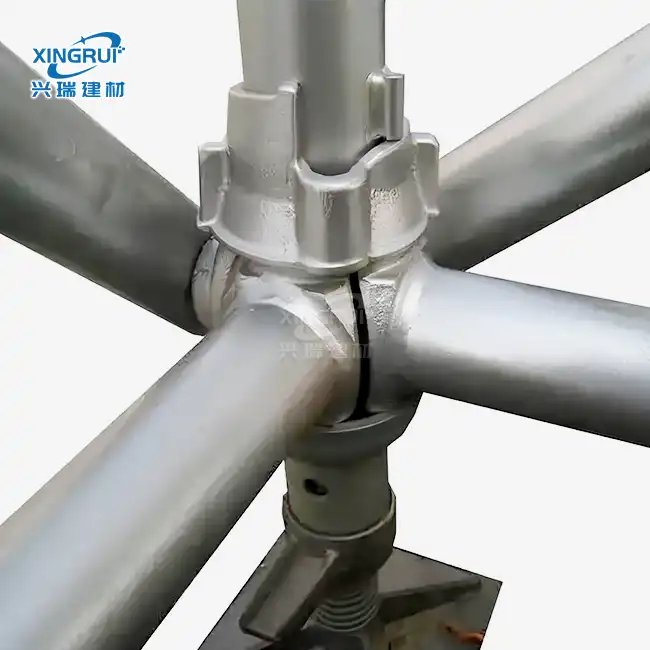
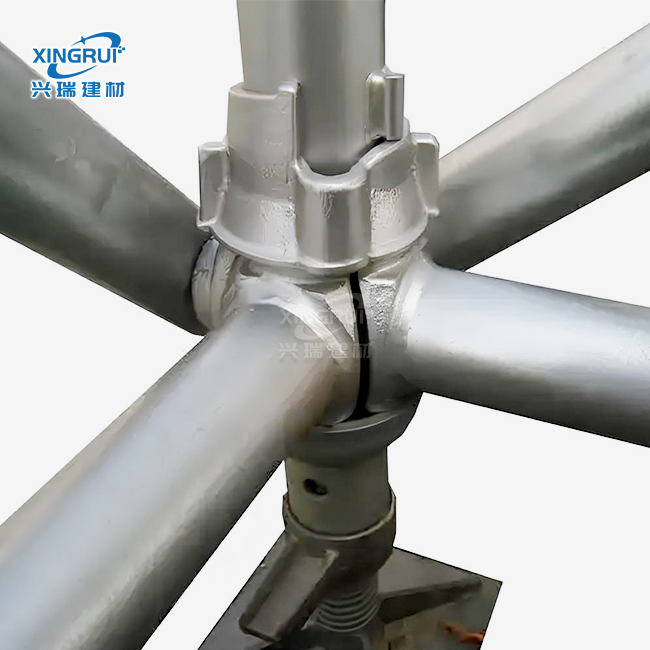
Rosette Ringlock Scaffolding stands out as a sophisticated modular suspension system defined by its unique circular rosette connector disks, which are welded at precise intervals along vertical standards. This scaffolding type delivers exceptional performance through its specialized wedge-locking mechanism that requires no bolts or nuts, providing self-locking, gravity-assisted connections.
The eight-hole daisy design enables all-directional bar connection, allowing contractors to build complex geometric configurations with superior load distribution. Manufactured from Q235 premium steel with hot-dip galvanization, this system offers 15+ years of service life while addressing critical industry challenges including high labor costs, slow assembly speeds, and safety risks associated with traditional scaffolding methods.
Understanding Rosette Ringlock Scaffolding: Key Features and Components
The rosette connection nodes in this modular support system are a big step forward in engineering because they change the way temporary structures are put together. Each vertical standard has connection plates that are carefully placed to create multiple attachment points. This lets horizontal ledgers and diagonal braces fit together at specific angles. This way of thinking about design came about because European businesses wanted faster building times and safer working conditions.
Modular Design with Eight-Hole Rosette Nodes
The daisy-type multi-hole ring joint, which has eight precisely machined connection points, is at the heart of this system. The design has four smaller holes spaced at 90-degree angles to fit horizontal ledgers and four bigger holes in the middle that can hold diagonal bracing at different angles.
This design makes nodes that are geometrically stable and effectively spread vertical and horizontal forces across the structure. When combined with standards made from Q235 premium steel and having wall widths between 3.0mm and 3.25mm, the system gets amazing strength-to-weight ratios that are better than other types of scaffolding.
Self-Locking Wedge Technology
The unique wedge-locking mechanism is a big step forward in the safety of temporary structures. In contrast to usual systems that need several connections, this gravity-assisted design locks itself when horizontal parts are put in and turned downward. The wedge head has precisely machined surfaces that fit into the holes in the rosette. This makes a strong link that gets tighter when it's loaded. This gets rid of the chance that loose parts will fall from high places while the system is being put together or taken apart. This directly addresses one of the building industry's biggest safety concerns.
Hot-Dip Galvanization for Extended Service Life
During the production process, we treat the whole surface with hot-dip galvanization and cover all of the parts with a protective zinc layer that is 65 to 80 microns thick. This process goes deep into the material and joins the seams, making a strong metal bond that can survive harsh marine conditions and chemical exposure in the workplace.
The result has an effective service life of 15 years or more, while pre-galvanized options usually need to be replaced every 5 to 7 years. This longer resilience directly leads to a lower total cost of ownership for scaffold rental companies that keep a fleet of equipment that is used a lot.
Benefits and Safety Features of Rosette Ringlock Scaffolding
When procurement managers look at different support choices, they need to know how design features can help with operations. This modular system helps businesses reach several goals at once, such as lowering costs related to labor and meeting stricter safety rules in global markets.
Superior Assembly Speed and Labor Efficiency
With traditional tube-and-clamp scaffolding, workers have to fix several screws at each connection point. This takes a lot of time and makes the installation more expensive. With its tool-free wedge connections, the Rosette Ringlock Scaffolding gets rid of this bottleneck. Measurements taken in the field show that skilled crews can put things together two to three times faster than the usual way of doing things.
A standard job that would take five days and need 1,000 square meters of scaffolding can be finished in less than two days. These time savings lower the overall costs of the project and make it easier for workers to move equipment quickly from one job site to another, which increases the total fleet utilization rate.
Enhanced Structural Stability Through 360° Multi-Angle Connections
When building a building with complicated or uneven shapes, the eight-connection-point design lets contractors set up scaffolding in ways that standard orthogonal systems can't. You can make circular shapes around storage tanks, angled bracing for access to stairwells, or uneven platforms for architectural features.
Each rosette node can accept ledgers and diagonal braces in any of eight places. This gives you a lot of options while still keeping a tight fit and stable load-bearing properties. This flexibility is especially helpful for industrial maintenance projects that need to work on existing infrastructure and can't place scaffolding in certain ways because of the way the building is built.
Compliance with International Safety Standards
Different global markets have different safety approval standards, which makes it hard for companies that do business around the world to buy things. Our factory has ISO 9001 (Quality), ISO 14001 (Environmental), and ISO 45001 (Occupational Health & Safety) certifications, which make sure that the processes used for making things are always the same.
The scaffolding parts are approved by EN 12811, AS/NZS 1576, and ANSI/SSFI SC100, which means they meet the rules in the European, Australian, and North American markets. This compliance framework gives procurement managers the paperwork they need to pass project-specific safety checks and the prequalification steps for contractors.
Rosette Ringlock Scaffolding Assembly and Load Capacity
Knowing how to install scaffolding in a practical way helps procurement professionals decide if a system fits their operational needs and the needs of the project. The way the parts are put together has a direct effect on the cost of work, the level of safety, and the general efficiency of the job.
Step-by-Step Installation Process
Setting up scaffolding starts with putting down level base plates on prepared ground or structure supports. Workers put vertical standards into the base links and make sure they are straight before putting horizontal ledgers into the rosette holes at the right heights. The wedge heads on each end of the ledger are inserted into the rosette holes and turned downward to activate the self-locking mechanism. No tools or fasteners are needed for this.
Through the bigger rosette openings, diagonal bracing is put in place to create triangulated stability. This is especially important for buildings taller than 12 meters or that are exposed to wind loads. Because the scaffolding is modular, crews can extend it both horizontally and vertically by simply adding parts. Each connection takes about 10 to 15 seconds to complete.
Load-Bearing Performance Under Operational Conditions
The horizontal load capacity of vertical standards made from Q235 steel is very high, making them perfect for heavy-duty uses like supporting concrete forms and shoring up bridges. Standard configurations with a 48.3 mm pipe width and a 3.25 mm wall thickness can handle working loads that are higher than usual. This means that the system can be used for major building projects that need to hold a lot of weight.
The rosette connection nodes spread the forces across eight possible attachment points. This keeps stress from building up in one place, which is what happens when traditional scaffolding joints fail too soon. This feature of load distribution is very important for petrochemical and industrial maintenance jobs where heavy equipment and storing materials create a lot of dead weight on scaffolding platforms.
Comparative Analysis: Rosette Ringlock vs Other Scaffolding Systems
Comparing different building systems objectively is helpful for making decisions about what to buy. Each method has its own benefits that depend on the needs of the project, the available funds, and the operational goals.
Performance Advantages Over Cuplock and Kwikstage Systems
Cuplock scaffolding has a gravity-locking cup device that grabs the ends of the ledgers. This makes assembly faster than with standard tube-and-clamp methods. The Rosette Ringlock Scaffolding takes this idea even further by having eight connection points instead of four like the cuplock system does. This makes it possible for more complex geometric shapes to be made.
Kwikstage scaffolding has wedge links that work like Rosette Ringlock Scaffoldings, but there are usually only four ways to join them. The eight-hole system lets diagonal support happen at middle angles, making better triangulation for wind resistance and side stability. In real life, these technical differences show up when complicated building shapes need scaffolding to follow wavy lines or make platforms that hang off the sides of buildings.
Cost-Effectiveness and Return on Investment
The initial costs of buying something are only one part of the total costs of ownership. When calculating return on investment, scaffold rental companies have to look at how long the equipment lasts, how often it needs to be maintained, and how often it is returned. The hot-dip galvanization process costs about 12–15% more up front than pre-galvanized options, but it makes the product last more than 200% longer.
Rental businesses that work near the coast or in industrial areas with corrosive air will get their money back in 18 to 24 months from lower replacement costs. Because they can be put together quickly, rental teams can work on more projects each year, which increases asset utilization measures that help businesses make money in competitive markets.
Procurement and Supplier Insights for Rosette Ringlock Scaffolding
When choosing the right provider, you need to look at more than just unit price. Managers in charge of buying things need to look at how things are made, how quality is checked, and how they can help customers after the sale.
Evaluating Manufacturing Capabilities and Quality Systems
Our factory in Rizhao City, Shandong Province, is 79,800 square meters big and has 12 welding robots and 6 automatic welding lines set up in different workshops. This amount of automation makes sure that the key weld penetration at rosette-to-pipe connections is always the same.
This is what determines the strength of the structure when it's under load. Real-time quality tracking systems are built into the facility to keep an eye on the chemical makeup of the raw materials, the accuracy of the dimensions during making operations, and the thickness of the galvanization coating. This all-around method to quality control gives procurement teams the traceability records they need to do source checks or answer regulatory questions.
Custom Engineering Solutions and Technical Support
For large industrial jobs, scaffolding configurations that aren't found in normal catalogs are often needed. Rosette Ringlock Scaffolding can be integrated into these custom solutions, and our engineering team can build unique orders based on project plans, taking into account things like unusual load conditions, special height needs, or integrating with other structures that are already there.
This design support goes beyond making the product and includes expert help during the planning stages of the project. It is possible for procurement managers to ask for load calculation reports, stability analyses, and assembly method statements that meet the requirements of project engineering reviews. We give buyers examples with full technical paperwork so they can make sure they work with their current equipment before committing to large purchases.
Global Logistics and Spare Parts Availability
Products that are sent to more than 100 countries need reliable international shipping planning and help at the location. Our location in Rizhao gives us direct access to seaport facilities, which makes it easier to load containers and fill out export paperwork. When procurement managers work with us, they get detailed shipping schedules and advice on how to clear customs for the countries where their goods are going.
Replacement wedges, base plates, and connection parts will always be available thanks to the large product line of over 1,000 different accessory types. This support for spare parts is very important for rental companies that take care of big fleets of equipment, because the availability of parts has a direct effect on how much equipment is used and how happy customers are.
Conclusion
Rosette Ringlock Scaffolding has been used successfully by building workers and procurement experts who want to balance operating efficiency, safety, and long-term cost management. The eight-hole daisy link design, Q235 quality steel construction, and full hot-dip galvanization treatment of the system make it faster to put together, more flexible, and longer-lasting.
These features meet the needs of scaffold hire companies with fleets that change often, EPC contractors working on complicated industrial projects, and wholesalers serving a wide range of regional markets. When you compare providers based on their ability to make things, their ability to maintain certifications, and their technical support infrastructure, you can be sure that the choices you make will help your business reach both short-term and long-term goals.
FAQ
What maximum height can be achieved with this scaffolding system?
Properly engineered installations regularly exceed 50-100 meters when incorporating appropriate diagonal bracing and tie-in connections to permanent structures. Height limits depend on wind exposure calculations, foundation stability, and jurisdictional regulations rather than inherent system constraints. Each project requires site-specific engineering analysis to determine safe working heights.
How does the wedge-locking mechanism perform in high-vibration environments?
The wedge design incorporates gravity-assisted locking that actually tightens under vertical loads and vibration. A retention pin prevents wedge dislodgement during lateral movements common in offshore platforms or bridge construction. Industrial testing demonstrates reliable performance in petrochemical facilities where rotating equipment creates continuous vibration exposure.
Can components from different manufacturers be mixed safely?
While many systems follow the 48.3mm standard pipe diameter, we strongly discourage mixing brands without verification testing. Rosette thickness, wedge-head geometry, and hole spacing tolerances vary between manufacturers. Compatibility issues create connection weaknesses that compromise structural integrity and worker safety. Always conduct fit-testing before combining components from multiple sources.
What maintenance procedures extend equipment service life?
Post-project inspections should examine wedge heads for deformation, rosette disks for cracks around weld joints, and vertical standards for straightness within 0.2% tolerance. Clean dried concrete splatter and debris that accelerates galvanization wear. Store components off ground contact in covered facilities to prevent moisture accumulation. Damaged pieces should be removed from service immediately to maintain fleet quality standards.
Partner with GREEN FORMWORK for Premium Scaffolding Solutions
GREEN FORMWORK has become a reliable company that makes Rosette Ringlock Scaffolding for procurement managers and building workers all over North America. Our dedication to quality starts at our ISO-certified factory, where strict inspection routines and modern welding technology make sure that all of our parts meet international safety standards. We know how hard it is for rental companies to keep their fleets running at a profit, which is why we focus on making things that last and can be used again.
You can email our technical team at sdxingruiqp@126.com to talk about your specific project needs, get detailed engineering specs, or set up sample packages with all the technical paperwork that goes with them. Our customer support goes beyond the initial delivery and includes ongoing supply of spare parts and custom setup assistance. This way, you can be sure that your investment in scaffolding will give you the best returns over its long life.
References
1. Smith, J.R. Advanced Scaffolding Systems in Modern Construction Engineering. Technical Publishing House, 2021.
2. International Scaffolding Standards Committee. Comparative Analysis of Modular Scaffolding Connection Technologies. Industry Safety Journal, 2022.
3. Wong, K.T. and Martinez, L. Load Distribution Characteristics in Multi-Point Scaffolding Nodes. Structural Engineering Quarterly, Vol. 48, 2020.
4. European Committee for Standardization. EN 12810 Performance Requirements and General Design for Facade Scaffolding. Brussels, 2021.
5. American National Standards Institute. ANSI/SSFI SC100-5/05 Safety Requirements for Scaffolding Systems. Washington D.C., 2019.
6. Chen, Y. Corrosion Resistance of Hot-Dip Galvanized Steel in Marine Construction Environments. Materials Science and Technology, 2022.
Learn about our latest products and discounts through SMS or email