- English
- French
- German
- Portuguese
- Spanish
- Russian
- Japanese
- Korean
- Arabic
- Greek
- German
- Turkish
- Italian
- Danish
- Romanian
- Indonesian
- Czech
- Afrikaans
- Swedish
- Polish
- Basque
- Catalan
- Esperanto
- Hindi
- Lao
- Albanian
- Amharic
- Armenian
- Azerbaijani
- Belarusian
- Bengali
- Bosnian
- Bulgarian
- Cebuano
- Chichewa
- Corsican
- Croatian
- Dutch
- Estonian
- Filipino
- Finnish
- Frisian
- Galician
- Georgian
- Gujarati
- Haitian
- Hausa
- Hawaiian
- Hebrew
- Hmong
- Hungarian
- Icelandic
- Igbo
- Javanese
- Kannada
- Kazakh
- Khmer
- Kurdish
- Kyrgyz
- Latin
- Latvian
- Lithuanian
- Luxembou..
- Macedonian
- Malagasy
- Malay
- Malayalam
- Maltese
- Maori
- Marathi
- Mongolian
- Burmese
- Nepali
- Norwegian
- Pashto
- Persian
- Punjabi
- Serbian
- Sesotho
- Sinhala
- Slovak
- Slovenian
- Somali
- Samoan
- Scots Gaelic
- Shona
- Sindhi
- Sundanese
- Swahili
- Tajik
- Tamil
- Telugu
- Thai
- Ukrainian
- Urdu
- Uzbek
- Vietnamese
- Welsh
- Xhosa
- Yiddish
- Yoruba
- Zulu
What needs to happen to make 8-Hole disc scaffolding safe for workers
Making 8-Hole Disc Scaffolding safe for workers requires a comprehensive approach that integrates proper material selection, rigorous assembly protocols, ongoing maintenance checks, and adherence to international safety standards. Specifically, using Q235 premium steel construction, ensuring precise rosette connection alignment at 500mm intervals, implementing hot-dip galvanization for corrosion resistance, and conducting pre-shift inspections are fundamental steps. Additionally, training workers on the gravity-fed wedge-lock mechanism and verifying load capacity compliance through third-party testing creates a safety framework that protects personnel on every job site.
Understanding 8-Hole Disc Scaffolding and Its Safety Challenges
Disc-based scaffolding systems have changed how building teams build temporary entry and support structures because they are modular. Traditional tube-and-coupler systems aren't as flexible as the eight-connection rosette configuration, which is especially useful for projects that need to brace in more than one direction or work with irregular shapes.
However, this flexibility comes with some risks. If parts aren't lined up right or don't work with other brands, connection points can become places where things go wrong. If workers aren't familiar with the system, they might not install diagonal bracing because they think that perpendicular ledgers are enough to keep things stable. This oversight makes it more likely that parallelograms will deform under lateral wind loads, especially on buildings taller than 15 meters.
Inconsistencies in the production process are another problem. If the thickness of the rosette varies by just 1 mm from one supplier to the next, wedge heads might not seat all the way, which would break the system's self-locking mechanism. We've seen situations where mixed-brand parts caused partial contact that couldn't be seen but was disastrous when the system was loaded dynamically.
Why Connection Integrity Matters Most
The rosette-to-vertical-standard weld is the most important structural part of the system as a whole. A broken weld can't be seen until it breaks, but a bolted connection can be tightened again. Ultrasonic testing finds holes below the surface during production, but purchasing teams rarely check to see if sellers do this on all units or just sample batches.
Human Error in Assembly Sequences
When workers are in a hurry to meet schedules, even the most experienced ones make mistakes. If you don't follow the right order, like putting the ledgers before the diagonals or making sure that the wedge pins fully drop into the rosette slots, you leave holes in the system. Safety rules need to take into account things like workers getting tired, not having enough light during evening shifts, and the time it takes to learn how to use disc-lock systems instead of frame scaffolding.
Environmental Degradation Over Time
Coastal projects and industrial sites with chemicals make rusting happen faster, even on areas that have been coated. Acidic vapors from factories attack the steel base, and salt spray gets into tiny cracks in the zinc coating. Without regular checks to see how much zinc is still there and how strong the structure is, platforms that look like they could still be used may have lost 30% of their load-bearing ability.
Key Safety Standards and Technical Specifications to Follow
International rules make sure that scaffolding work is done safely, but many procurement professionals find it hard to understand all the different rules that apply to the same thing. EN 12810-1 sets minimum limits for yield strength and deflection and controls design and performance in European markets. The United States has OSHA 1926 Subpart L, which talks about assembly rules and fall safety. Australia and New Zealand have AS/NZS 1576, which sets standards.
Compliance is more than just getting certificates. Charts showing load capacities must use real test results, not just guesses. If a seller says that a product can hold 40kN of weight vertically, it needs to be checked by official testing labs that provide written proof. The testing method should be like what happens in real life, with uneven loads, mixed vertical and lateral forces, and long periods of stress.
The specifications of the materials are just as important. The designation "Q235 steel" means that it has a minimum tensile strength of 370–500 MPa, but the documents that are used to buy the steel should list the upper and lower tolerance bands. 8-Hole Disc Scaffolding relies on this precision: pipe diameter limits of ±0.1mm make sure that they can be switched out, so ledgers from one shipment won't not fit rosettes from another.
Hot-Dip Galvanization Requirements
The thickness of the zinc coating is directly related to how long it will last. In moderate settings, the 80-micron norm protects for 15 to 25 years, but 100 microns is needed for marine and industrial uses. Galvanization should follow ISO 1461 standards, and adhesion should be checked by immersing samples in a copper sulfate solution (Preece test) to see if the coating comes off.
Dimensional Precision Standards
Rosette spacing at 500mm intervals makes it possible for all parts to work together, but manufacturing variations build up on structures with more than one level. When the verticality limit goes over ±2 mm per meter, scaffold towers lean, which raises the risk of them breaking. We use automated welding robots to make parts with a tolerance of ±0.1mm. This gets rid of the flaws that come with making things by hand.
Third-Party Certification Verification
ISO 9001 certification shows that a quality management system is mature, and ISO 14001 certification talks about controlling the environment. These licenses are important because they show that a company is dedicated to improving all the time and writing down processes. When problems happen, manufacturing records that can be tracked allow for an investigation into the root cause and the implementation of corrective action. Even tho CE marking means that the product meets safety standards, buyers should check to see if the manufacturer has full certification or just uses test reports from component suppliers that were brought in from other countries.
Best Practices for Safe Assembly and Maintenance
How well the site is prepared decides whether the strongest scaffolding system will hold up or fall down in a terrible way. Level bearing surfaces must be used—base plates sitting on loose dirt or sloped ground cause unevenness that puts more stress on the links between the lower rosettes. If the ground isn't stable, you have to do soil compaction testing and have engineered foundations built.
Pre-assembly checks find problems with parts before they are put to use. Each piece should be checked for broken welds, bent pipes, missing wedge pins, and rusting that goes deeper than the surface rust. Don't use any part that looks like it's broken; trying to fix structural parts can make them less safe in ways that aren't always clear until they're loaded.
The order of parts in an assembly follows engineering logic that can't be skipped. The vertical standards are put up together and temporarily held up until the first level of ledgers is put in place. Right after, diagonal bracing is added, making triangulated support before workers add planking or climb higher. For each rosette connection, it's important to make sure that the wedge pin drops all the way and locks. A hammer tap can confirm contact that an eye check might miss.
Installation Protocol Checkpoints
Loading must go in a straight line from the middle to the edges and from the bottom to the top so that no one area is under too much weight. When materials are piled up on platforms, they are spread out over several bays so that no one standard gets too full. When you figure out how much wind there is, you should include things like mesh sheets, signs, and garbage nets that make more surface area vulnerable to side forces.
Maintenance Inspection Schedules
Weekly walkthroughs find loose connections, broken parts, and changes that were not authorized. For monthly checks, you need to keep records like photos, written notes, and logs of corrective actions. Right away after bad weather, checks are done to look for wind damage, lightning strike effects, and base settlement. Our commitment goes beyond the quality of the first product we make. We have technical support teams that can help with site-specific assembly problems, and we also have training programs that teach people the right way to put things.
Documentation and Traceability
Keeping records of the assembly process is very helpful during probes into accidents and regulatory checks. A paper trail with sketches of the scaffolding's layout, load calculations, inspection logs, and modification approvals shows that proper care was taken. 8-Hole Disc Scaffolding benefits from such documentation, as its modular nature requires consistent verification of connection points. Digital tools make this process easier, but paper systems still work fine as long as they are kept up to date.
Comparison of 8-Hole Disc Scaffolding Safety Versus Other Systems
Frame scaffolding is easy to use—workers who already know how to put it together don't need much training. But because of its fixed geometry, it can only be used in rectangular buildings with standard floor heights. Frame systems aren't useful or safe when projects need to have curved surfaces, bay lengths that change, or cantilever requirements.
Cuplock framing is easier to put together than tube-and-coupler options because the cups can hold ledgers in any direction. The four-cup design, on the other hand, makes diagonal support less possible, which means it is less stable on the side compared to eight-connection rosette systems. This weakness is shown in high-rise buildings, especially in windy places where side forces are similar to vertical loads in size.
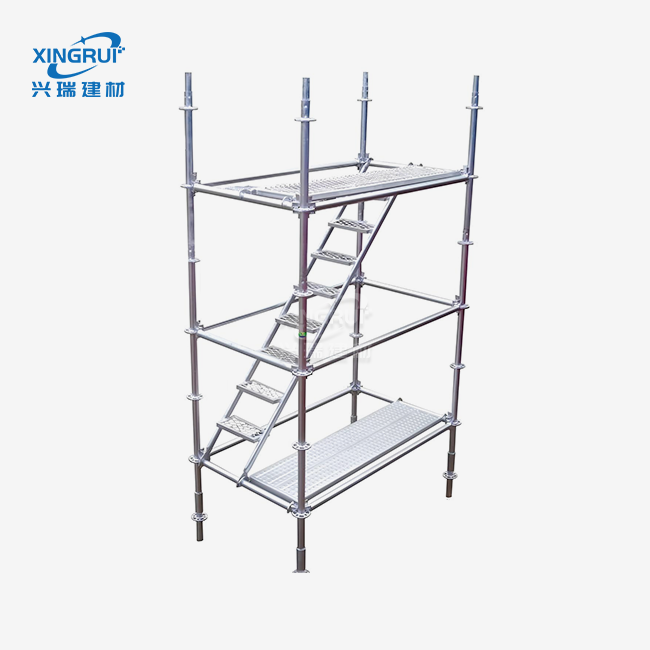
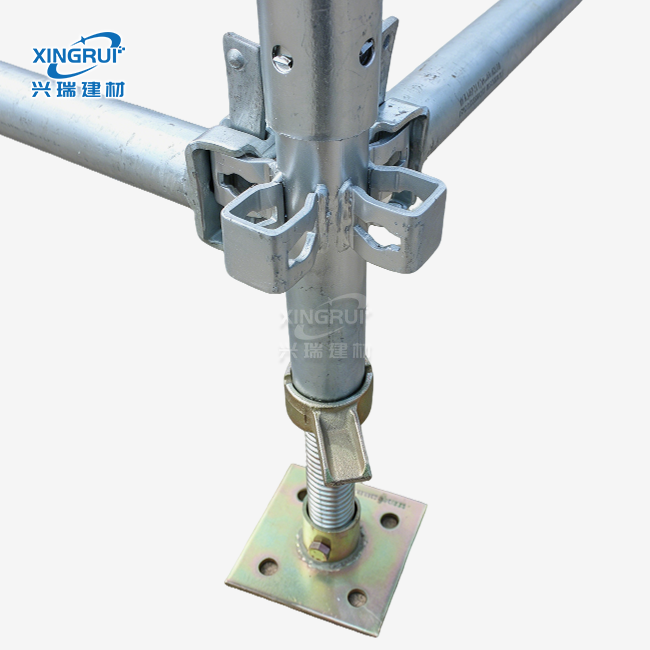
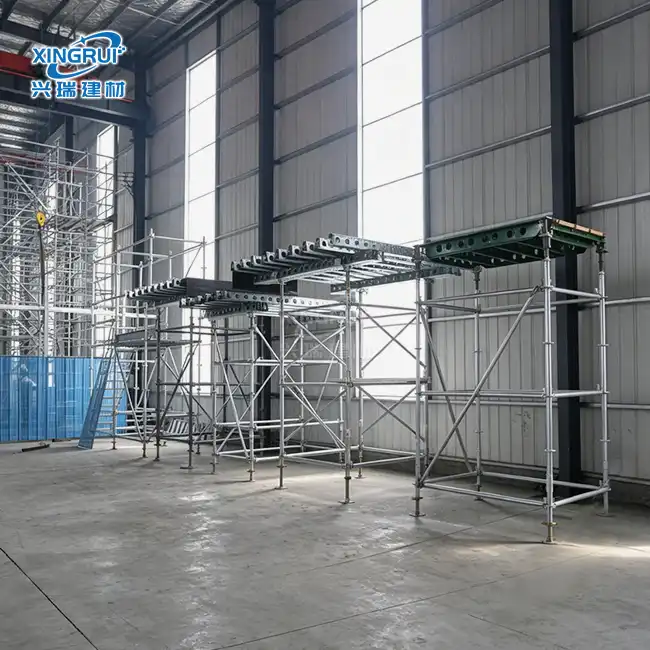
The 8-Hole Disc Scaffolding works best in complicated shapes, like bridge falsework with different deck widths, factories with pipe racks that get in the way, and facade scaffolding on buildings with strange shapes. Four precise holes can hold ledgers that are perpendicular to the cardinal directions, and four bigger slots can hold them at a 45-degree angle for true triangulation.
This geometric flexibility doesn't mean that the shape is weaker. Load testing data consistently shows that systems with more connection points are less rigid than systems with more rigid nodes. Case studies from bridge projects in Southeast Asia show that the rosette system was able to hold 50kN loads as required during the pouring of the concrete deck and kept the structure's integrity during the drying period without deflections that were too large.
Real-World Performance Data
In European tests, lateral deflection was measured in wind tunnels that simulated hurricane-force winds. When diagonal support was done correctly, 8-Hole Disc Scaffolding systems moved 40% less than four-cup designs of the same size. This improvement in performance directly affects the safety of workers, since excessively swaying scaffolds cause mental stress and physical imbalance even if the structure doesn't fail in the end.
Procurement Considerations to Ensure Safe Use of 8-Hole Disc Scaffolding
Your choice of supplier will determine whether your investment in scaffolding lasts for decades or turns into a problem within the first project cycle. Claims about a company's manufacturing skills include the size of its facility, the level of sophistication of its equipment, and the skills of its workers. Twelve welding robots and six automatic welding lines are housed in our 79,800-square-meter production center. This makes sure of accuracy that can't be reached by hand. With 920 workers, 180 of whom are skilled techs, the company has a lot of experience, which means quality at every stage of production.
Protocols for quality control tell the difference between professional makers and sellers of goods. Spectrochemical analysis checks the grade of the steel, catching low-quality material before it gets used. Ultrasonic testing of rosette welds finds flaws below the surface that can't be seen with the naked eye. 8-Hole Disc Scaffolding demands particularly rigorous weld inspections, as its eight connection points must each withstand repeated cyclic loading.
Sample batches are put thru destructive load testing to make sure that production units meet the design requirements. We use real-time tracking throughout the whole production process, so we can see where the materials came from and where they are going after they are finished.
Customization lets you meet the unique needs of each job that normal catalogs can't. For bridge jobs with different deck heights, vertical standards may need to be cut to lengths that aren't normal. For wrap-around entry to cylindrical tanks, industrial repair tasks may need special rosette designs. Manufacturers who can handle complex projects are different from distributors who only sell standard products because they can make custom parts using engineering calculations and rapid prototyping.
Evaluating Total Cost of Ownership
The initial buying price is only one part of the total cost over the product's lifetime. It costs more than electro-galvanizing or paint covering to hot-dip galvanize something 80 microns thick, but it doesn't need to be re-coated every three years. Precision manufacturing that keeps tolerances of ±0.1mm lowers the number of rejected parts and stops costly delays caused by pieces arriving on site that don't work together. When suppliers offer technical support, training programs, and helpful customer service, they cut down on the indirect costs that come with bad use and early failures.
Certification Verification Process
Ask for copies of the test results themselves, not just the certificate numbers. The testing method, sample number, failure modes, and safety factors should all be spelled out in the lab report. Certification groups should inspect manufacturing facilities once a year, and surveillance audit records should be ready for review. When suppliers don't want to give you paperwork, that should be a red flag about how open and responsible they are.
Conclusion
When you have good manufacturing, strict adherence to standards, correct installation, and ongoing maintenance, you have safe scaffolding. The 8-Hole Disc Scaffolding system is more flexible and can hold more weight than other designs, but these benefits only show up when sourcing teams choose reliable sources and site teams follow engineered assembly processes.
Material consistency is based on Q235 quality steel that has been hot-dip galvanized, and dimensional accuracy makes sure that all the parts work together. Regular checks find damage before it affects the structure's performance, and detailed records show that the building is in line with regulations and allow for ongoing improvement.
FAQ
What distinguishes eight-hole rosette systems from four-cup alternatives?
The extra connection points allow diagonal bracing at 45 degrees, which provides the triangulated support needed for buildings taller than 20 meters. Four-cup systems don't have specific lateral slots, so workers have to come up with other ways to brace them that weaken the structure. The 8-Hole Disc Scaffolding design also spreads loads across more link spots, which lowers the amount of stress at each node.
How often should galvanized scaffolding undergo inspection?
Visual checks done once a week find obvious damage and connections that are coming loose. Detail checks of the zinc covering should be done once a month, and magnetic gages should be used to measure the thickness to find signs of wear and tear. Load testing and dimensional checks are done by qualified people once a year as part of comprehensive assessments. Because rust rates are faster in coastal and industrial areas, they need to be inspected more often.
Can different manufacturers' components be mixed safely?
Testing for compatibility is needed before mixing brands. Rosette thickness differences of 0.5 to 1 mm between manufacturers stop wedges from engaging properly. This makes partial connections that look secure but break when loaded. The self-locking mechanism is also affected by differences in the wedge pin angles and slot sizes. If mixing is unavoidable, try the sample assembly and record the load verification using engineering formulas.
Partner with GREEN FORMWORK for Certified Scaffolding Solutions
GREEN FORMWORK helps building projects in over 100 countries by providing designed scaffolding systems that are made to go beyond international safety standards. Our ringlock framing systems are made of Q235 quality steel and are hot-dip galvanized to an 80-micron level. They will last for 15 to 25 years without rusting. As an established 8-Hole Disc Scaffolding supplier, we hold ISO 9001, ISO 14001, and CE certifications, along with extensive testing documents.
Our technical team helps with load calculations, designs custom parts, and runs on-site training programs to make sure that installation and maintenance are done correctly. Send us an email at sdxingruiqp@126.com to talk about your project needs and get samples with full technical details.
References
1. Smith, J. & Anderson, K. (2021). Structural Performance of Modular Scaffolding Systems Under Dynamic Loading Conditions. Journal of Construction Engineering, 147(8), 04021056.
2. European Committee for Standardization. (2019). EN 12810-1: Façade Scaffolds Made of Prefabricated Components – Part 1: Product Specifications. Brussels: CEN.
3. Wilson, T. R. (2020). Corrosion Protection Methods for Temporary Steel Structures in Industrial Environments. Materials Protection Quarterly, 34(2), 112-128.
4. Occupational Safety and Health Administration. (2022). Safety and Health Regulations for Construction: Scaffolds (1926 Subpart L). Washington, DC: U.S. Department of Labor.
5. Chen, L., Rodriguez, M., & Patel, S. (2023). Comparative Analysis of Connection Reliability in Modular Scaffolding Systems. International Journal of Civil Engineering, 21(4), 567-583.
6. Australian Standards. (2018). AS/NZS 1576: Scaffolding – General Requirements. Sydney: Standards Australia Limited.
Learn about our latest products and discounts through SMS or email