- English
- French
- German
- Portuguese
- Spanish
- Russian
- Japanese
- Korean
- Arabic
- Greek
- German
- Turkish
- Italian
- Danish
- Romanian
- Indonesian
- Czech
- Afrikaans
- Swedish
- Polish
- Basque
- Catalan
- Esperanto
- Hindi
- Lao
- Albanian
- Amharic
- Armenian
- Azerbaijani
- Belarusian
- Bengali
- Bosnian
- Bulgarian
- Cebuano
- Chichewa
- Corsican
- Croatian
- Dutch
- Estonian
- Filipino
- Finnish
- Frisian
- Galician
- Georgian
- Gujarati
- Haitian
- Hausa
- Hawaiian
- Hebrew
- Hmong
- Hungarian
- Icelandic
- Igbo
- Javanese
- Kannada
- Kazakh
- Khmer
- Kurdish
- Kyrgyz
- Latin
- Latvian
- Lithuanian
- Luxembou..
- Macedonian
- Malagasy
- Malay
- Malayalam
- Maltese
- Maori
- Marathi
- Mongolian
- Burmese
- Nepali
- Norwegian
- Pashto
- Persian
- Punjabi
- Serbian
- Sesotho
- Sinhala
- Slovak
- Slovenian
- Somali
- Samoan
- Scots Gaelic
- Shona
- Sindhi
- Sundanese
- Swahili
- Tajik
- Tamil
- Telugu
- Thai
- Ukrainian
- Urdu
- Uzbek
- Vietnamese
- Welsh
- Xhosa
- Yiddish
- Yoruba
- Zulu
What Is Combined Steel Formwork? A Guide for Contractors and Buyers
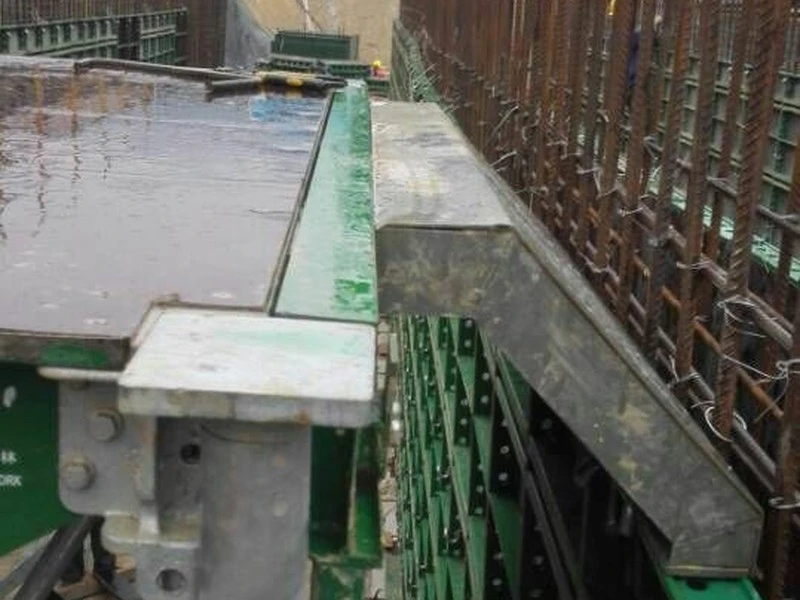
Combined steel formwork is a factory-manufactured, modular concrete shaping system built from Q235 carbon steel panels, connecting hardware, and support structures. Designed for walls, columns, beams, and slabs, it replaces disposable timber boards with reusable steel panels that deliver consistent concrete geometry pour after pour. With load-bearing capacity up to 60–80 KN/m² and dimensional accuracy within ±0.5mm, this system cuts material waste, shortens cycle times, and gives procurement teams a predictable cost structure across the full project lifecycle.
Understanding Combined Steel Formwork
What It Is Made Of?
The steel itself is what any modular steel panel system is made of. The base is made of hot-rolled Q235 carbon steel, and the panel is between 2.5 mm and 3 mm thick. Standard P-hole spacing every 50mm or 100mm is built into the shape of the upper flange. This lets all the parts fit together without any changes being made to the flat panels, corner pieces, or filler strips. With the water pressure of fresh concrete, U-clips and L-shaped bolts close up gaps. This stops the leaks that happen when wooden forms are used for long pours because of gaps.
How the Modular System Works?
Lengths of 900, 1200, 1500, or 1800 mm and widths of 100, 150, 200, 250, or 300 mm are all the same. These parts can be put together in any way shown on the building plans. This means that the walls and beams can be any size and thickness. The panels can be taken apart and put back together for the next pour as soon as the first one is dry. This "factory-made, site-assembled" way cuts down on the amount of cutting that needs to be done on-site, and it can be used more than once for jobs with more than one floor.
Types and Configurations
Steel building formwork systems come in two main types: configured sets and flat panel arrays. Configured sets are made up of corner modules, curved fillers, and adjustable ties for structures that aren't straight, while flat panel arrays are used for straight walls and slabs. Builders can start with a flat-wall kit and add curved or angled parts as the project gets harder without having to buy a whole new system. This is possible because both families use the same connection hardware.
Key Benefits and Applications of Combined Steel Formwork
Durability and Reuse Performance
If you take good care of your combined steel formwork system, it can be used 200–300 times or more. Forms made of wood usually only last 5–8 uses before they start to bend or come apart. Because they last different amounts of time, the cost per pour changes a lot. After being pickled and phosphated at industrial levels, each panel is baked at a high temperature. With a salt spray test grade better than Grade 8, this means the surface won't rust. If you store panels the right way between jobs, they don't lose much of their quality over time, even after years of use.
These are the main reasons why steel formwork is the best choice for tough places in terms of safety:
- Load-bearing strength: A capacity of 60–80 KN/m² handles high-speed concrete pours in bridge piers, shear walls, and large columns without deflection issues. The modulus of elasticity sits at 206 GPa, minimizing panel flex under pressure.
- Surface finish quality: Flatness tolerance of ≤2mm per GB/T 50214 means formed concrete surfaces typically need no secondary plastering, reducing finishing labor costs on fair-faced concrete specifications.
- Environmental credential: High reuse rates cut timber consumption and construction waste, supporting ISO 14001 Environmental Management System targets on green-rated projects.
Typical Project Applications
Modular steel formwork is mostly used for three main types of high-volume jobs. The stiffness of the panels helps high-rise shear walls because they keep the walls' height and width the same across pours of more than one story. For bridge piers and abutments, the system needs to be able to move a lot of concrete quickly and easily while still leaving a smooth surface. Tunnel and culvert linings use corner and curved modules that are set up in specific ways to deal with the complicated shapes of the ground and to keep joints tight in damp places.
Comparing Combined Steel Formwork with Other Formwork Solutions
Steel vs. Timber
Although timber forms are cheaper at first, they have hidden costs, such as the fact that they need to be changed more often, their sizes change because the boards grow or shrink, and it costs more to cut them on-site. Steel plates are always the same size. When the original cost is over, the cost of steel per use is much less than the cost of wood over 50 pours. So that they can compare more than just the purchase price, procurement teams always pick steel for projects that need structural elements that will be used over and over again.
Steel vs. Aluminum
Aluminum forms are easier to move and won't rust if you don't treat the surface. But each square meter of metal panels costs a lot more and can't hold as much weight when it rains a lot. Combined steel formwork using Q235 steel doesn't cost more than other steels and can handle loads of 60–80 KN/m², which are common in building work. If an EPC contractor needs to work with a lot of steel forms and a tight budget, steel forms offer the same level of accuracy at a lower unit cost.
Steel vs. Plastic Composite
Plastic composite panels can be used to make bent art pieces, but they aren't as strong as solid concrete and can't hold as much weight. They also break down when UV light and chemical release agents hit them. By pickling, phosphating, and baking steel panels, their surfaces stay strong even after being stored outside for a long time. This is something that regional rental depots and equipment yards need to be able to do.
Procurement Insights for Buyers and Contractors
Evaluating Supplier Credentials
If you want to buy steel formwork, the first thing you should do is look for certifications. Certifications such as ISO 9001 for Quality Management, ISO 14001 for Environmental Management, and ISO 45001 for Occupational Health and Safety show that there are written rules in place for the production process, not just vows that were made over the phone. The needs of the European market are met by CE approval. Buyrs are protected when project owners or third-party monitors ask for proof of compliance. Batch quality inspection reports and material tracking paperwork do this.
Lead Times and Order Structure
It usually takes between 60 and 120 days for the first time goods are bought, from the first RFQ to when they arrive at the destination port. During the sample stage, which includes sending drawings and getting real panels for site trials, the process usually takes 7–14 days. The site team can check the fit and finish with small test orders before committing to full production numbers. Flexible payment terms, such as 30% to 50% TT advance against the rest on the bill of lading, make it less likely that both parties will run out of cash.
Customization and Technical Support
For projects of all sizes with combined steel formwork, we need suppliers who can work from CAD models. To get accurate tooling for customized corner sections, filler modules, and circular column forms, you should check with the supplier before signing to see if they have their own engineering team. On-site technical help and samples given before a big order is made protect the buyer's project schedule.
Installation, Maintenance, and Best Practices
Assembly Sequence
Successful panel installation starts with a clean, level base. Position flat panels first, lock flanges with U-clips at every P-hole, then add corner and filler sections. Check vertical alignment with a plumb bob at each corner before tightening L-bolts. Apply a compatible concrete release agent to all interior faces before the pour begins — this step protects the surface coating and makes stripping faster.
Routine Maintenance
After each pour cycle, remove concrete residue with a scraper before it hardens. Inspect welds and flange edges for deformation. Minor bends in the flange return to shape with a rubber mallet; panels with weld cracks should be removed from rotation. Store panels flat on timber dunnage in a dry area to prevent moisture accumulation on stacked faces.
Compliance and Safety
Working under international standards such as EN 12811 or equivalent national codes requires suppliers to provide calculation reports confirming the system's rated capacity matches the project's pour design. Confirming these documents before site mobilization keeps the project compliant and protects contractors during third-party audits.
Conclusion
For contractors, combined steel formwork is very useful because it keeps the shape of the concrete, can be used over and over, and can be bought in stages, from a trial order to a full project supply. For EPC contractors, rental fleet operators, and infrastructure buyers who need steady performance over multiple pours, this group is the best choice. It is made of Q235 steel, has tight joint tolerances, and has a quality management system that has been written down. If you choose a qualified maker who has experience shipping, you won't have to worry about compliance issues that slow down project approvals.
FAQ
Q1: What is the expected reuse life of a steel formwork panel?
A: With proper maintenance and the use of a compatible release agent, Q235 steel panels routinely achieve 200–300+ reuse cycles. This contrasts sharply with timber forms, which typically last 5–8 uses before warping affects concrete geometry.
Q2: How are joint leaks prevented during the concrete pour?
A: High-precision U-shaped flange edges combined with P-clip connectors create a tight seal under concrete pressure. Applying a sealing strip at panel joints on high-pressure pours adds an additional safeguard.
Q3: Can the system handle irregular or curved structural shapes?
A: Yes. Customized corner modules, filler panels, and curved accessories configured to CAD drawings allow the modular system to address non-standard column profiles, tunnel linings, and complex architectural geometries.
Q4: What certifications should buyers request from suppliers?
A: Request ISO 9001, ISO 14001, and ISO 45001 system certificates alongside CE certification for European projects. Batch inspection reports and material traceability documents complete the compliance package for most project owners.
Q5: Is on-site technical support available?
A: Reputable manufacturers provide samples before large orders and offer technical guidance for assembly and troubleshooting, helping crews achieve correct installation without delays.
Get a Quote from GREEN FORMWORK — Your Trusted Combined Steel Formwork Manufacturer
GREEN FORMWORK sells ISO-certified combined steel formwork to builders and buying teams in more than 100 countries with the help of Shandong Xingrui Building Materials Co., Ltd. We can make custom specs from your drawings, send you samples in 7–14 days, and come with full technical documentation for every order. Mail our staff an email at sdxingruiqp@126.com right now to find out about prices and products.
References
1. American Concrete Institute (ACI). ACI 347R-14: Guide to Formwork for Concrete. ACI, 2014.
2. British Standards Institution. BS EN 12812: Falsework — Performance Requirements and General Design. BSI, 2008.
3. Hurd, M.K. Formwork for Concrete, 7th ed. American Concrete Institute, 2005.
4. Construction Industry Research and Information Association (CIRIA). Formwork: A Guide to Good Practice, 3rd ed. CIRIA, 2012.
5. Peurifoy, R.L., and Oberlender, G.D. Formwork for Concrete Structures, 4th ed. McGraw-Hill, 2011.
6. International Organization for Standardization. ISO 9001:2015 Quality Management Systems — Requirements. ISO, 2015.
Learn about our latest products and discounts through SMS or email